

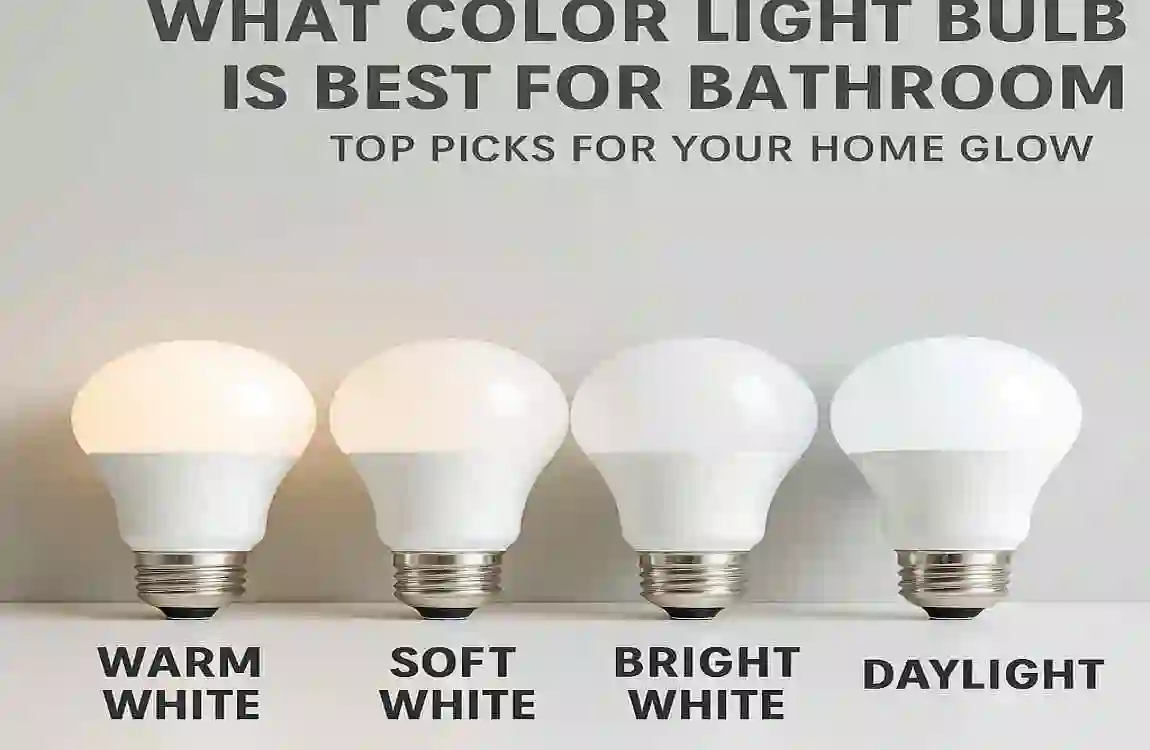
Are you tired of stepping into your bathroom only to be greeted by lighting that’s either too harsh or leaves your space looking dull and uninviting? You’re not alone! According to the Illuminating Engineering Society of North America (IESNA), 70% of homeowners struggle with poor bathroom lighting, impacting daily routines like shaving, makeup, and even mood. The truth is, the right bathroom light bulb color can completely transform your space, making it feel fresh, flattering, and functional.
Understanding Color Temperature: The Key to Perfect Bathroom Lighting
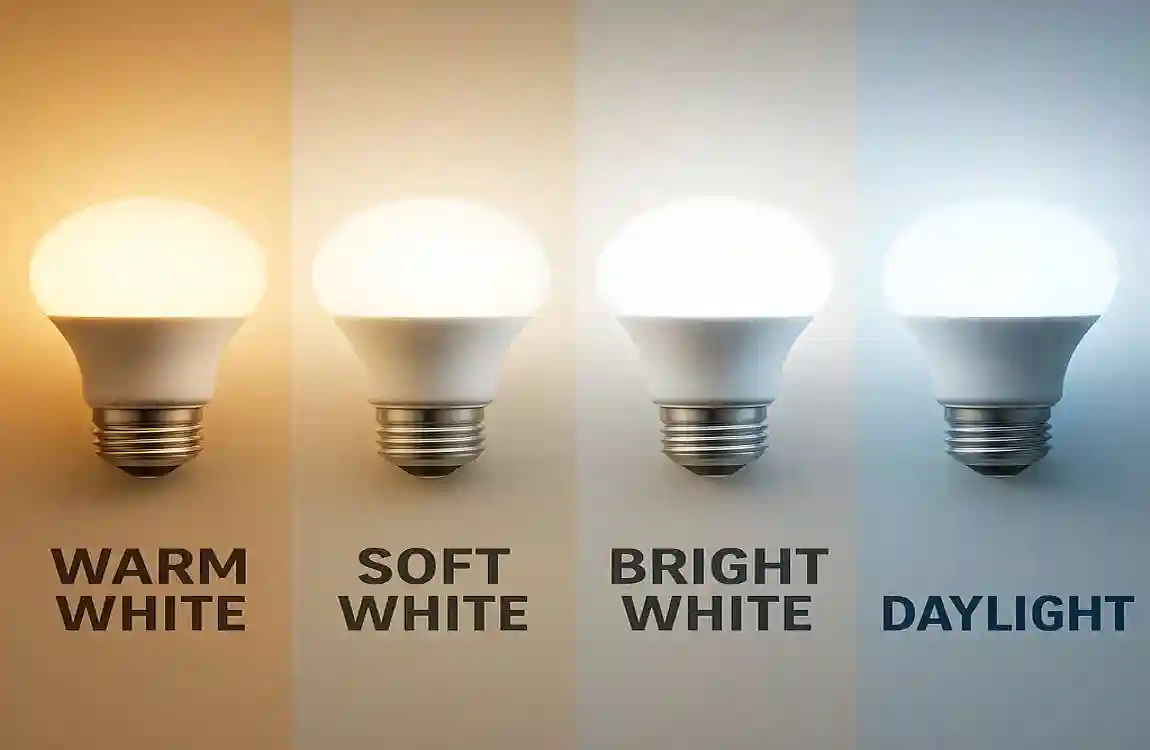
When it comes to lighting, color temperature is the secret sauce that sets the mood and function of your bathroom. But what exactly is it, and why does it matter?
What is Color Temperature and Why It Matters for Bathrooms
Color temperature measures how “warm” (yellowish) or “cool” (bluish) a light source appears, expressed in Kelvins (K). Lower numbers (like 2700K) give off a cozy, golden glow, while higher numbers (like 6500K) mimic bright daylight.
- Flattens skin tones or enhances them (vital for makeup and shaving)
- Sets the mood—relaxing or energizing
- Improves visibility for detailed tasks
Warm White vs. Daylight vs. Cool White: Quick Comparison Table
Let’s quickly compare the most popular bathroom bulb colors:
| Color Temp | Kelvin Range | Best For | Pros | Cons | Bathroom Fit |
|---|---|---|---|---|---|
| Warm White | 2700K–3000K | Relaxing glow, evenings | Flattering skin, cozy | Too dim for tasks | Primary pick for most bathrooms |
| Soft White | 3000K–4000K | Balanced daily use | Versatile, energizing | Less spa-like | Vanity lighting |
| Daylight/Cool | 5000K–6500K | Precision tasks | Bright, accurate colors | Harsh on skin | Task zones only |
This table shows why warm white is the best color light bulb for bathroom relaxation, while soft white and daylight are ideal for grooming and detail work.
CRI Explained: Why High Color Rendering is Essential
CRI stands for Color Rendering Index—a measure (0–100) of how accurately a light source reveals objects’ true colors. For bathrooms, always choose bulbs with CRI 90+. This means your makeup, hair, and even towels will look true-to-life, not washed out or oddly tinted.
Best Color Light Bulb for Bathroom by Area: Tailored Recommendations
Bathrooms aren’t one-size-fits-all. The best color light bulb for bathroom use depends on the specific zone. Let’s break it down:
-
- Pros: Crisp, flattering light; minimal shadows
- Cons: May feel clinical if used throughout
- Installation Tip: Mount bulbs at eye level on both sides of the mirror for even glow.Vanity/Mirror Lighting (Primary Focus: 4000K Neutral White)
For makeup, shaving, and grooming, the vanity is where you need the most accurate, shadow-free lighting. The sweet spot? 3500K–4500K neutral white. This range mimics natural daylight, revealing true skin tones and preventing makeup blunders.
- Shower/General Overhead (Warm White 2700K–3000K)
For showers and overheads, warm white bulbs (2700K–3000K) create a cozy, spa-like atmosphere. This color temperature softens features and helps you unwind.- Why: Moisture-resistant and dimmable for custom comfort
- Avoid: Anything above 4000K—otherwise, you risk a cold, unwelcoming feel.
- Accent/Ambient Lighting (Mix: 2700K Dimmers)
Accent lights (like under-cabinet strips or toe kicks) work best with dimmable 2700K bulbs. These add depth and luxury to your bathroom.- Pros: Smart controls, customizable colors
- Cons: Requires app setup
- Small vs. Large Bathrooms: Size-Specific Advice
- Small Bathrooms: Stick with warm tones (2700K–3000K) to boost coziness and avoid a “hospital” vibe.
- Large Bathrooms: Layer in some cooler or neutral whites (3500K–4000K) for task zones, keeping the rest warm and inviting.
Top 5 Best Light Bulbs for Bathroom in 2026: Reviews and Picks
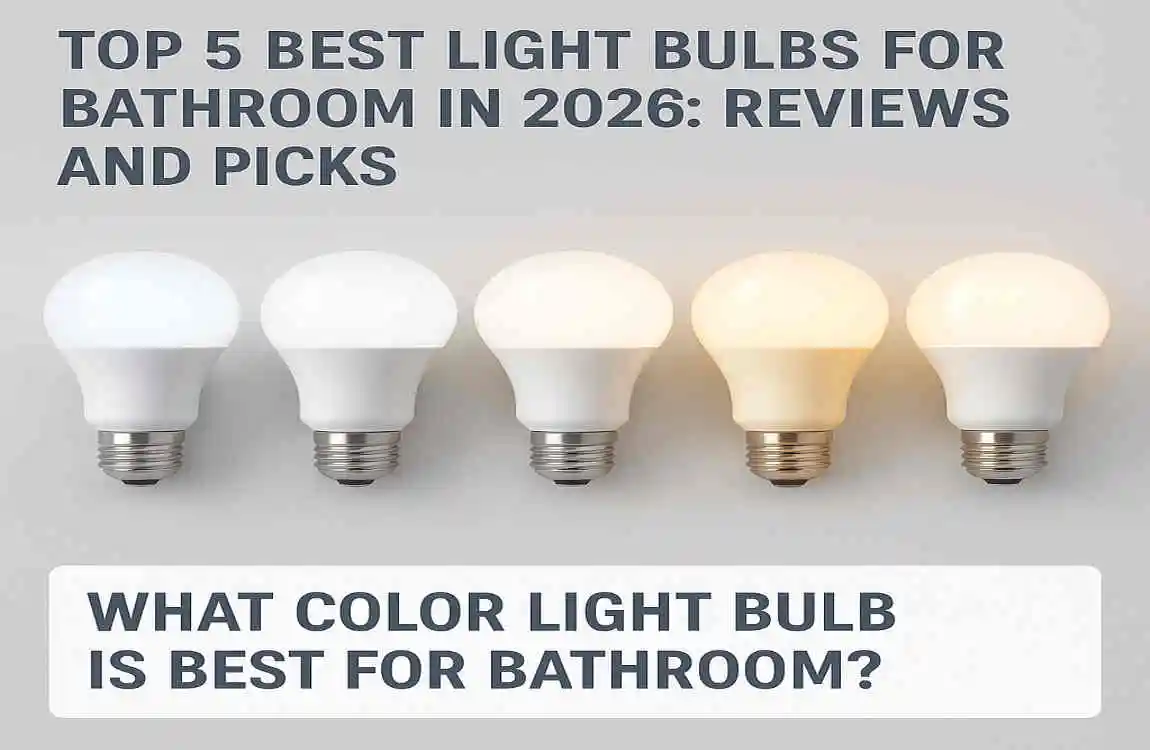
When deciding what color light bulb is best for bathroom use, these five top-rated bulbs stand out in 2026 for performance, style, and value.
Philips Ultra Definition 3000K LED (Editor’s Choice)
- Color Temp: 3000K (warm white), CRI: 95, Lumens: 800
- Pros: Gorgeous, even glow; ideal for both overhead and vanity; dimmable
- Cons: Slightly pricier than basic LEDs
- Best For: Most home bathrooms; spa-like upgrade
GE Reveal HD+ 4000K for Vanity
- Color Temp: 4000K (neutral white), CRI: 90+
- Pros: Filters yellow for ultra-accurate skin tones; perfect for makeup
- Cons: Not as warm for relaxing soaks
- Best For: Vanity and grooming stations
Sengled Smart LED 2700K–6500K Tunable
- Color Temp: Adjustable (warm to daylight), App: Yes
- Pros: Tunable color temp via app; works with Alexa/Google
- Cons: Needs WiFi and smart home setup
- Best For: Tech-loving homeowners; mood lighting
EcoSmart Dimmable 5000K Task Bulb
- Color Temp: 5000K (daylight), Budget pick
- Pros: Bright and crisp; great for detailed tasks
- Cons: Too harsh for overall bathroom use
- Best For: Task-only zones, like medicine cabinets
Feit Electric Moisture-Resistant 2700K
- Color Temp: 2700K (warm white), Moisture rating: IP65
- Pros: Safe for showers; long lifespan
- Cons: Limited color options
- Best For: Damp environments, shower stalls
| Bulb Model | Color Temp | CRI | Lumens | Lifespan (hrs) | Energy Savings vs Incandescent |
|---|---|---|---|---|---|
| Philips Ultra Def | 3000K | 95 | 800 | 25,000+ | 85% |
| GE Reveal HD+ | 4000K | 90+ | 760 | 20,000+ | 80% |
| Sengled Smart | 2700–6500K | 90+ | 800 | 25,000+ | 85% |
| EcoSmart Dimmable | 5000K | 90 | 850 | 20,000+ | 80% |
| Feit Moisture-Resist | 2700K | 90 | 750 | 25,000+ | 85% |
Common Mistakes to Avoid When Choosing Bathroom Bulbs
Even savvy shoppers make these mistakes when picking the best color light bulb for bathroom use. Don’t fall for these common pitfalls:
- Using overly cool bulbs (>5000K) everywhere: This can make your bathroom feel cold and uninviting, and is unflattering for skin tones.
- Ignoring moisture ratings: For showers and damp areas, always pick bulbs with at least IP44 (or higher) to avoid hazards.
- Skipping dimmers: Inflexible lighting limits ambiance; install dimmable switches for more control.
- Low CRI bulbs: These distort colors, making makeup application and grooming tricky.
- Forgetting wattage/lumen equivalents: Ensure your LED bulbs meet or exceed the brightness of old 60W incandescents (approx. 800 lumens).
Pro Tip: Many hardware stores (like Home Depot) offer sample bulb kits—test at home to see what suits your bathroom best!
How to Install and Optimize Your Bathroom Lighting Setup
Ready to upgrade your bathroom lighting? Follow these steps for a flawless result:
- Assess Your Fixtures and Wattage Limits
Check your existing fixtures for maximum wattage and base type (E26, GU10, etc.). - Choose Your Bulbs
Refer back to our comparison table—pick bulbs matched to your needs (vanity, general, accent). - Install Safely
- Always turn off power at the breaker.
- Use GFCI outlets for safety in wet zones.
- For recessed or complex fixtures, hire a pro electrician.
- Layer Your Lighting
Combine overhead (general), task (vanity), and ambient (accent) for a balanced, beautiful glow. - Smart Upgrades
Consider a Hue Bridge or similar device for color tuning and scheduling.
Safety Warning: Never install non-rated bulbs in damp zones!
Cost Savings Example: Swapping out five 60W incandescent bulbs for LEDs can save you over $375 in five years—that’s $75 per bulb per year!
Bathroom Lighting Trends for 2026
Bathroom lighting is evolving fast. In 2026, the top trends are:
- Human-centric lighting: Tunable white bulbs (adjustable from 2700K–6500K) that adapt to your mood or time of day.
- Rise of RGB accents: Color-changing LEDs for wellness-inspired touches—think chromatherapy showers and relaxing blue ambient glows.
- Minimalist, layered designs: Sleek fixtures that combine multiple color temperatures for a tailored look.
These trends are redefining what color light bulb is best for bathroom comfort and style.
