

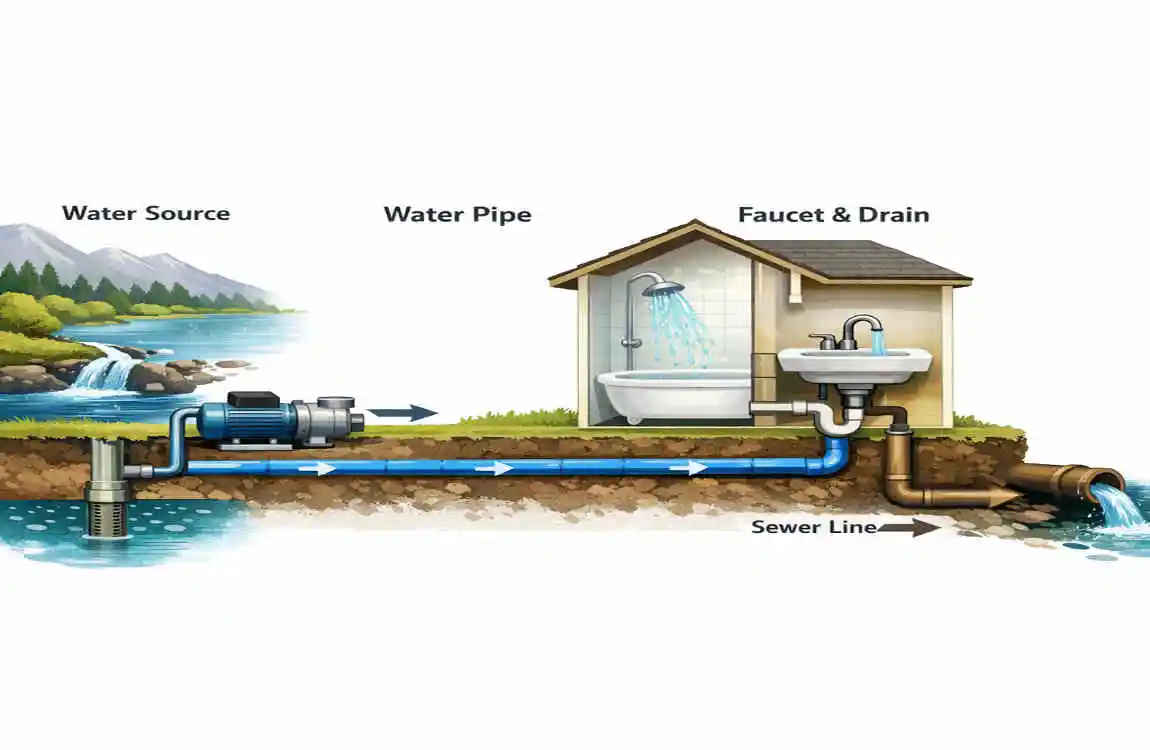
A water pipe is a tube that carries water from one place to another. In a home, pipes bring in clean water, and other pipes carry used water away.
To understand how a water pipe works, think of it as a simple route system. Water enters the house, moves through supply pipes, reaches faucets and fixtures, and then leaves through drain pipes after use.
Water pressure matters too. Without enough pressure, water will not reach your faucet properly. Too much pressure can wear out pipes and fixtures faster.
How Water Moves Through a Plumbing System
From the Main Water Supply to Your Home
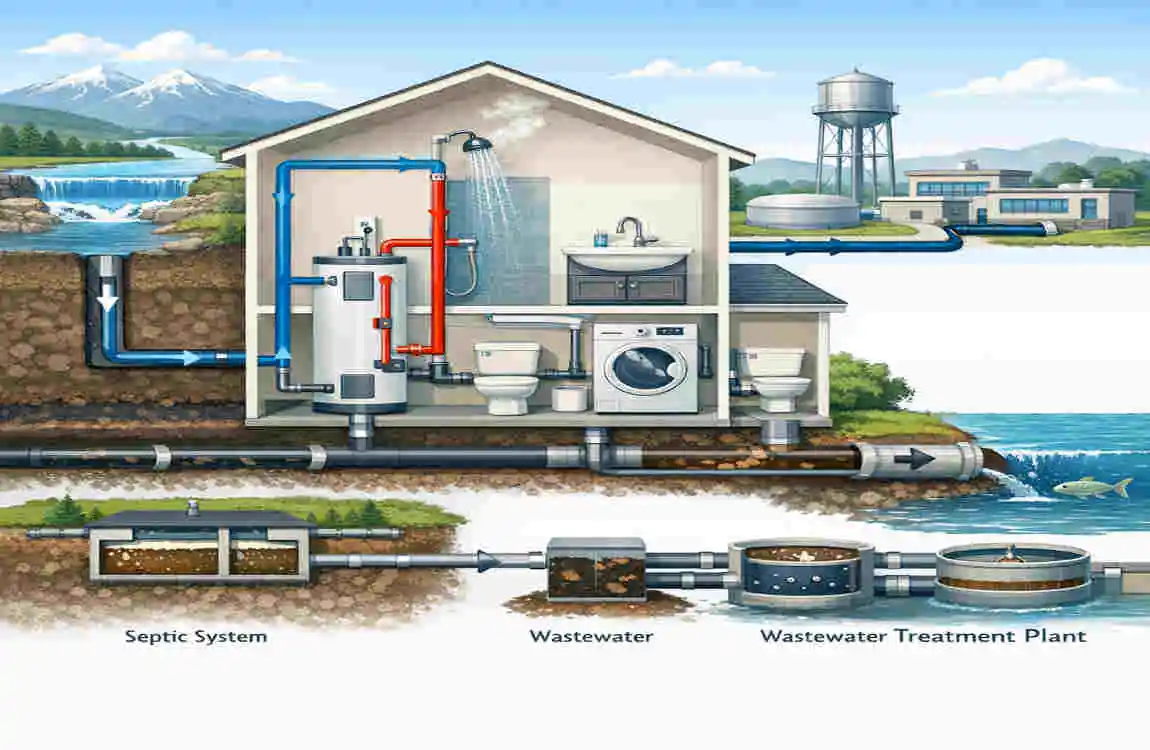
Water usually enters your home from a public water main or a private well system. From there, it passes through the main shut-off valve and often a water meter.
The shut-off valve lets you stop water flow during repairs or emergencies. The meter measures how much water the home uses.
How Water Pressure Moves Water
Water does not usually “push itself” through pipes. It moves because of pressure. That pressure comes from the utility system, a pump, or gravity in some setups.
If pressure is too low, water flow feels weak. If pressure is too high, pipes may rattle or leak over time.
Hot and Cold Water Pipes
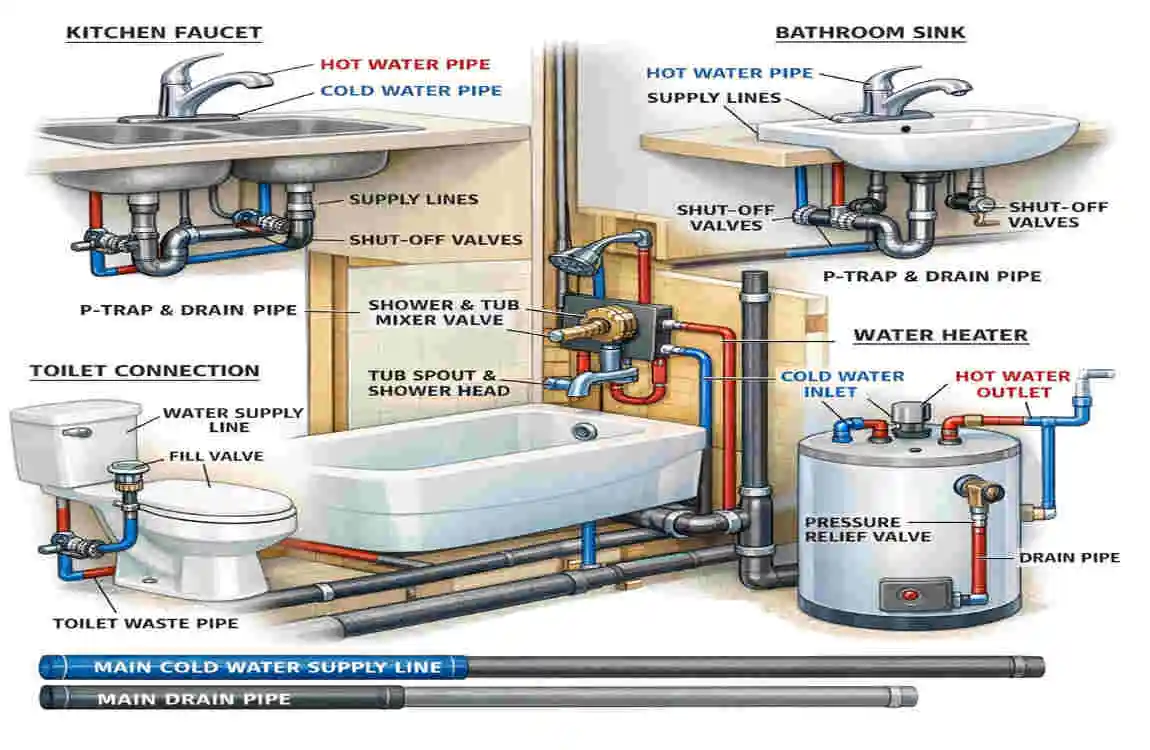
Most homes have separate hot and cold water lines. Cold water comes in directly. Hot water first goes to the water heater, then travels through hot water pipes to sinks, tubs, and showers.
This is why your faucet can mix hot and cold water. The two lines meet at the fixture.
Main Types of Water Pipes and How They Work
Different homes use different pipe materials. Each one has its own strengths.
Pipe TypeMain UseSimple Strength
Copper Water supply lines Strong and long-lasting
PVC Drain and vent lines Lightweight and affordable
CPVC Hot and cold water lines Handles higher heat than PVC
PEX Modern supply lines Flexible and easy to install
Galvanised steel Older homes Durable at first, but can corrode
Copper pipes
Copper pipes carry water well and last a long time. Many older and higher-end homes use them because they are reliable.
PVC and CPVC pipes
PVC is often used for drain lines, while CPVC can be used for supply lines because it handles heat better. These pipes are light and easy to work with.
PEX pipes
PEX is flexible tubing used in many modern plumbing systems. It can bend around corners and often makes installation easier.
Older galvanised pipes
Some older homes still have galvanised steel pipes. Over time, these can rust inside and reduce water flow.
How Water Pipes Connect to Faucets and Fixtures
Pipe connections and fittings
Pipes do not connect by magic. They use fittings such as:
- Elbows to turn corners
- Tees to split flow
- Couplings to join pipe sections
- Adapters to connect different materials
- Valves to stop or control flow
These parts help the plumbing system move water in the right direction.
Faucets, toilets, showers, and appliances
Supply pipes feed water into all the main fixtures in your home. A faucet uses a valve inside the handle to open or close water flow. A toilet uses a supply line to refill the tank after flushing. Dishwashers and washing machines also connect to water lines.
Shut-off valves
Each fixture often has its own small shut-off valve. That makes repairs easier because you don’t need to shut off the water for the whole house.
How a Water Pipe Works With Drainage and Waste Systems
Supply pipes and drain pipes do different jobs.
Supply pipes bring water in under pressure. Drain pipes carry wastewater out using gravity.
Drain systems also include P-traps, which hold a small amount of water to block sewer gases. Vent pipes let air into the system so wastewater can move smoothly.
If a drain is blocked, you may notice slow draining, gurgling, or bad smells. That is different from a supply pipe problem, which usually affects water pressure or causes leaks.
Common Water Pipe Problems and How to Identify Them
Low water pressure
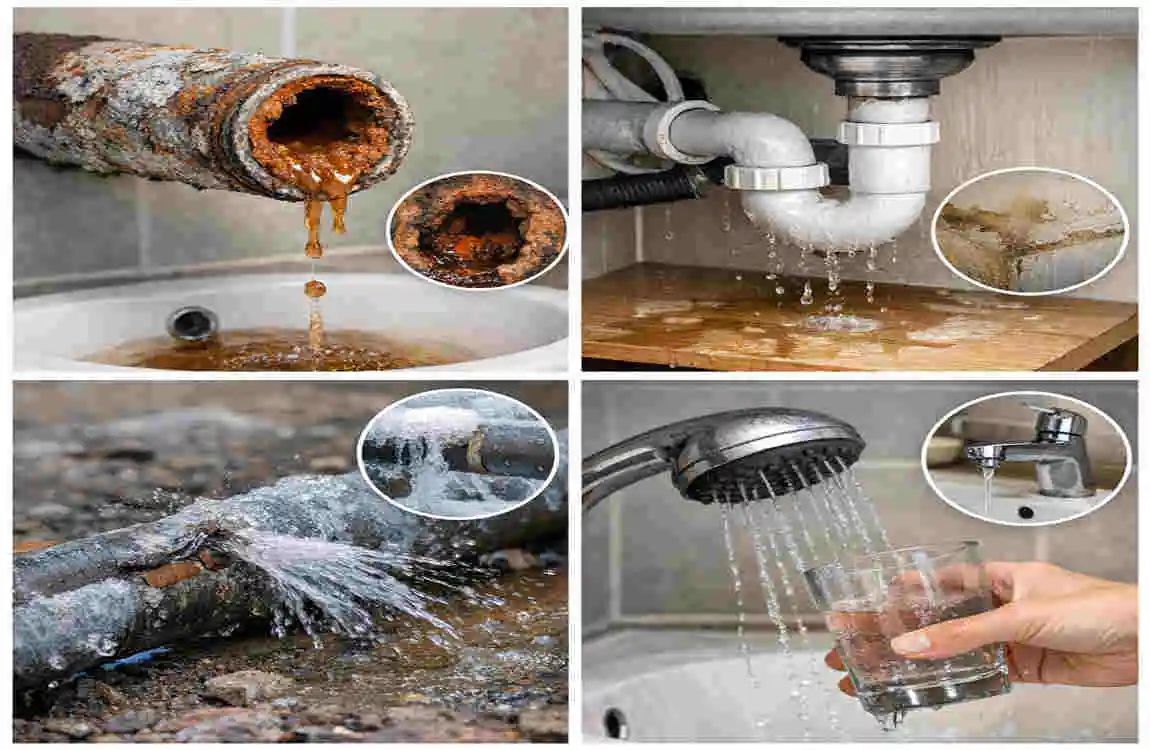
Low pressure can happen because of clogged pipes, closed valves, leaks, or a faulty pressure regulator.
Leaking pipes
Leaks may show up as wet spots, mould, water stains, or higher water bills. Small leaks can still cause big damage over time.
Noisy or vibrating pipes
If pipes bang or shake, it may be water hammer, loose pipe support, or too much pressure.
Frozen, corroded, or blocked pipes
Pipes can freeze in cold weather, especially if they are exposed. Older metal pipes can corrode, and mineral buildup can also block flow.
Basic maintenance tips
A few simple habits can help:
- Check visible pipes for drips or rust
- Protect exposed pipes in cold weather
- Watch water pressure changes
- Inspect valves and fittings now and then
FAQ About How a Water Pipe Works
How does a water pipe work in a house?
It carries pressurised water from the main supply to faucets, toilets, showers, and appliances.
How does water move through pipes?
Water moves because of pressure from the utility system, a pump, or, in some cases, gravity.
What creates water pressure in a pipe?
Pressure usually comes from the municipal water supply, a well pump, or elevation differences.
How do hot water pipes work?
Cold water goes to the water heater first, then heated water travels through separate hot water pipes.
What is the difference between a water pipe and a drain pipe?
A water pipe brings fresh water in. A drain pipe carries wastewater out.
Which type of pipe is best for household water?
That depends on the home, but PEX, copper, and CPVC are common choices for supply lines.
Why does water pressure drop suddenly?
A sudden drop can mean a leak, a valve problem, a clog, or a utility issue.
How can you tell if a water pipe is leaking?
Look for damp spots, stains, dripping sounds, mould, or an unexplained rise in your water bill.
| Part | What It Does | Simple Explanation |
|---|---|---|
| Water Supply | Brings water in | Connects the building to a main water source |
| Main Pipe | Carries water | Moves water throughout the property |
| Branch Pipes | Distributes water | Sends water to individual fixtures |
| Water Pressure | Pushes water | Helps water flow through the pipes |
| Valves | Controls flow | Turns water on, off, or regulates it |
| Faucets | Releases water | Allows users to access the water |
| Drain Pipes | Removes wastewater | Carries used water away from the building |
| Pipe Material | Provides structure | Common materials include PVC, PEX, copper, and CPVC |
