

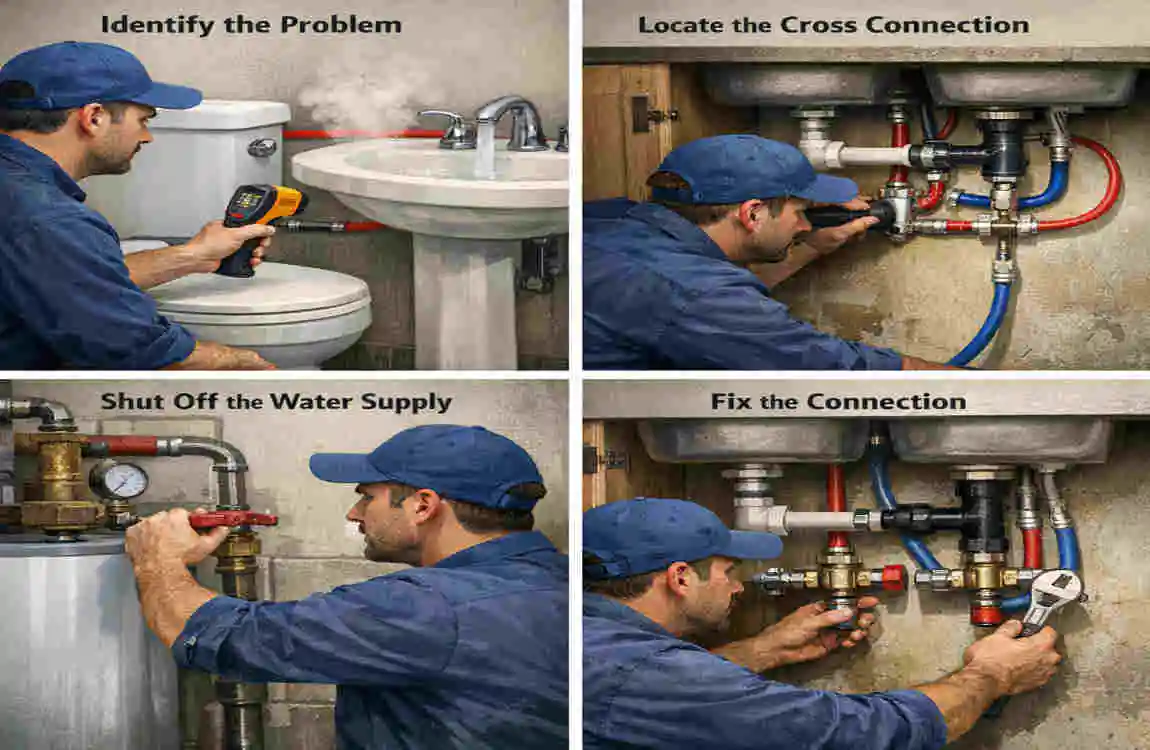
When people ask what a cross-connection in plumbing is, they usually want a simple answer. In plain terms, it means there is a connection, or possible connection, between clean drinking water and a source that could contaminate it.
That may sound small, but it matters a lot. A cross connection can create a pathway for dirty water, chemicals, or wastewater to enter the potable water supply. If pressure changes happen, the water can move in the wrong direction.
That is where backflow becomes important. Backflow is the unwanted reverse flow of water. Together, cross connections and backflow can create serious plumbing safety problems in homes, businesses, and other buildings.
What Is a Cross Connection in Plumbing?
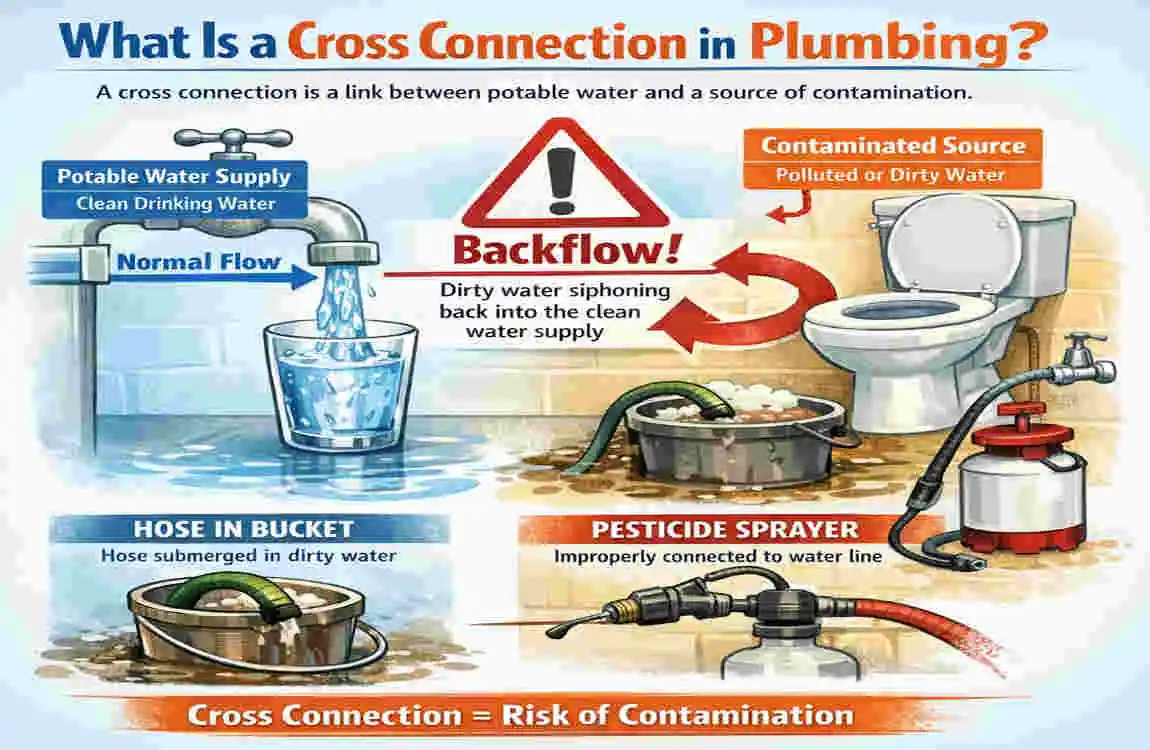
Simple Definition of a Cross Connection
A cross-connection occurs when a potable water line is connected in any way to a source that is not safe to drink.
The connection itself is the concern. It may not cause trouble all the time, but it can create a path for contamination if water flow changes.
How Cross Connections Develop
Cross-connections often occur in everyday plumbing setups. Some common examples include:
- Garden hoses attached to outdoor faucets
- Washing machines and utility sinks
- Irrigation systems
- Boilers and heating equipment
- Improper plumbing repairs or modifications
Sometimes the issue comes from a simple mistake. Other times it happens because the plumbing system was changed over the years without proper protection.
Cross Connection vs Backflow
These two terms are related, but they are not the same.
A cross-connection is a link or potential link between clean water and a source of contamination.
Backflow occurs when water moves backwards through that connection.
So, the cross connection creates the risk, and backflow creates the actual problem.
Why Are Cross Connections Dangerous?
Risk of Drinking-Water Contamination
The biggest danger is contamination of drinking water. If polluted water enters the potable system, it can spread through faucets, showers, and appliances.
Possible contaminants include:
- Fertilizers
- Cleaning chemicals
- Wastewater
- Dirty hose water
- Pool water
- Industrial fluids
Once contamination reaches the water supply, it can quickly affect many people.
Health and Safety Concerns
Contaminated water can cause illness and other health problems. The risk is especially serious in places where water is used for drinking, cooking, or bathing.
That is why prevention is so important. It is much safer to stop contamination before it happens than to deal with it afterwards.
Common Situations That Increase the Risk
Some situations make cross connections more likely:
- A hose left submerged in a bucket
- A chemical sprayer attached to a faucet
- An irrigation system without proper protection
- A pool filling setup with no safeguard
- Equipment connected directly to drinking water lines
If you see one of these setups, it is worth checking it carefully.
Common Examples of Cross Connections in Plumbing
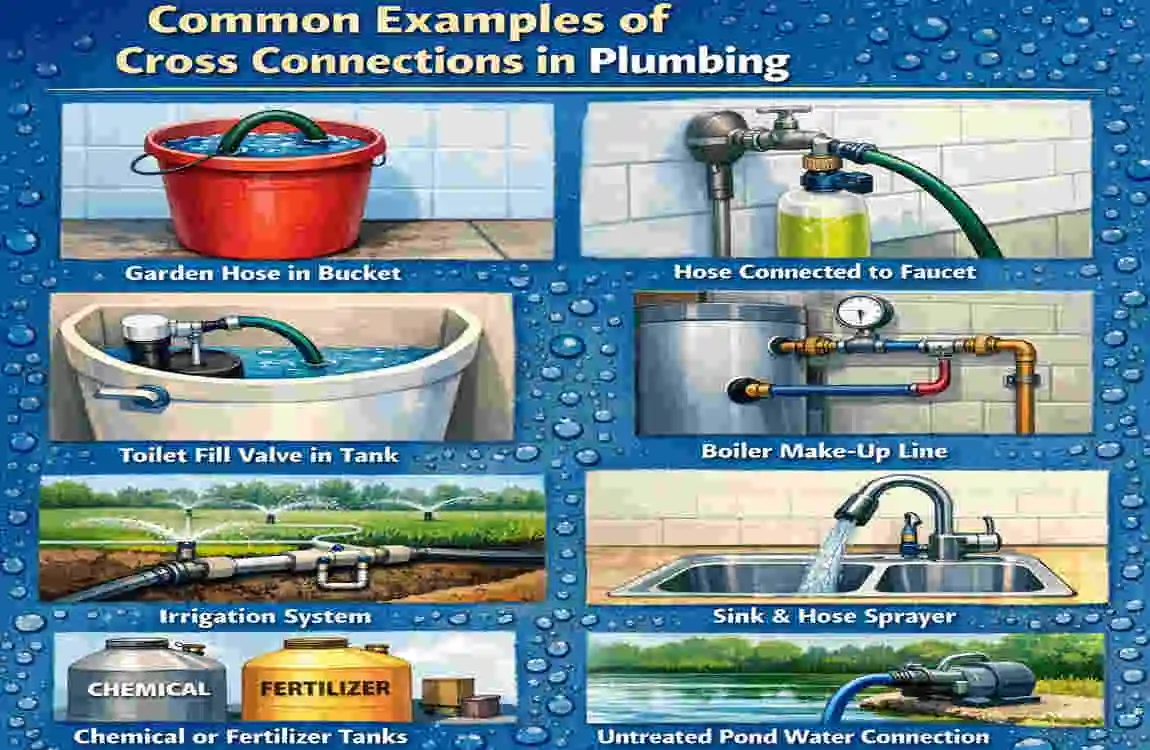
Garden Hose Connections
Garden hoses are one of the most common household examples. If a hose is left in a bucket, sink, or puddle of dirty water, it can create a backflow risk.
This is especially dangerous if the water pressure drops. Dirty water may be pulled back into the home’s water line.
Irrigation Systems
Lawn and garden irrigation systems can also create cross-connection risks. They often handle water that may contain soil, fertiliser, or other outside contaminants.
That is why irrigation systems usually need proper separation from drinking water and the right backflow protection.
Washing Machines and Utility Equipment
Appliances and utility equipment can also be part of the problem. If they are not installed correctly, they may create unsafe water pathways.
The key is using approved plumbing parts and proper installation methods.
Boilers and Heating Systems
Some heating systems also need backflow protection. These systems can involve water that should not mix with the drinking supply.
Because requirements vary, this type of setup is best handled by a qualified plumber.
How Does Backflow Happen Through a Cross Connection?
Backpressure
Backpressure occurs when the pressure in the non-potable system exceeds that in the drinking water line.
When that happens, contaminated water can be pushed backwards.
Backsiphonage
Backsiphonage happens when pressure in the clean water line drops. That drop can pull contaminated water into the potable line, almost like using a straw.
A simple example is a hose sitting in dirty water while the water main suddenly loses pressure.
Conditions That Can Cause Backflow
Backflow can happen because of:
- Water-main breaks
- Sudden pressure changes
- Pump operation
- Plumbing failures
- Poorly connected equipment
These situations do not happen every day, but when they do, they can create serious risk.
How to Prevent Cross Connections and Backflow
Install Proper Backflow Prevention Devices
A backflow prevention device helps keep water moving in the correct direction. These devices are used to reduce the chance of contamination entering the clean supply.
There are different types of devices, but the main goal is the same: protect potable water.
Keep Hoses and Faucets Safe
You can lower risk with a few simple habits:
- Do not place hoses in dirty water
- Do not leave hoses submerged in buckets or tanks
- Use hose protection where required
- Disconnect unsafe attachments when not in use
Small changes like these can make a big difference.
Use a Qualified Plumber
If the plumbing setup is old, modified, or complicated, a professional plumber should inspect it. A trained plumber can spot hazards that are easy to miss.
This is especially important if you suspect contamination or see unusual plumbing connections.
Follow Local Plumbing Codes
Plumbing rules are not always the same everywhere. Local codes may require certain backflow devices or inspection schedules.
If you own a home or manage a property, it is smart to follow local requirements closely.
How to Identify and Fix a Cross Connection
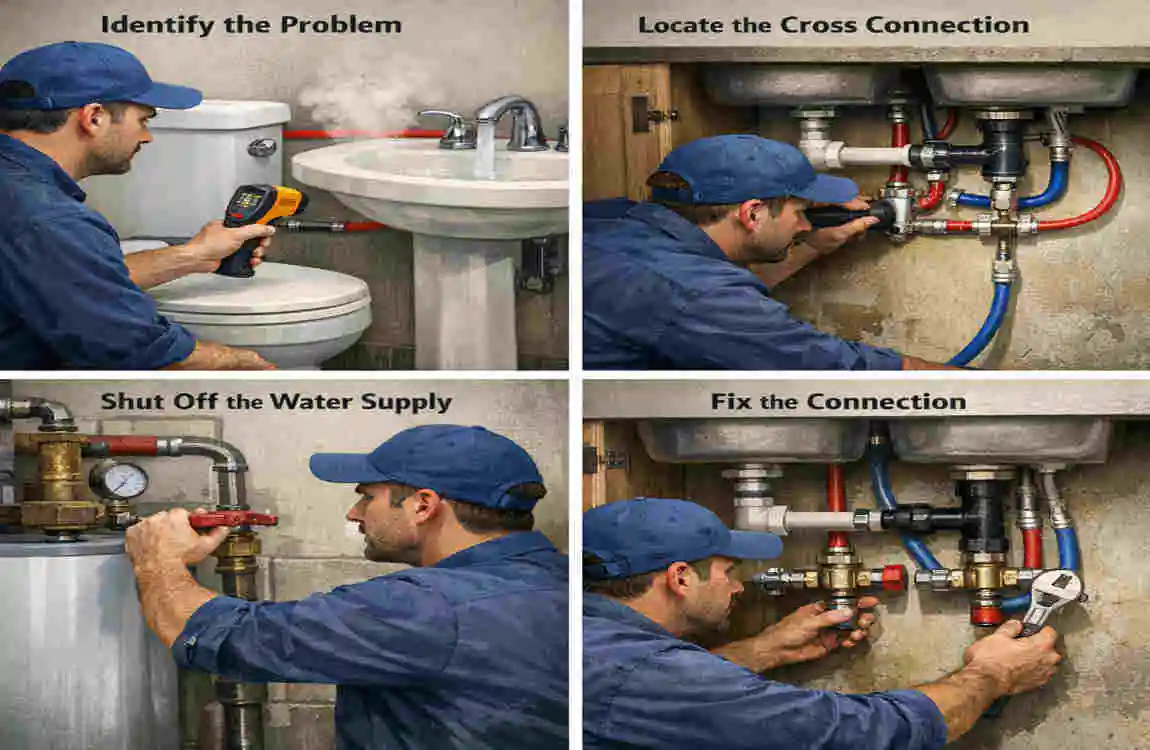
Warning Signs to Look For
Look for signs like these:
- Hoses attached to faucets
- Irrigation systems without visible protection
- Equipment connected directly to water lines
- Old or altered plumbing
- Unusual connections near sinks or utility areas
If something looks improvised or unsafe, it may need attention.
What a Plumber May Check
A plumber will usually inspect:
- Water-supply lines
- Valves and fittings
- Backflow prevention devices
- Irrigation and outdoor plumbing
- Any possible contamination sources
This helps find weak points before they become serious problems.
Frequently Asked Questions About Cross Connections in Plumbing
What is cross connection in plumbing?
It is a connection, or possible connection, between clean drinking water and a source that could contaminate it.
What is the difference between cross connection and backflow?
A cross connection is the pathway. Backflow is the reverse movement of water through that pathway.
Can a garden hose cause a cross connection?
Yes. If a hose is submerged in dirty water or attached unsafely, it can create a backflow risk.
How do you prevent cross connection in plumbing?
Use proper plumbing design, backflow prevention devices, safe hose use, and regular inspections.
Are cross connections common in homes?
Yes. They can happen around outdoor faucets, irrigation systems, appliances, and special equipment.
Should a plumber inspect a suspected cross connection?
Yes. A plumber can check the system safely and recommend the right fix.
Is a cross connection always dangerous?
Not always when it is present, but it creates a potential pathway for contamination if backflow occurs.
| Aspect | Simple Explanation |
|---|---|
| Cross Connection | A connection between a drinking-water supply and a source that may contain contaminants. |
| Main Risk | Contaminated water can flow backward into the clean water supply. |
| Common Examples | Garden hoses, irrigation systems, boilers, pools, and chemical tanks. |
| Backflow | The unwanted reverse flow of water through a plumbing system. |
| Backflow Prevention | Devices such as air gaps, check valves, and backflow preventers help protect drinking water. |
| Why It Matters | Preventing cross connections helps keep household and public water supplies safe. |
| Professional Help | A licensed plumber can identify risky connections and install appropriate protection. |
