

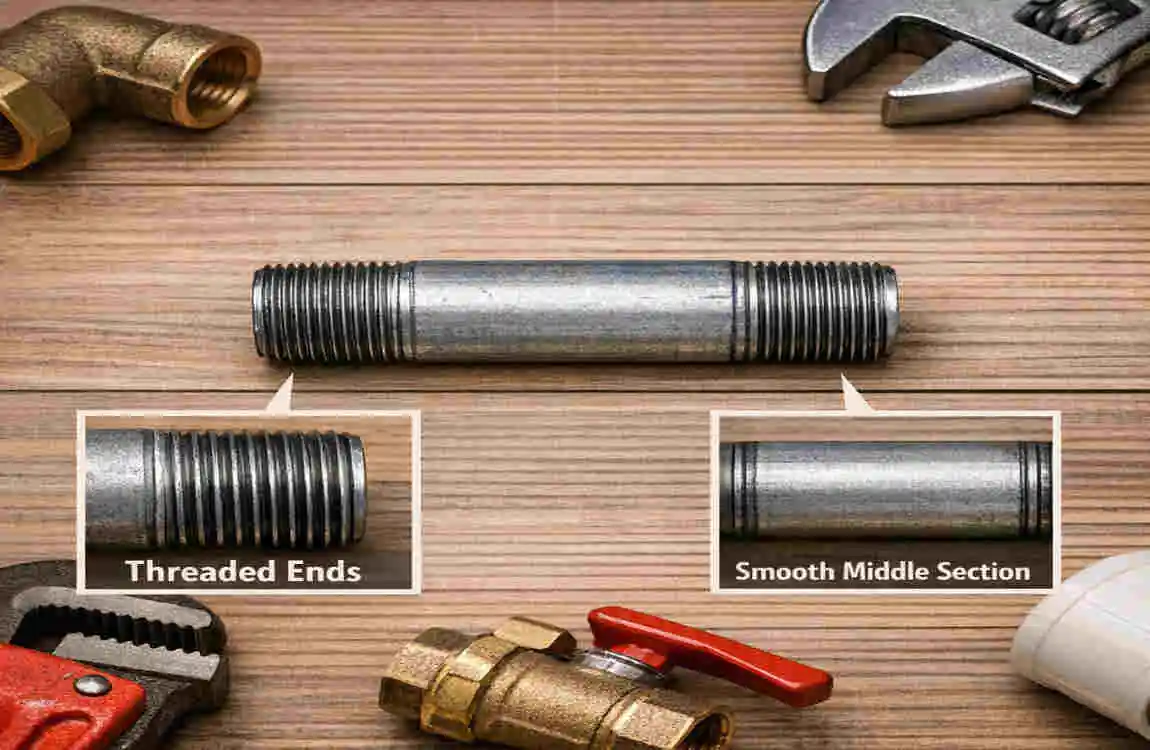
If you are asking what a nipple in plumbing is, the simple answer is this: it is a short piece of pipe with threaded ends used to connect two plumbing parts.
It may sound like a small thing, but it plays an important role in many plumbing systems. A nipple helps join fittings, extend a connection, or link parts where space is tight.
Plumbing nipples come in different materials, lengths, and thread types. That makes them useful in water lines, faucets, valves, heaters, and other plumbing setups.
Understanding How a Plumbing Nipple Works
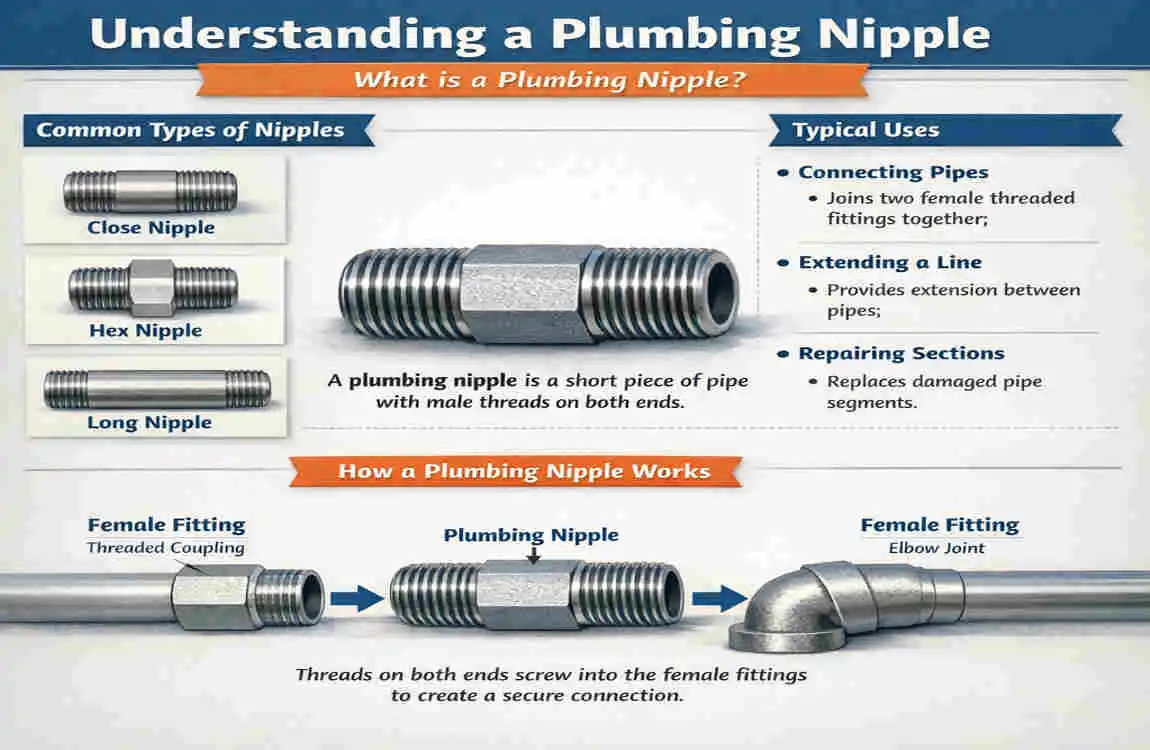
A plumbing nipple works as a connector. It sits between two components and helps them fit together securely.
Most nipples have threads on both ends so that they can screw into matching fittings. This makes installation fairly simple when the parts are the right size.
The key is choosing the correct length, diameter, and material. If you pick the wrong one, you may end up with leaks or a weak connection.
Common Types of Plumbing Nipples
There are a few common types of nipples, and each one serves a slightly different purpose.
Close Nipple
A close nipple is very short. It has almost no unthreaded section in the middle, so it connects fittings very closely together.
This type is useful when you do not have much space.
Hex Nipple
A hex nipple has a hexagonal section in the middle. That shape lets you tighten it easily with a wrench.
It is often used when you want a stronger grip during installation.
Pipe Nipple
A pipe nipple is the most common type. It is simply a short threaded pipe section used to join plumbing parts.
You will see this type in many basic plumbing jobs.
Long Nipple
A long nipple is used when you need more distance between two parts. It gives you extra space in the connection.
This can be helpful in larger or more flexible plumbing layouts.
Common Materials Used for Plumbing Nipples
Plumbing nipples are made from different materials, depending on the job.
MaterialCommon UseMain Benefit
Brass Water lines, valves Corrosion resistance
Copper Water systems Good durability
Galvanized steel Older plumbing systems Strong and affordable
Stainless steel Harsh or wet environments Long-lasting and tough
PVC / Plastic Certain non-metal systems Lightweight and easy to use
Brass is very popular because it handles water well and resists rust. Stainless steel is also a strong choice when durability matters most.
Common Uses of Plumbing Nipples
Plumbing nipples are used in many places around the home and in building systems.
They may connect:
- Water pipes and fittings
- Valves and faucets
- Water heaters
- Shower plumbing
- Pressure tanks
- Plumbing extensions and adapters
Because they are small and simple, they are often used where a regular pipe would be too long or bulky.
How to Choose the Right Plumbing Nipple
Choosing the right nipple is important for a secure, leak-free connection.
Check the Size
Make sure the pipe diameter matches the fitting. Even a small size mismatch can cause problems.
Match the Thread Type
The threads must fit properly. If the thread type does not match, the parts will not connect correctly.
Pick the Right Length
Some jobs need a short connector, while others need more space. The length depends on the layout of your plumbing system.
Choose the Right Material
The material should match the type of plumbing work you are doing. For example, brass is often a good choice for water lines, while stainless steel is better for tougher conditions.
Think About the Application
A nipple used for a water heater may not be the same as one used in a shower or pressure tank. Always match the part to the job.
A little plumber’s tape or thread sealant may also help create a tighter seal when needed.
Plumbing Nipple Installation and Maintenance Tips
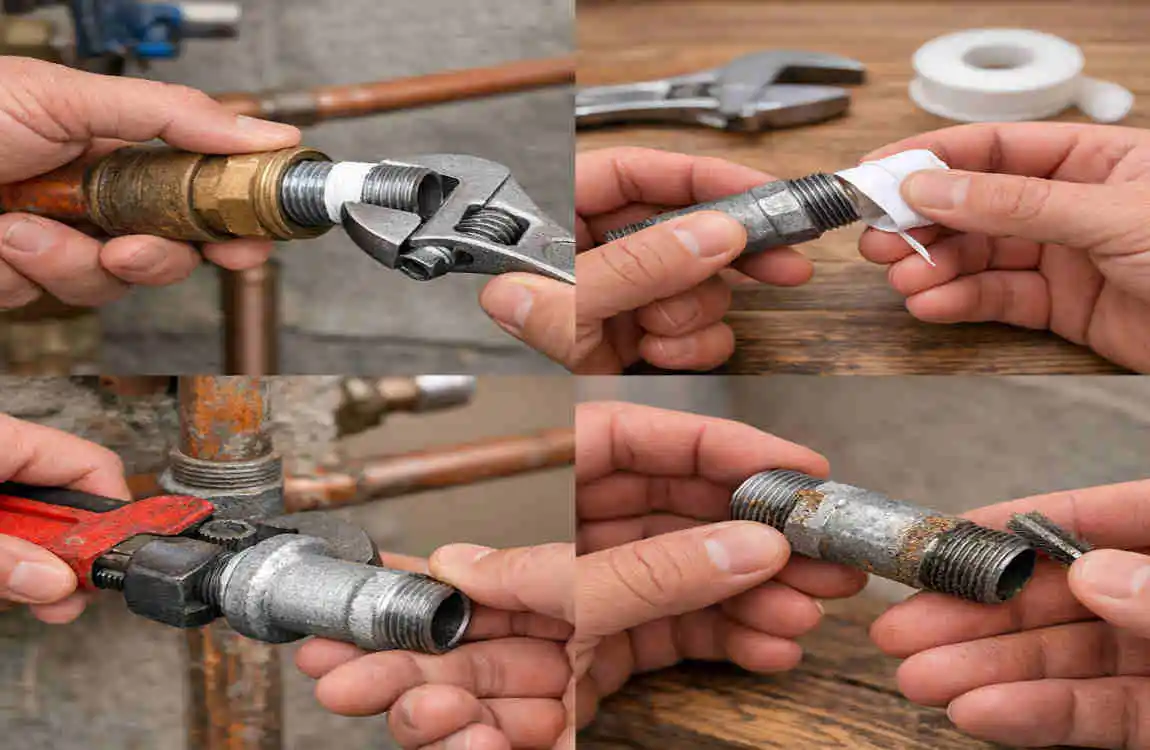
Installing a plumbing nipple is usually simple, but you should still take care.
Before Installation
- Clean the threads
- Check for cracks or damage
- Make sure the parts fit properly
During Installation
Do not overtighten the nipple. Too much force can damage the threads or the fitting.
After Installation
Check the connection for leaks. Even a small drip can become a bigger problem later.
Ongoing Maintenance
Look for signs of:
- Corrosion
- Loose connections
- Wear and tear
- Moisture around the fitting
Regular checks can help prevent plumbing problems before they get worse.
FAQ About Plumbing Nipples
What is a nipple in plumbing?
A nipple is a short piece of pipe, usually with threaded ends, used to connect two plumbing fittings or components.
Why is it called a plumbing nipple?
The name comes from its small, short connecting shape. It acts like a tiny link between larger plumbing parts.
What is the difference between a pipe and a nipple?
A pipe is usually used for longer runs, while a nipple is a short connector used to join fittings or extend a connection.
Are all plumbing nipples threaded?
Most plumbing nipples are threaded on both ends. Some special connectors may use different connection styles, but threading is the most common.
What materials are plumbing nipples made from?
They are often made from brass, copper, galvanized steel, stainless steel, or certain plastics.
Can I install a plumbing nipple myself?
Simple jobs may be fine for experienced DIY users. But if the work involves gas, high pressure, or a complicated system, it is safer to call a professional plumber.
| Aspect | Simple Explanation |
|---|---|
| What is a pipe nipple? | A short piece of pipe used to connect two plumbing fittings or pipes. |
| Main purpose | It extends, joins, or connects plumbing components. |
| Common materials | Steel, stainless steel, brass, copper, PVC, and other plastics. |
| Threading | Many nipples have male threads on both ends for easy connection. |
| Common sizes | Available in various diameters and lengths to match different plumbing systems. |
| Where used? | Water supply lines, tanks, valves, pumps, and other plumbing connections. |
| Key benefit | Provides a simple and secure connection between threaded fittings. |
| Important tip | Choose a nipple that matches the pipe size, material, pressure rating, and application. |
