

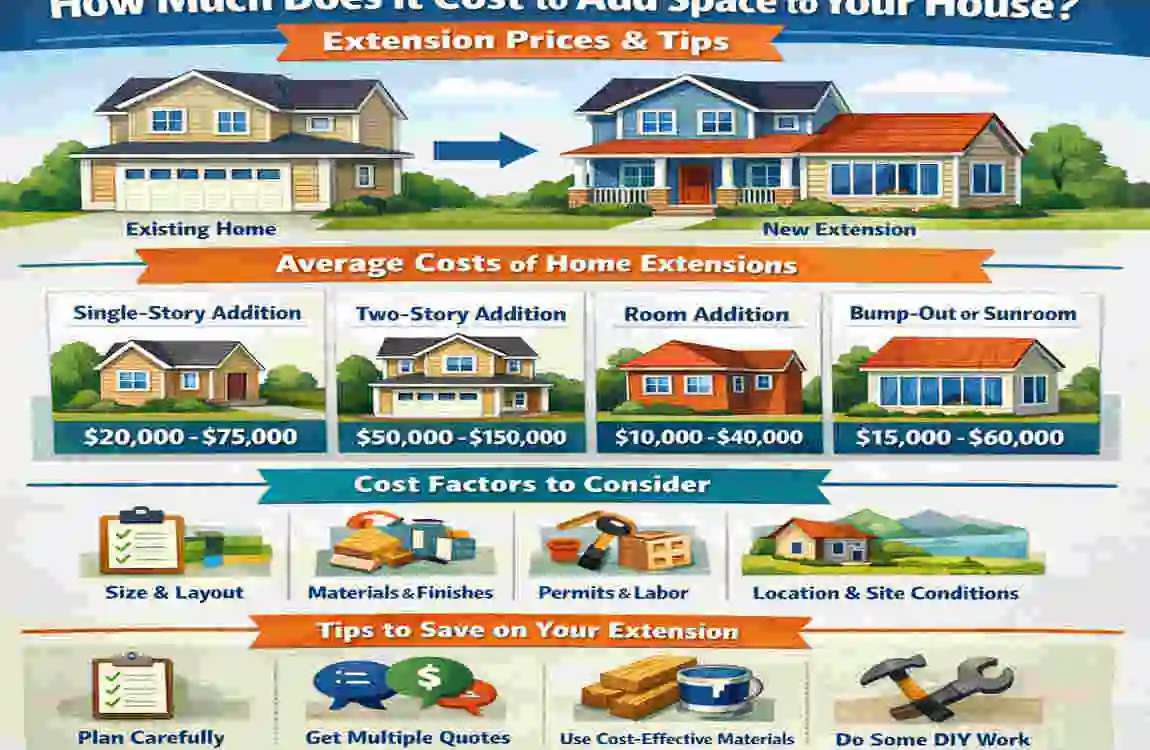
You know the feeling all too well. You are standing in your kitchen, bumping elbows with your family, thinking, “We just need a little more room.”
If you are looking for a straightforward answer to set your expectations, here it is: in 2026, you can generally expect to pay between £40,000 and £140,000 for most standard extension projects. If you prefer to calculate things by size, the national average currently sits between £1,800 and £3,000 per square meter (m²).
Of course, a massive two-storey wraparound extension is going to cost vastly more than a simple, single-storey kitchen bump-out. Your final bill will depend entirely on the size of your dream space, the quality of the materials you choose, and where your house is located.
Average Costs Breakdown: What to Expect
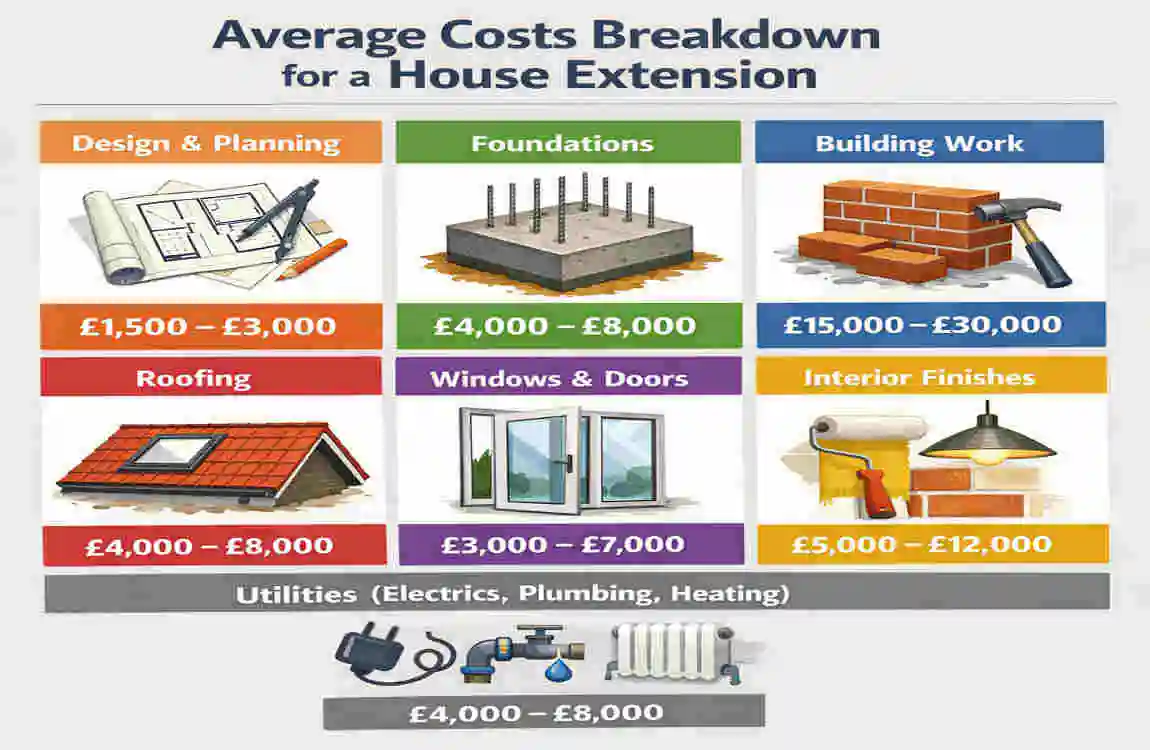
When you begin budgeting for a home addition, it helps to start with broad averages. This gives you a realistic baseline before you start adding in the cost of those luxury bifold doors or that beautiful marble kitchen island you have been eyeing.
To make things easy to scan, we have put together a breakdown of the typical costs you can expect based on the raw size of your planned extension.
Extension Size Low-End Cost (excl. VAT)High-End Cost (excl. VAT)Average UK Cost
20m² (Small) £40,000 £56,000 £48,000
30m² (Medium) £60,000 £84,000 £72,000
50m² (Large) £100,000 £140,000 £120,000
Understanding the Price Per Square Meter
As you speak with architects and builders, you will hear the phrase “cost per square meter” constantly. Right now, the standard rate for a high-quality, fully finished extension is between £1,800 and £3,000 per m².
However, you need to understand that this is just a baseline. If you live in premium areas or major cities like London, you are looking at a significantly higher starting point. In these high-demand zones, prices routinely range from £3,000 to £5,000 per m².
What Inflates These Average Costs?
You might be looking at the table above and wondering why a medium 30m² extension has such a large £24,000 price gap between the low and high ends.
Several major factors inflate your costs:
- Location Premiums: Building in a major city isn’t just about higher labour rates. It is about logistics. If your builder has to pay for expensive parking permits, struggle to get delivery trucks down narrow city streets, and pay a premium for skip hire, those costs are passed directly onto you. Costs in cities can easily be 20% to 50% higher than in rural suburbs.
- Material Choices: Are you happy with a standard brick exterior and a flat roof? That keeps you at the low end. Do you want a pitched roof, vaulted ceilings with custom skylights, and walls made entirely of architectural glass? That pushes you to the absolute high end.
- The “Going Up” Factor: According to industry experts, building a two-storey extension averages out to about £144,000 for 60m². While it sounds expensive, building two storeys actually lowers your per-square-meter cost, because you are only paying to dig the foundation and build the roof once!
Costs by Extension Type: Finding the Right Fit
The total square footage of your project is only half the story. The type of extension you choose will determine the project’s structural complexity, which directly affects your builder’s quote.
Let’s explore the most popular options available today, along with the features and prices you can expect for each.
Single-Storey Rear Extension
This is the undisputed king of home additions. A single-storey rear extension pushes the back of your house out into your garden. It is the absolute most common choice for families wanting to create a massive, open-plan kitchen, dining, and living area.
- Average Size and Price: A standard 20m² to 30m² rear extension typically averages between £48,000 and £72,000.
- Cost Per m²: You are looking at the standard £1,800–£3,000 range.
- The “Shell-Only” Trick: If you want to save money upfront, you can ask your builder for a “shell-only” quote. This means they build the walls and roof and install the windows, making the structure watertight. You then handle the plastering, flooring, and decorating yourself. A shell-only build drops your cost down to about £1,200–£1,700 per m².
Real-World Case Study: Last year, our team completed a stunning 25m²-inspired open-plan extension. The client wanted a seamless indoor-outdoor flow with large archways and cooling terracotta floor tiles. By keeping the roof structure simple and managing the interior painting themselves, we delivered the entire finished project for just £55,000.
Two-Storey Side Extension
If you have dead space in the alleyway running down the side of your house, a two-storey side extension is a brilliant way to maximise your property’s footprint.
- The Benefits: This type of extension completely transforms a home. It allows you to expand your kitchen and living room on the ground floor, while simultaneously adding an extra bedroom and an en-suite bathroom on the first floor.
- Average Size and Price: A spacious 60m² addition across two floors will generally run you between £108,000 and £180,000.
- Why It Costs More Upfront: You will generally pay 20% to 30% more for a two-storey build compared to a single-storey because of the heavy structural work involved. Your existing house walls need to be heavily reinforced, and you need robust steel beams to support the second floor.
Loft or Garage Conversion
What if you want more space, but you don’t want to lose a single inch of your garden? You look to the spaces you already have but aren’t using properly!
- The Cheaper Alternative: Converting a dusty attic or a cluttered garage into a habitable room is significantly cheaper than building an extension from scratch. Expect to pay between £45,000 and £75,000 for a beautiful 25m² master suite over your garage or in your loft.
- Why It Saves Money: Conversions typically cost 30% to 50% less than full builds. Why? Because the hardest parts of the job—pouring the concrete foundation and building the exterior walls—are already done! You are primarily paying for insulation, drywall, flooring, and windows.
Bump-Out or Wrap-Around Extensions
Sometimes, you don’t need a massive new room; you just need a little more breathing space to make your current layout work.
- The Bump-Out: A bump-out is a micro-addition. You literally push an existing wall out by just 2 to 15 feet. It is perfect for adding a downstairs toilet, creating space for a kitchen island, or installing a walk-in closet. These micro-gains cost between £1,700 and £18,000 in total.
- The Wrap-Around: On the complete opposite end of the spectrum is the wrap-around. This combines a side extension and a rear extension into a massive L-shape that hugs your house. It is the most expensive type of extension, often requiring a budget well over £100,000. Still, it completely redefines your entire ground floor.
Key Factors Affecting Prices: Why Quotes Fluctuate
When you start inviting builders to your home to get quotes, you might be shocked by how widely their prices vary. One builder might quote you £50,000, while another insists the job cannot be done for less than £80,000.
Why does this happen? A web of interconnected factors influences the final price tag on your extension. Let’s break down the big four.
Your Geographic Location
We touched on this earlier, but it is worth repeating because it is the biggest variable in construction. The UK average sits at £2,400/m². But if you live inside the M25 in London, you must budget for £3,000 to £5,000 per m².
Interestingly, if you look at equivalent property markets in regions like , local labourlabour is much cheaper. However, if you want high-end imported materials—like Italian marble or German-engineered kitchen appliances—the import taxes and shipping fees will easily add a 15% premium to your material costs.
Quality and Finishes
You control this part of the budget. Your builder will construct the structural shell, but you decide what goes inside it.
- Basic Finish (£1,800/m²): Standard uPVC windows, laminate flooring, basic lighting fixtures, and an off-the-shelf kitchen from a big-box store.
- Premium Finish (£3,500+/m²): Frameless glass roof lanterns, floor-to-ceiling aluminium sliding doors, underfloor heating, solid hardwood flooring, and a bespoke, hand-painted kitchen with stone countertops.
Labor and Raw Materials
Typically, 40% to 50% of your entire budget goes directly toward raw materials and the physical labour required to build the structure. Bricks, cement, timber, and roofing tiles add up fast.
Furthermore, if you want a massive open-plan space, you will have to remove existing load-bearing walls. To prevent your house from falling, the builder must install heavy-duty structural steel beams. A single large steel beam installation can add £2,000 to £5,000 to your costs in the blink of an eye.
Planning, Permits, and Paperwork
Before you lay a single brick, you have to pay for the right to build. If your project requires full Planning Permission from your local council, expect to pay between £500 and £2,000 in application and architectural drawing fees.
Additionally, if you live in the UK and your new foundations are going to be close to your neighbour’s property line, you must comply with the Party Wall Act. Hiring surveyors to manage this legal agreement will quickly add £1,000+ to your preliminary expenses.
Quick Reference: Impact of Cost Factors
Factor Cost Impact on Budget: Tips to Minimise the Expense
Materials: 30–40%. Use high-quality mid-range suppliers instead of luxury bespoke brands.
Labour 25–35%. Always get 3+ itemised quotes to ensure you are getting a fair market rate.
Permissions 2–5% Design your extension to fit within “Permitted Development” rules.
Hidden Costs & Budgeting Tips: Avoiding Nasty Surprises
There is nothing worse than getting halfway through a build and realising you have run out of money. Many homeowners meticulously calculate the cost of their bricks and kitchen cabinets. Still, they completely forget about the hidden costs that lurk in every construction project.
Here are the most common financial oversights:
- Professional Fees (5–10%): You have to pay the Architect to design the space, the structural engineer to calculate the steel sizes, and the building control inspector to sign off on the work’s safety.
- The Contingency Buffer (10–15%): Once you start digging up the ground, you might find a broken Victorian sewer pipe. Once you open a wall, you might find rotten timber. You must set aside a 10% to 15% cash buffer for emergencies only.
- VAT (20%): In the UK, standard building work is subject to 20% Value Added Tax. If a builder gives you a quote for £50,000 “ex-VAT,” your actual bill will be £60,000. Always demand quotes with VAT included!
How to Budget the Right Way
To ensure your project doesn’t spiral out of control, you should always add 20% to the total figure you think the project will cost. This covers your VAT and your emergency surprises like unexpected soil tests.
Follow these steps for a stress-free financial timeline:
- Get a Site Survey First: Don’t guess. Have a professional map out your drains and property lines before you design anything.
- Budget for the Architect (£1k–£3k): Pay for good drawings. Precise architectural drawings mean your builders can provide hyper-accurate quotes, preventing costly mid-build changes.
- Agree on Phased Payments: Never pay a builder the full amount upfront. Agree on a payment schedule tied to milestones (e.g., pay 20% when the foundations are poured, 20% when the roof goes on).
How to Save on Your Extension Without Cutting Corners
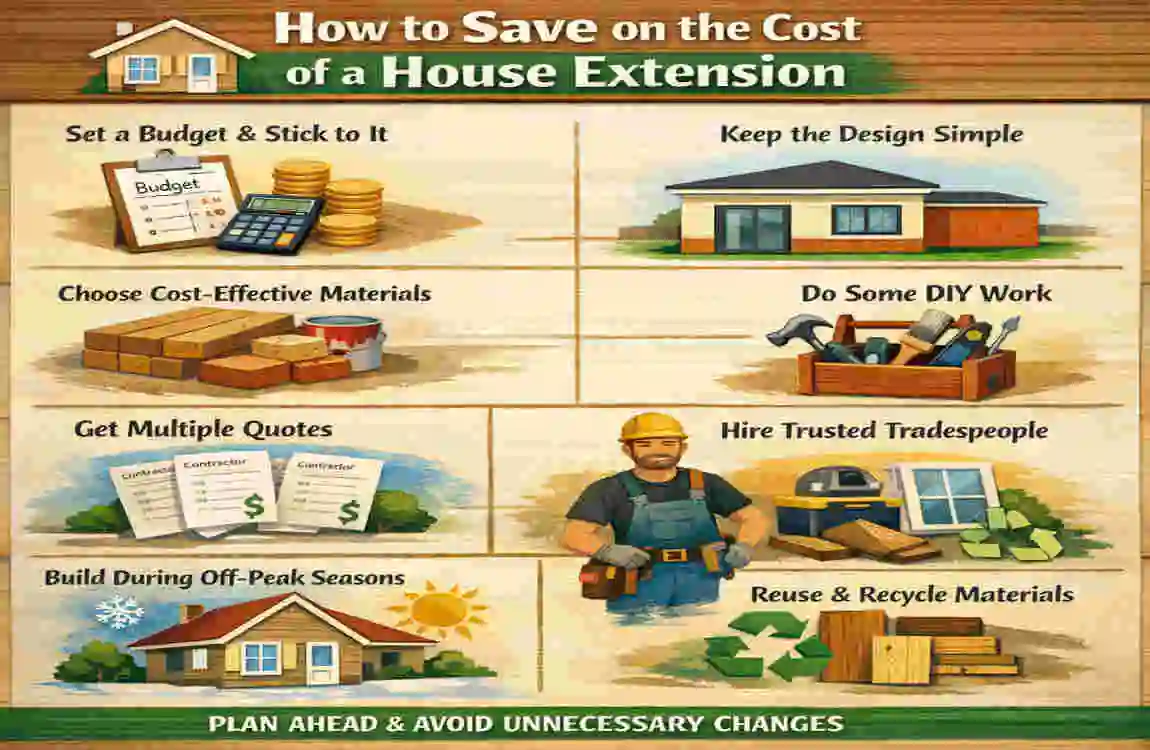
We have talked a lot about how expensive things can get. Now, let’s talk about how you can claw some of that money back! You don’t have to sacrifice safety or style to bring your extension in on a budget.
Here are some proven, expert strategies to help you save thousands on your home addition.
Take on the DIY Elements.. We strongly advise leaving electrical wiring, gas plumbing, and wall demolition to certified professionals. However, the finishing touches are well within the grasp of a dedicated homeowner. If you are willing to spend your weekends painting the walls, assembling flat-pack kitchen cabinets, and doing the landscaping outside, you can easily save 5% to 10% of your total budget.
Utilise Permitted Development Rights. Did you know you might not even need to apply for planning permission? Under “Permitted Development” rules, you can often build a single-storey rear extension up to 3 meters out from your original house (or 4 meters for a detached house) without a full planning application. Skipping the full planning process saves you months of waiting and hundreds of pounds in council fees.
Invest in Energy-Efficient Designs. It sounds counterintuitive to spend more money up front to save money, but it works. By over-insulating your new extension, installing high-quality double glazing, and utilising skylights to maximise solar gain, you drastically reduce your need for artificial heating and lighting. This significantly reduces your long-term energy bills. Furthermore, adding energy-efficient features often qualifies you for local green energy grants!
Never Settle for the First Quote. Statistics show that simply taking the time to source multiple bids from different contractors can save you 10% to 20% on your overall project. Get at least three detailed, itemised quotes. It gives you incredible negotiating power.
Frequently Asked Questions (FAQs)
Still have questions bouncing around in your head? You are not alone. Here are the most common questions homeowners ask us before taking the plunge.
How much does a house extension cost per m²? On average, expect to pay between £1,800 and £3,000 per square meter in the UK. However, this varies heavily based on the type of extension, the quality of your interior finishes, and whether you live in a high-cost area like London.
Is a 20m² extension actually worth the investment? Absolutely! While a 20m² space might cost you around £48,000 on average, adding a high-quality, modern living space or kitchen to your home typically adds 10% to 20% to your overall property value. In many cases, the value added to your home easily offsets the cost of the build.
How long does an extension take to build? Once the builders actually break ground, a standard extension takes about 3 to 6 months to complete. However, you need to factor in an additional 3 to 6 months before that for architectural drawings, council approvals, and waiting for your builder’s schedule to open up. Plan for disruptions and noise!
Do I absolutely need planning permission? Not always! As mentioned above, many smaller extensions fall under “Permitted Development.” You should always check your local council’s specific limits and restrictions before you assume you need full permission.
Can I stay in my house while the extension is being built? Yes, the vast majority of people live in their homes during construction. The builders will erect temporary dust walls to separate the building site from your living space. However, be prepared for noise, dust, and a few weeks without a proper kitchen if you are doing a rear extension.
Do I really need to hire an architect? While it is not a legal requirement to use an architect, it is highly recommended. A good architect doesn’t just draw pretty pictures; they maximise your natural light, ensure the space flows logically, and provide the technical blueprints that your structural engineer and builders desperately need to do their jobs safely.
What is a Party Wall Agreement? If you live in a semi-detached or terraced house, you share a wall with your neighbour. If your extension requires digging foundations close to this shared boundary, the law requires you to formally notify your neighbours and get an agreement in place to ensure their property isn’t damaged during your build.
What is the absolute cheapest way to add space to my house? The cheapest way to add functional square footage is generally a simple garage conversion. Because the walls, roof, and foundation already exist, you are only paying to insulate, wire, and decorate the interior, which drastically lowers the cost compared to pouring fresh concrete for a new build.
