

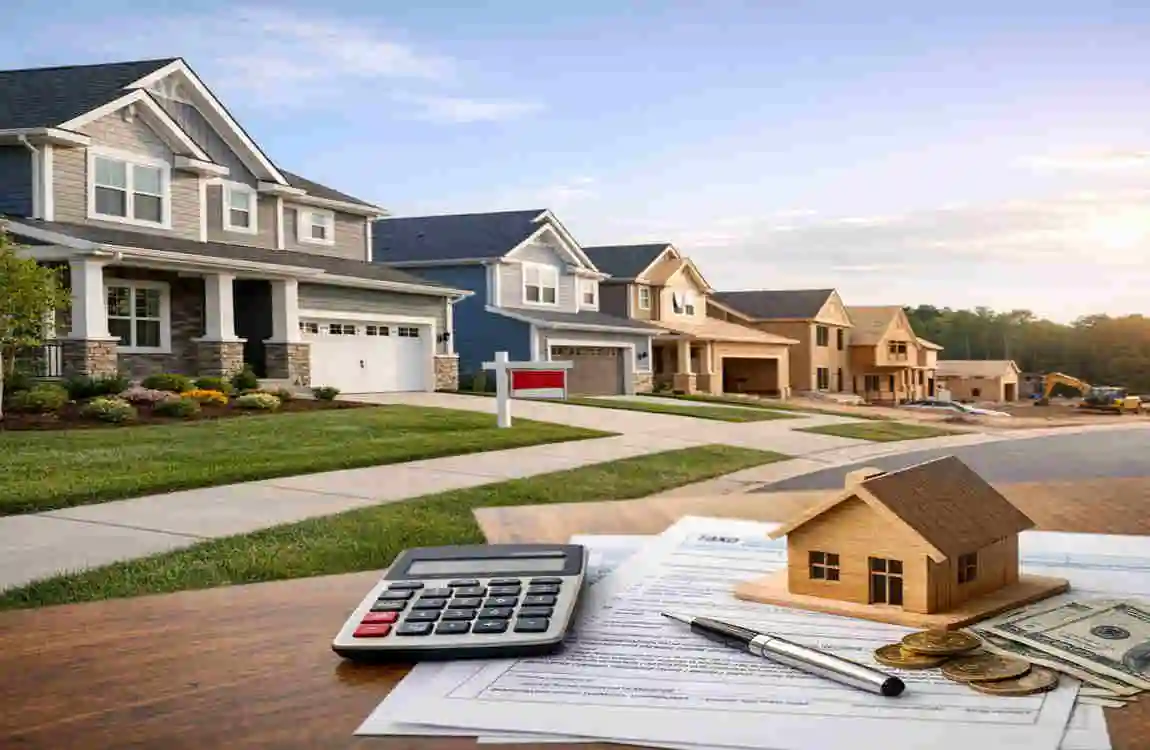
If you have been watching property market lately, you have probably noticed one big shift. Newly built homes are getting a lot more attention, especially. A major reason is the 2026 budget reform package, which lowered several taxes on new construction and gave first-time buyers better entry points. That is exactly why Houses for new sale construction taxes have become such a popular search phrase among buyers, investors, and families planning to move into modern communities.
For many people, buying a house is no longer just about location or design. It is also about how much tax you pay at the time of purchase, how much you can save in the first few years, and whether the property qualifies for rebates or lower rates. where affordability often shapes buying decisions, even a small tax reduction can save you hundreds of thousands of rupees..
Tax Breaks Explained for Houses for New Sale Construction Taxes

The biggest reason new homes are getting traction in 2026 is simple: the tax burden is lower than before. Federal and provincial policy changes have reduced some of the extra costs that usually make a brand-new house feel out of reach.
For buyers, these changes matter because taxes can quietly add a large amount to the final deal value. A house that looks affordable on paper may become far more expensive once you add transfer charges, withholding tax, documentation costs, and developer-related fees. The 2026 changes aim to ease that pressure.
Overview of key reforms
The following reforms are the most talked-about changes affecting new-build residential property, especially in larger urban markets.
Tax Type Old Rate (2025)New Rate (2026)Savings Example (PKR 10M House)
Construction Withholding 10% 7% PKR 300,000
Property Transfer 3% 2% PKR 100,000
Capital Gains 15% 10% (under 2 years) PKR 500,000
At first glance, these reductions may look modest. But when you combine them, they create a meaningful drop in the total acquisition cost. On a PKR 10 million property, you could be looking at savings that go well beyond what many buyers expect.
Let’s simplify what each category really means.
Construction withholding tax applies to the taxed amount associated with new construction activity. Lowering this rate makes newly built homes easier to price competitively. Developers often pass part of that relief on to buyers.
Property transfer tax directly affects ownership transfer. If this rate goes down, you pay less when the house is legally transferred into your name.
Capital gains tax matters more to short-term investors or buyers who may sell within a couple of years. A lower rate can improve resale margins and make fresh construction more attractive as an investment.
These changes are especially relevant in projects that market themselves as budget-friendly, first-time-buyer-friendly, or green-certified.
Federal Budget highlights
Here are some of the most important budget-related points buyers should pay attention to:
- Reduced withholding tax on qualifying new residential constructions.
- Lower transfer charges in selected new-build categories.
- Exemptions or relief for some first-time homebuyers.
- Extra encouragement for eco-friendly housing, including solar-ready homes and energy-efficient layouts.
- Policy support for smaller plots and compact homes, especially under defined size thresholds.
- More formal documentation requirements, which help serious buyers but can expose weak developers.
These updates show that the government is not only trying to stimulate construction. It is also trying to move more property activity into the documented, regulated market.
Who qualifies for these tax breaks?
Not every property will automatically qualify. That is important to remember.
In many cases, relief applies more easily if the property falls into a category such as:
- Newly constructed residential property
- Plot or home size under around 250 square yards
- First-time buyer status
- Approved or compliant project documentation
- Eco-friendly or energy-efficient building features
- Verified registration with the relevant authority
In Punjab, and especially, some additional encouragement has come through housing and planning frameworks that support urban expansion and lower-cost formal housing. Projects aligned with the Punjab Housing Authority or approved local development structures often stand a better chance of fitting the rules cleanly.
If you are buying, this matters a lot. The city has many excellent projects, but there are also areas where documentation can vary from developer to developer. A house may be new, attractive, and ready to move into, yet still fail to meet the paperwork standard needed for the best tax treatment.
That is why you should always ask the seller or builder for:
- Approval letters
- Layout plan approvals
- Tax challans
- Completion or possession records
- Utility connection details
- Green certification, if they claim eco eligibility
A little caution at this stage can save you a lot of money later.
Why these reforms improve affordability
When people search for Houses for new sale construction taxes, what they really want to know is this:
In many cases, yes, you really can save.
The reforms improve affordability in three direct ways.
First, they reduce upfront costs. That means less cash is needed at booking, transfer, and handover.
Second, they improve loan compatibility. If your total purchase cost is lower, your financing burden also becomes lighter. This can help more buyers qualify for bank or SBP-backed home finance options.
Third, they improve future liquidity. If taxes are lower and the project is well documented, resale becomes easier. Buyers prefer clean, transparent deals.
In practical terms, a family buying a small or mid-sized home may now find that a modern new-build unit costs only slightly more than an older resale property after tax savings are included. Once you factor in repair costs, outdated plumbing, renovation needs, and weaker energy efficiency, the new house can become the smarter financial move.
Hidden costs to watch before you buy
Tax relief is helpful, but it does not eliminate every expense. This is where many buyers make mistakes.
Some developers advertise “low tax” or “rebate eligible” homes, but do not clearly explain the full payment structure. You should always ask for a written breakdown.
Hidden or less-visible costs may include:
- Developer documentation charges
- Utility connection fees
- Club or society membership charges
- Possession fees
- Map approval fees
- Maintenance deposits
- Parking or service-area charges
- Agent commission
Stamp duty reductions can help, but if a developer adds bulky private charges, your total savings may shrink quickly.
So before you commit, ask one direct question: What is my full, all-in cost from booking to transfer?
That one question can reveal whether the deal is truly attractive or just packaged well.
Benefits for Buyers and Investors
Tax reform only matters if it creates real value. In 2026, it does. The benefits are not limited to accountants or big investors. Ordinary buyers can also gain in very practical ways.
Financial savings that change the full deal
The biggest attraction is still the money.
Across qualifying projects, tax breaks can reduce the effective overall cost by around 12% to 18%, depending on plot size, location, and financing structure. For mid-range homes, that can mean savings of roughly PKR 2 million to PKR 5 million when taxes, transfer fees, and launch pricing advantages are combined.
That is not a small discount. That is the kind of difference that can help a buyer:
- Upgrade from a smaller unit to a better one
- Reserve more funds for furnishing
- Reduce dependence on borrowing
- Keep cash available for emergencies
This is one reason “Houses for new sale construction taxes ” have become such a strong search term. Buyers are no longer just comparing house prices. They are comparing the final cost of ownership.
There is also another financial upside. Brand-new homes often come with fewer repair issues in the first few years. You are less likely to face immediate spending on wiring, seepage, old tiles, plumbing lines, or structural patchwork. That means your savings continue even after you move in.
Better lifestyle and day-to-day comfort
New homes are attractive for reasons beyond tax relief.
Modern projects often include features that older neighborhoods may lack or offer inconsistently. These include:
- Better road planning
- Cleaner utility layouts
- Security systems
- Community parks
- Nearby schools and retail
- Wider streets
- Underground wiring in some Premium zones
- Smart home features in selected projects
In places like , and expanding gated communities, buyers often enjoy a cleaner living environment and a more predictable maintenance system. This is especially appealing to families with children, overseas , and professionals who want less hassle.
Older resale homes can still be excellent, of course. But they often need renovation. A new house gives you a fresher structure, better layout efficiency, and stronger appeal if you decide to rent or sell later.
If you compare old vs. new, the difference becomes clear:
Older homes may offer mature surroundings and larger land value. Still, they often come with repair costs and limited energy efficiency.
New homes usually offer modern design, lower initial maintenance costs, better utility planning, and better tax treatment.
Stronger investment potential
Investors are paying attention for a reason.
Lower tax friction improves transaction speed. That helps the market move. It also supports investor confidence, especially in projects where demand is already healthy.
In many tax-advantaged or well-documented new developments, rental yields are estimated to be up by around 8% after the reform cycle. That makes sense. New homes attract tenants who value modern features, reliable services, and newer communities.
Small investors also like the flexibility. A newer house can be:
- Rented to families
- Offered as a corporate or executive rental
- Held for capital appreciation
- Sold during a later project phase for profit
This is particularly true in neighborhoods where commercial activity, road access, and school infrastructure are improving quickly.
Infographic placeholder: Rental yield comparison for new-build communities before and after 2026 tax reforms.
For buyers who want a blend of lifestyle and return, new construction now offers a balanced option. You are not only buying a structure. You are buying into a growth corridor.
Current Market Trends
The market in 2026 feels very different from even a year ago. Tax policy has not worked alone, but it has definitely helped shape momentum.
Surging demand and nearby growth zones
One of the strongest signals is digital behavior. Market watchers tracking Google Trends and local portal activity have reported a 30% rise in searches for new home construction tax and related terms.
That tells us something important: people are actively researching tax-smart buying opportunities, not just browsing random property ads.
remains the main hotspot because it combines three things buyers want:
- Established residential demand
- Ongoing new project launches
- Strong brand value in major societies
Areas getting the most attention include:
- Valencia
- Lake city
- Raiwind Road corridors
- Emerging southern and western expansion zones
Buyers are especially drawn to projects with transparent tax structures, realistic possession timelines, and available financing options.
Why developers are adjusting their strategy
Developers have also changed the way they market projects.
In the past, many ads focused only on location, plot size, and installment plans. In 2026, serious developers are also highlighting:
- Tax-compliant pricing
- Eligible unit sizes
- Green construction credentials
- Faster documentation support
- First-time buyer suitability
This shift matters because buyers are more informed now. They ask tougher questions. They want to know whether the advertised tax benefit is truly available or simply a promotional phrase.
Developer highlights’s new-build market.
Several kinds of projects are standing out in the current cycle.
DHA phase expansions continue to attract mid- to upper-middle-income buyers who want structured development, reliable resale demand, and stronger long-term confidence.
Bahria Town phases remain popular for lifestyle-led buyers who prioritize community planning, parks, commercial access, and wide roads.
Valencia and its adjoining growth pockets appeal to people seeking a balance between price and location. These areas often attract practical buyers who want a solid standard of living without going to the top end of the market.
Smaller boutique developments are also gaining traction. These projects often target compact family homes below the threshold that better fits tax benefits.
Price forecasts after tax breaks
Tax reductions do not always mean house prices fall sharply. In reality, the market response is more balanced. Sometimes taxes go down while demand goes up, which keeps prices firm.
Still, in some areas, the tax-friendly environment has made newly launched inventory feel more accessible. Effective acquisition costs can soften, especially where developers pass savings to buyers.
Here is a broad market-style snapshot:
LocationAvg Price/sq ft (2025)Projected
Across , new-build residential prices often sit in the PKR 15,000 to PKR 25,000 per sq ft range, depending on location, build quality, and brand strength.
What should you expect going forward?
- Premium communities may retain strong value because demand remains high.
- Mid-range projects may see the biggest buyer push because tax savings make them feel newly reachable.
- Well-documented small homes may outperform larger, less efficient options.
- Green-certified homes may attract more attention as energy costs remain important.
In other words, the market is not simply getting cheaper. It is getting smarter, and buyers are rewarding projects that combine tax efficiency with livability.
Top Houses for New Sale Construction Taxes
Below are five illustrative listings styled for a property blog. They reflect realistic market positioning for 2026 and show the type of homes attracting attention.
5 Marla Modern Family Home
Price: PKR 8.5 million
Tax edge: Up to 10% rebate potential under a qualifying new-home structure
Best for: First-time buyers and small families
Image placeholder: Front elevation of DHA Phase 9 5 Marla house
This home works well for buyers who want a branded location without stretching too far into Premium pricing. It offers practical room planning, fresh construction, and easier resale confidence because DHA remains one of’s strongest names.
10 Marla Green-Cert Ready Home
Price: PKR 15 million
Tax edge: Eligible for green feature incentives in select documentation scenarios
Best for: Families looking for lifestyle plus long-term savings
Image placeholder: 10 Marla exterior and lawn
This listing stands out for combining a newer build with eco-friendly planning. Solar readiness, better ventilation, and efficient design can support both tax advantages and lower utility costs.
8 Marla Corner House
Price: PKR 12.2 million
Tax edge: Lower transfer burden on compliant new build
Best for: Buyers wanting balanced value
Image placeholder: Valencia Town corner house street view
Valencia remains attractive to practical buyers who want decent access, family-friendly surroundings, and a more reasonable price point than some top-tier societies.
7 Marla Contemporary Home
Price: PKR 11.8 million
Tax edge: Qualifies well where documentation and project status are clear
Best for: Professionals and smaller families
Image placeholder: Lake city house with modern facade
This property suits buyers who want a polished look and organized surroundings. The modern elevation and gated environment make it attractive both for living and for future rental demand.
Raiwind Road New Development – 5 Marla Budget Entry Home
Price: PKR 6.9 million
Tax edge: Strong fit for a smaller-home tax-friendly bracket
Best for: Budget-conscious first-time buyers
Image placeholder: Budget new-build home in emerging Raiwind Road project
This is the listing many young buyers now want. It offers low-barrier entry into ownership while still appealing to the allure of a newly built home in a growing corridor.
If you are actively comparing deals, Houses for new sale construction taxes should not be based solely on the advertised rebate. You should also compare society reputation, legal status, possession timeline, and hidden charges before deciding.
Step-by-Step Buying Guide
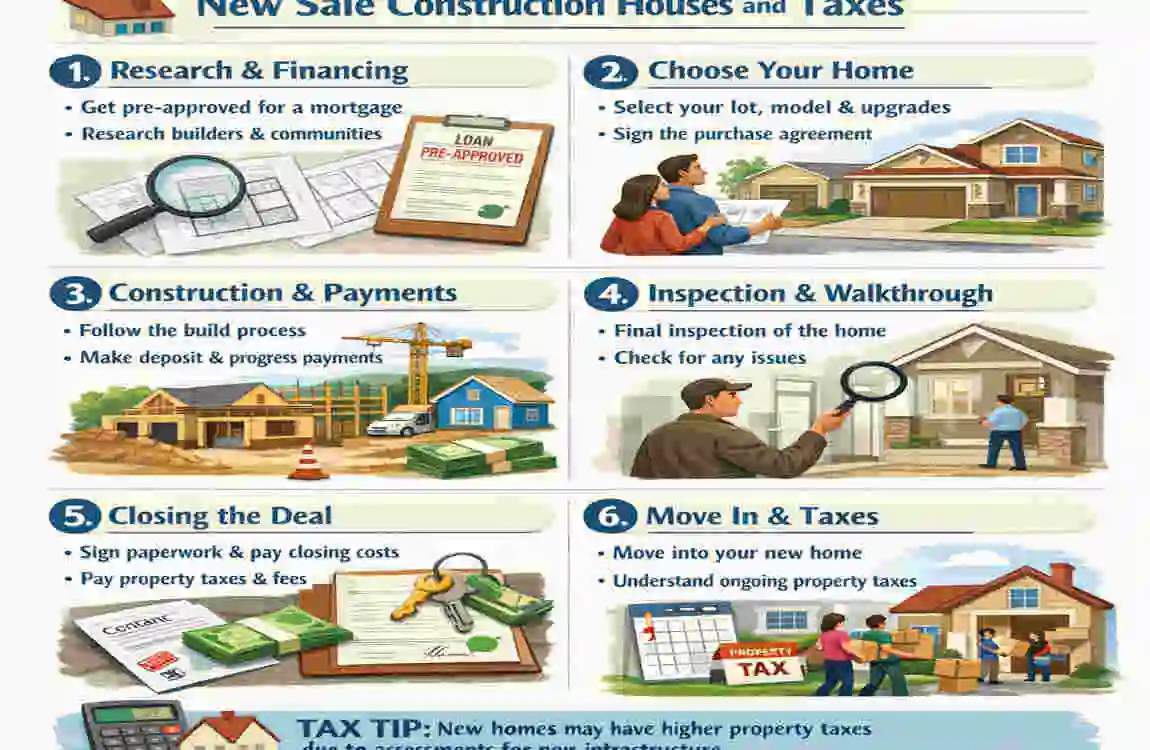
A tax-friendly deal only works when you follow the right process. Here is a practical, simple roadmap you can use.
Verify tax eligibility first
Before you get emotionally attached to any property, confirm whether it actually qualifies for reduced taxation.
Start with the FBR portal, project paperwork, and the developer’s official tax documents. Ask for proof, not verbal promises. If an agent says, “This will qualify,” ask them to show you the rule, form, or approval.
This first step protects you from misleading marketing.
Visit projects in low-tax and high-demand zones
Do not buy from photos alone. Visit the area in person.
Look at roads, drainage, nearby construction activity, commercial access, and overall neighborhood quality. Tax benefits matter, but location still drives future value.
In , compare at least two or three areas before choosing. A slightly higher-priced project in a stronger location may outperform a cheaper one over time.
Review financing options early
If you plan to finance the home, speak to your bank before booking.
Some buyers make the mistake of paying token money and only later discover that the financing structure does not match the project stage. In 2026, SBP-backed lower-rate housing finance options may improve access for qualifying buyers. However, you still need to check income documentation, debt ratio, and project acceptability.
A pre-discussion with your bank can save time and stress.
Run legal and compliance checks
This is where serious buyers separate themselves from risky buyers.
Make sure the project has valid approvals, no major ownership disputes, and proper development status. Ask for legal verification of land title, approved plans, and tax compliance.
If you can, use a property lawyer or an experienced legal consultant. The fee is worth it.
Ask for a full written cost sheet
Never rely only on the base price.
Request a detailed cost sheet showing:
- Sale price
- Applicable taxes
- Transfer fee
- Documentation charges
- Utility charges
- Society charges
- Possession amount
- Any rebate or incentive adjustments
Once you have the full sheet, compare it with at least one competing project. This helps you see the true difference.
Confirm possession and handover timeline
A new house may be complete, near completion, or only marketed as “almost ready.” These are not the same thing.
Ask:
- Is the house already built?
- Are utilities active?
- Is possession immediate?
- Are roads and services functional?
- Is the rebate available now or after transfer?
A low tax rate means little if the home sits delayed for months.
Documents you should keep ready
Here is a simple checklist of documents most buyers should prepare:
- CNIC copies
- Proof of income
- Bank statements
- Tax filer status details
- Passport-size photographs
- Down payment proof
- NTN, if applicable
- Power of attorney, if buying through a representative
Common pitfalls to avoid
Many people lose money not because the property was bad, but because the process was weak.
Watch out for:
- Unregistered developers
- Vague rebate claims
- Incomplete approvals
- Delayed possession promises
- Poor utility planning
- Surprise charges after booking
The smarter your process, the more value you get from Houses for new sale construction taxes in practice, not just in theory.
Frequently Asked Questions
What are the house sales construction taxes?
This phrase generally refers to the taxes, rebates, and reduced charges associated with newly built homes sold in 2026., these include lower withholding tax, transfer relief, and selected incentives for first-time or qualifying buyers.
How much can I save on new home taxes?
Your savings depend on the project’s location, property size, and legal status. In many qualifying cases, buyers may save 12% to 18% on the total transaction impact when lower taxes and launch pricing benefits are combined.
Do tax breaks apply to resale properties?
Usually, no. Most of the meaningful benefits focus on new construction and qualifying fresh-build inventory. Resale properties are subject to different tax treatment and usually do not receive the same level of relief.
Who qualifies for the 2026 housing rebates?
Qualification often depends on factors such as property size, first-time buyer status, proper documentation, and, in some cases, eco-friendly features. Always confirm with the developer and the tax documentation before proceeding.
How long does it take to claim the rebate?
That depends on the type of rebate and the quality of the paperwork. Some benefits apply directly during the transaction, while others may require filing, approval, or formal adjustment after transfer.
Are green homes treated differently?
Yes, in some cases they are. Homes with energy-efficient or eco-friendly elements may receive better treatment under selected housing incentive policies, especially when documentation clearly supports those features.
the best city for tax-friendly new construction
one of the strongest markets because it offers high demand, multiple branded societies, and a wide range of new projects. That said, buyers should still compare location, price, and compliance rather than assume every new project is equally strong.
