

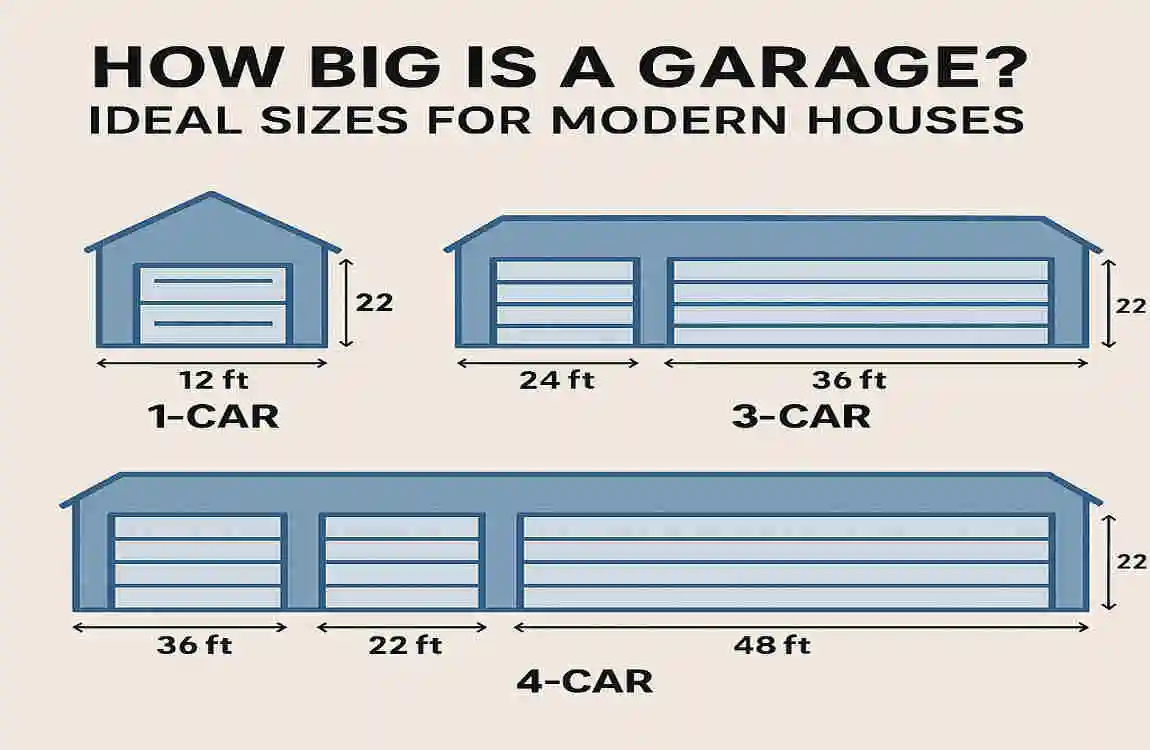
Wondering how big is a garage needs to be for your dream home? You’re not alone! The size of your garage is much more than just a number—it directly affects your daily comfort, vehicle protection, storage options, and even your home’s future resale value. In today’s world, garages are evolving far beyond mere parking spaces. They’re becoming workshops, gyms, storage havens, and even charging stations for electric vehicles (EVs).
Standard Garage Sizes
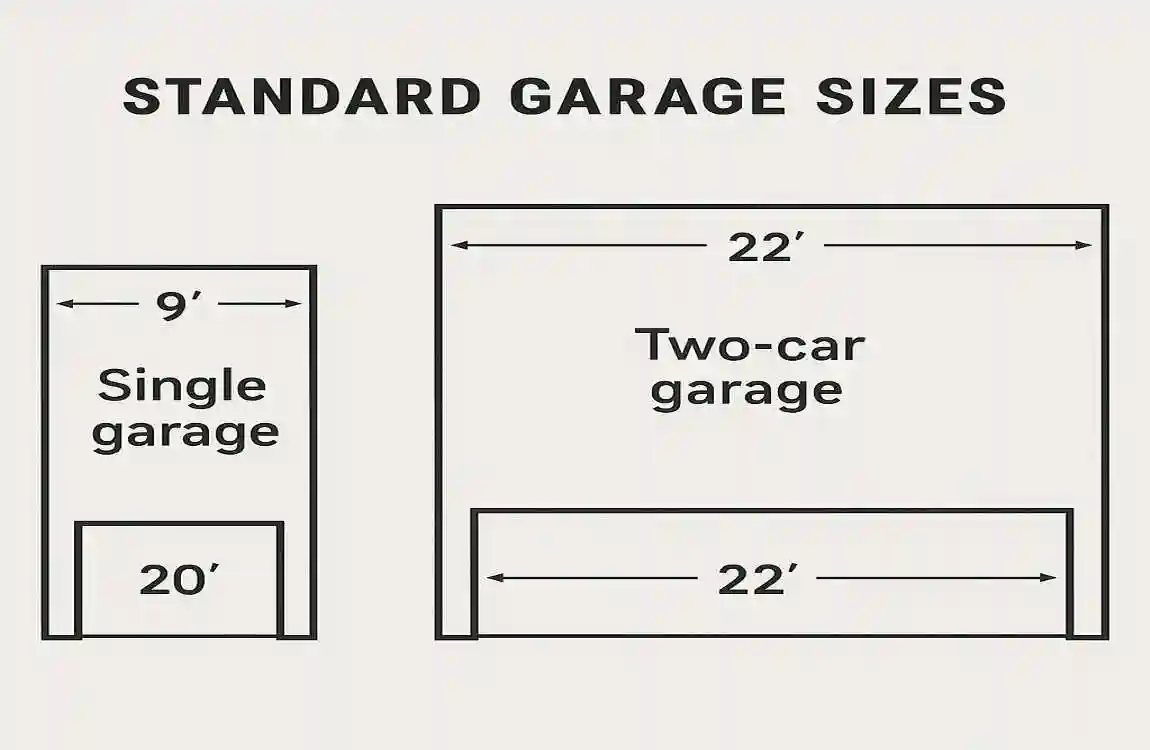
When asking, how big is a garage supposed to be?, the answer depends on how many vehicles you own and what else you want to store. Let’s dive into standard dimensions so you can compare options side by side.
Typical Garage Dimensions by Car Count
Here’s a quick reference table that breaks down the most common garage sizes:
| Garage Type | Width (ft) | Depth (ft) | Area (sq ft) | Best For |
|---|---|---|---|---|
| 1-Car | 12-18 | 20-24 | 240-432 | Sedans, tight lots |
| 2-Car | 20-24 | 20-24 | 400-576 | Families, compact SUVs |
| 3-Car | 30-36 | 22-28 | 660-1,008 | Trucks, storage |
| 4-Car | 40-48 | 24-30 | 960-1,440 | Luxury homes, workshops |
One-Car Garage: Compact and Practical
Standard size: 12×20 to 14×24 feet
A one-car garage is perfect for small lots or older homes. It’s an economical option if you own a single car or need minimal storage. However, with average cars measuring 6 to 7 feet wide and 16 to 18 feet long, a 12×20 space can feel tight—especially if you want to open your doors without hitting the walls.
Pros:
- Budget-friendly construction
- Ideal for urban lots where space is limited
Cons:
- Limited storage or workspace
- Challenging for larger vehicles
Two-Car Garage: The Modern Family Classic
Standard size: 20×20 to 24×24 feet
Most suburban homes feature a two-car garage, which offers enough room for two vehicles and some storage. Opting for a 24×24 design gives you extra space for bikes, tools, or a small workbench.
Pros:
- Fits most family vehicles including compact SUVs
- Extra depth allows for shelving or a freezer
Cons:
- Can be cramped with two large SUVs or trucks
Three-Car Garage: Flexibility and Storage
Standard size: 30×22 to 36×28 feet
A three-car garage is a popular upgrade for people who need more space for vehicles, storage, or hobbies. Many car enthusiasts and growing families choose this size for the flexibility it offers.
Pros:
- Accommodates larger vehicles or a boat
- Space for workshop or gym
Cons:
- Higher construction and maintenance costs
Four-Car Garage: Luxury and Possibilities
Standard size: 40×24 to 48×30 feet
This is the ultimate option for luxury homes or anyone who needs room for multiple vehicles, a workshop, or even a home office. A four-car garage can also add significant resale value.
Pros:
- Plenty of space for cars, tools, and hobbies
- Suitable for custom home designs
Cons:
- Requires a large lot and higher building costs
How Garages Have Evolved
Older garages, especially those built before the 1980s, often measure 20×20 feet. However, with modern SUVs and trucks, experts recommend a minimum of 24×24 feet for two vehicles. This extra space ensures doors open fully and there’s room to walk around safely.
Ceiling height is also important—8 to 10 feet is now standard, allowing for overhead storage or even a car lift for enthusiasts.
Quick Tips:
- Measure your vehicle: Add at least 2 feet of clearance on all sides.
- Consider ceiling height: 8’ standard, 10’ for tall vehicles or storage racks.
Ideal Sizes for Modern Houses
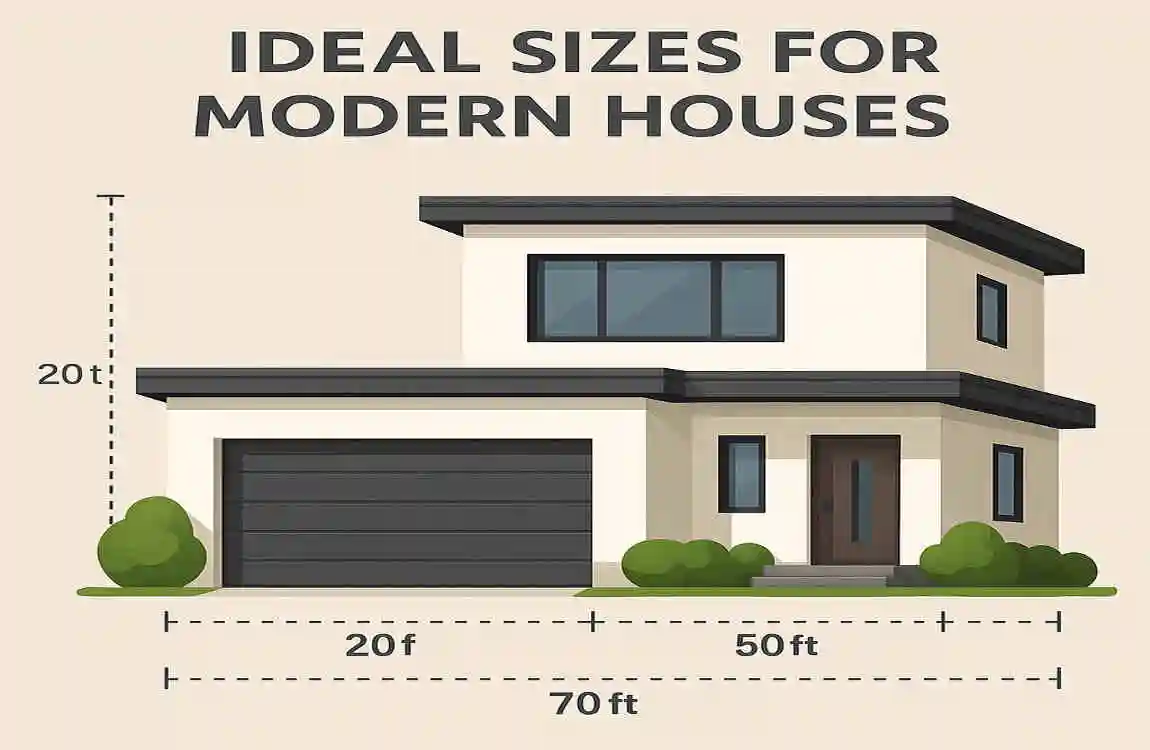
Today’s garages are more than just parking spots—they’re multipurpose spaces built with the future in mind. So, how big is a garage when you want to accommodate modern needs?
Family Homes: Balancing Cars and Clutter
If you have a typical family with two vehicles, experts recommend a minimum of 24×24 feet (576 sq ft). This gives you enough room for two cars, plus space to store bikes, lawn equipment, and seasonal items.
Pro tip:
Add an extra 4 feet of depth if you want a workbench or need space for kids’ bikes, strollers, or snow blowers.
Example:
The Smith family has two SUVs and a collection of bikes. They chose a 24×28 garage, giving them dedicated wall storage and a small hobby area.
SUV/Truck Owners: Extra Elbow Room
Larger vehicles like SUVs and trucks need more space. A single bay for an SUV should be at least 14×24 feet (336 sq ft). For two large vehicles, consider a 24×28 or even 28×28 feet double garage.
Why?
- SUVs are usually about 7 feet wide and 16-18 feet long.
- You’ll need at least 2 feet on each side for door clearance and walking space.
Regional Variations: City vs. Suburb
- Urban areas: Smaller lots mean garages are often 12×20 feet or even less.
- Suburbs and rural: Larger garages are common, with 28×24 feet popular for two cars, storage, and a workspace.
Quick Garage Sizing Tips
- Measure your vehicles: Most cars are 16-20 feet long, 6-7 feet wide.
- Allow for walkways: Add 2-3 feet on each side.
- Plan for future needs: Leave extra space for storage, EVs, or a hobby area.
Bullet List: Garage Planning Essentials
- Measure every vehicle you plan to park.
- Allow at least 24 feet width for two cars.
- Add 4-6 feet depth for storage or a workbench.
- Include outlets and charging for EVs.
- Think about ceiling height for overhead storage.
Factors Influencing Garage Size
There’s no one-size-fits-all answer to how big is a garage. Several factors will shape your ideal garage dimensions:
Lot Size and Zoning Laws
Your property’s size is the first limit. In many cities, zoning laws restrict the total square footage or location of garages. For example, some areas limit garages to 1,000 sq ft or require setbacks from the property line.
Multi-use Spaces: Making Your Garage Do More
Garages now double as workshops, home gyms, or even accessory dwelling units (ADUs). If you’re planning to use your garage for more than just parking, add at least 10 feet to the depth to fit a workbench or gym equipment.
Example Uses:
- Workshop: Add shelving and tool storage.
- Home gym: Space for equipment and mats.
- Office/Studio: Insulate, add windows, and finish walls.
Energy Efficiency and Modern Codes
Modern building codes often require insulated garage doors and walls, especially in colder climates. This not only saves energy but also makes your garage more comfortable for hobbies or work.
Fun Fact:
Adding insulation can help your garage double as a year-round workspace.
Resale Value: More Space, More Money
A spacious, well-designed garage can increase your home’s value by 10–15%. Buyers often look for extra storage and flexibility, making a larger garage a smart investment.
Pros List: Bigger Garage Benefits
- More storage for toys, bikes, tools
- Space for hobbies or a home office
- Increased resale value
- Easier vehicle access and maintenance
Design and Layout Tips
Building the right-sized garage is just the start. Smart design and layout choices can make your space safer, more efficient, and more enjoyable to use. Let’s break down some best practices.
Side-by-Side vs. Tandem Layouts
- Side-by-side: Most common for two or more cars; offers easy access to each vehicle.
- Tandem: One car parks behind another; saves width but can make accessing the rear vehicle tricky.
Table: Layout Pros and Cons
| Layout | Pros | Cons |
|---|---|---|
| Side-by-side | Easy access, more storage options | Requires a wide lot |
| Tandem | Space-saving, fits narrow lots | Rear car blocked in |
Storage Hacks for a Clutter-Free Garage
- Wall-mounted shelves: Free up floor space for cars.
- Overhead racks: Store seasonal items or bins.
- Pegboard systems: Keep tools and small items organized.
Smart Features for Modern Needs
- Motion-activated lighting: Improves safety and convenience.
- EV chargers: Future-proofs your garage for electric vehicles.
- Insulated doors and smart locks: Enhance comfort and security.
