

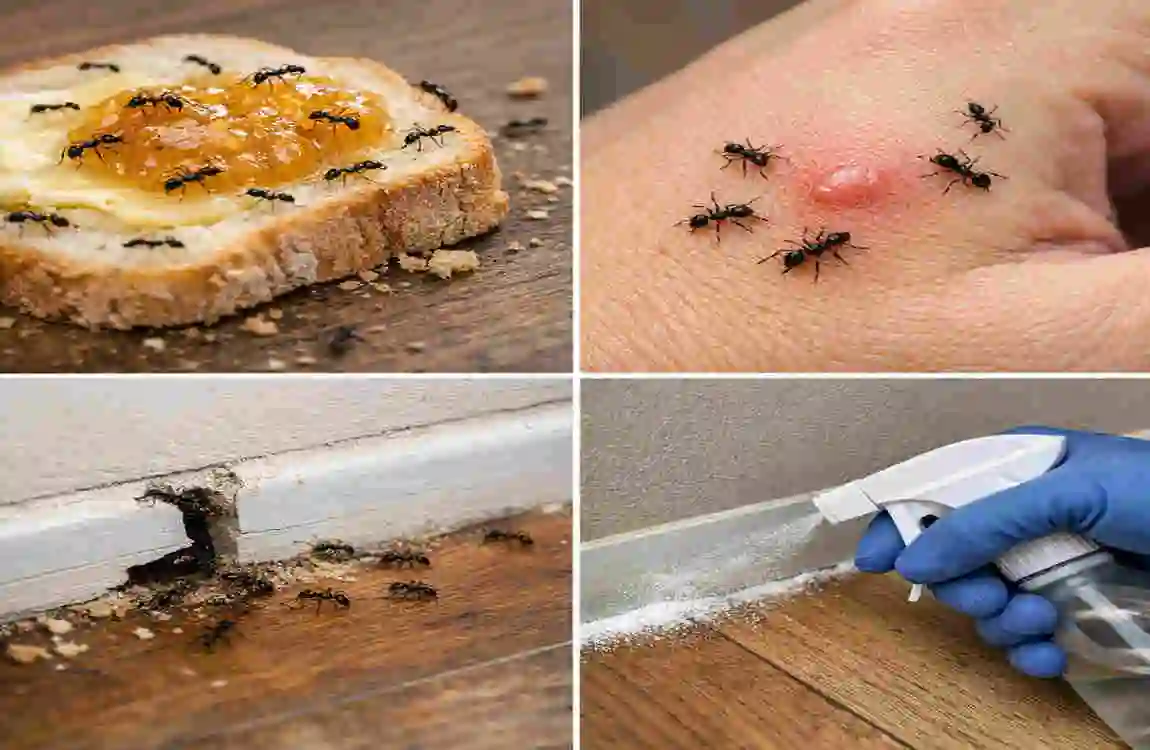
You walk into your kitchen for a midnight snack, flip on the light, and freeze. There, marching in a perfect, determined line across your countertop, is a highway of tiny black insects. They are heading straight for the fruit bowl or that drop of juice you forgot to wipe up. Your first instinct might be to grab a shoe or a can of spray, but then a thought crosses your mind: Are house ants dangerous?
It is a question homeowners ask constantly. We tend to view ants as mere nuisances—uninvited guests that ruin picnics and raid pantries. However, the reality is a bit more complex. While most common luxury house ants aren’t going to send you to the hospital, some species pack hidden risks that go far beyond stealing a crumb of bread.
Common Types of House Ants and Their Traits
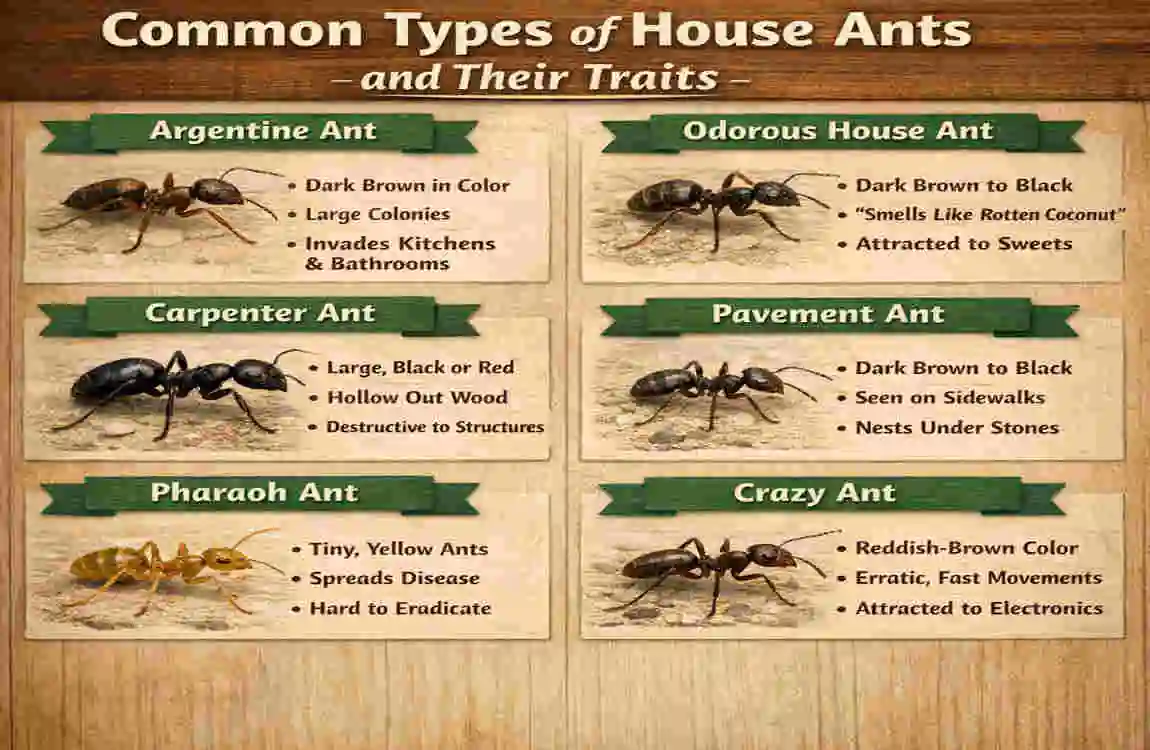
To understand the risk, you first need to know the enemy. Not all ants are created equal. Some are just looking for sugar, while others are looking to turn the structural beams of your house into a hollow shell. Identifying the ant is the first step in deciding: Are house ants dangerous in your specific situation?
Odorous House Ants The “Sugar Ant”
These are the most common intruders. They are tiny (about 1/8 inch), dark brown or black, and they move fast.
- The Trait: Why are they called “odorous”? If you crush one between your fingers, it releases a smell that many people describe as rotten coconuts.
- The Goal: They are relentlessly hunting for sweets. If you leave a drop of soda on the counter, they will find it.
Carpenter Ants
These are the heavyweights. They are much larger than sugar ants, ranging from 1/4 to 1/2 inch in length. They can be black, red, or a mix of both.
- The Trait: They have strong mandibles (jaws). Unlike termites, they do not eat wood; they excavate it to build nests.
- The Danger: If you see these, you likely have a moisture problem in your walls. They love wet, rotting wood.
Pharaoh Ants
These are very small (1/16 inch) and have a yellowish or light brown color. They are almost translucent.
- The Trait: They are notoriously difficult to kill because if you spray them with pesticide, the colony splits into two or more new colonies (a process called “budding”).
- The Danger: These are a major hygiene risk, often found in hospitals and kitchens.
Fire Ants
Red Imported Fire Ants are aggressive. They are reddish-brown and build large mounds in the soil, but they can enter homes through HVAC systems or cracks.
- The Trait: They sting rather than bite. The sting injects venom that causes a burning sensation and white pustules.
- The Danger: High. Their stings can cause anaphylactic shock in allergic individuals.
Ant Identification Guide
Ant TypeSize & ColorDanger LevelCommon in Homes?
Sugar Ant 1/8″, Black/Brown Low (Nuisance) Very Common
Carpenter Ant 1/4″-1/2″, Black/Red High (Property Damage) Occasional
Pharaoh Ant 1/16″, Yellow/Pale High (Disease Vector) Common in Cities
Fire Ant 1/8″-1/4″, Reddish High (Health/Sting) Rare Indoors
Are House Ants Dangerous? Real Risks Explained
When we ask, “are house ants dangerous,” we usually think of physical attacks. But the danger of ants is often silent and gradual. Let’s break down the real risks they pose to your health, your home, and your wallet.
Health Risks and Contamination
You might think ants are clean because they groom themselves, but consider where they have been before they walked across your cutting board. Ants often forage in garbage cans, rotting food, and even animal waste.
- Bacterial Spread: Pharaoh ants and common house ants can carry bacteria like Salmonella, Staphylococcus, and E. coli. As they march across your countertops, they leave invisible trails of these pathogens.
- Allergies and Asthma: According to CDC data, cockroach allergens are well known, but ant allergens are also triggers. As ants die and decompose, or as they leave waste behind, these particles become airborne and can trigger asthma attacks or respiratory issues in sensitive individuals.
Physical Bites and Stings
For most house ants, biting isn’t a concern. Their jaws are too small to break human skin. However, fire ants are the exception.
- If a fire ant nest is disturbed, they swarm and sting repeatedly.
- The venom causes intense itching and pain.
- For pets and small children, a swarm of fire ants can be a serious medical emergency.
Structural Destruction
This is where the financial danger lies. Carpenter ants are often mistaken for termites, and while they work more slowly, the damage is just as costly.
- They hollow out wood to build “galleries” for their nests.
- They target structural beams, window sills, and door frames.
- Over time, this compromises the structural integrity of your house. Repair bills can easily run from $500 to $5,000 depending on the severity.
Electrical Fires
It sounds like a myth, but it is true. Some ant species are attracted to magnetic fields or the warmth generated by electrical wires. They can swarm inside wall outlets, breaker boxes, and appliances.
- Their bodies can create a bridge between contacts, causing short circuits.
- This can ruin expensive appliances (like air conditioners or fridges) and, in rare cases, spark electrical fires.
The Verdict
So, are house ants dangerous? If you ignore them, yes. They are not just an aesthetic problem; they are a warning sign that your home’s defenses are down.
Signs of House Ant Infestations
You typically won’t see the nest first. You will see the scouts. Catching an infestation early is the key to preventing it from becoming dangerous. Here are the red flags you need to watch for.
The Visible Trails
Ants leave behind a chemical scent trail (pheromones) for other ants to follow. If you see a distinct line of ants marching along a baseboard or up a wall, you have an established colony nearby. This isn’t random wandering; this is a supply line.
Frass Sawdust Piles
If you see small piles of wood shavings that look like pencil-sharpening debris near your baseboards, door frames, or in the basement, be alarmed. This is called “frass.”
- This is the debris Carpenter ants kick out of their tunnels.
- Unlike termites (who eat the wood), Carpenter ants have to dump the wood somewhere. Frass is a definitive sign of a structural threat.
Winged Ants Swarmers
If you see ants with wings flying around your windows or lights, usually in the spring or after a heavy rain, this is a mating swarm. It means a colony is nearby and is large enough to reproduce. Do not ignore swarmers inside the house.
The “Rustling” Sound
In a quiet room, if you have a massive Carpenter ant infestation, you can actually hear them. It sounds like a faint crinkling of cellophane or rustling inside the walls. This is the sound of them chewing through your home’s frame.
Why Ants Invade Your Home
To stop them, you have to think like them. Why are they here? It usually boils down to three survival needs: Food, Water, and Shelter.
The Moisture Connection
In many regions, especially places with distinct wet and dry seasons like Lahore, ants are driven by water.
- Dry Season: Outside water sources dry up. Your kitchen sink, leaky pipe, or pet bowl becomes an oasis.
- Wet Season (Monsoon): The ground becomes saturated. Soil-dwelling ants (like Fire ants or pavement ants) are flooded out of their homes. They move upward—into your house—to find dry ground.
The Food Scout
Ants send out “scouts” to forage. These solo ants wander until they find a source of energy (sugar, grease, or protein). Once they find it, they head back to the nest, laying down a pheromone trail.
- Sugar: Soda spills, fruit, candy.
- Protein: Grease splatters, meat scraps, pet food.
- Carbs: Bread crumbs, crackers.
If you leave food out, you are essentially ringing the dinner bell.
Safe DIY Removal Tips: Step-by-Step
You have confirmed the enemy, and you know the risks. Now, let’s get them out. You do not need to drown your house in toxic chemicals. In fact, for many ants, baiting is far more effective than spraying.
Here is your battle plan to address the problem of dangerous house ants safely.
The Detective Work Identify
Use the chart above or a smartphone app to identify the ant.
- Why it matters: Sugar ants like sweet bait. Grease ants ignore sugar and want protein. If you use the wrong bait, you will fail.
Break the Scent Trail Sanitize
Simply killing the ants you see won’t work. The trail remains, and new ants will follow it.
- The Mix: Mix a solution of 50% distilled white vinegar and 50% water in a spray bottle.
- The Action: Spray the line of ants and the path they were walking on. Wipe it up with a paper towel. The vinegar disrupts their pheromones, causing them to lose their way.
The Trojan Horse Baits
This is the most effective method. You want the scout ants to carry poison back to the queen. When the queen dies, the colony dies.
- The Borax Recipe:
- Mix 1/2 cup of sugar (attractant).
- Mix 1.5 tablespoons of Borax (the killer).
- Dissolve in 1.5 cups of warm water.
- Soak cotton balls in the mixture.
- Placement: Place these cotton balls near the trails (but out of reach of pets and kids).
- Patience: You will see more ants at first. This is good! Let them feast. After 24-48 hours, the population will crash.
Physical Barriers
Once the inside ants are dealt with, stop new ones from entering.
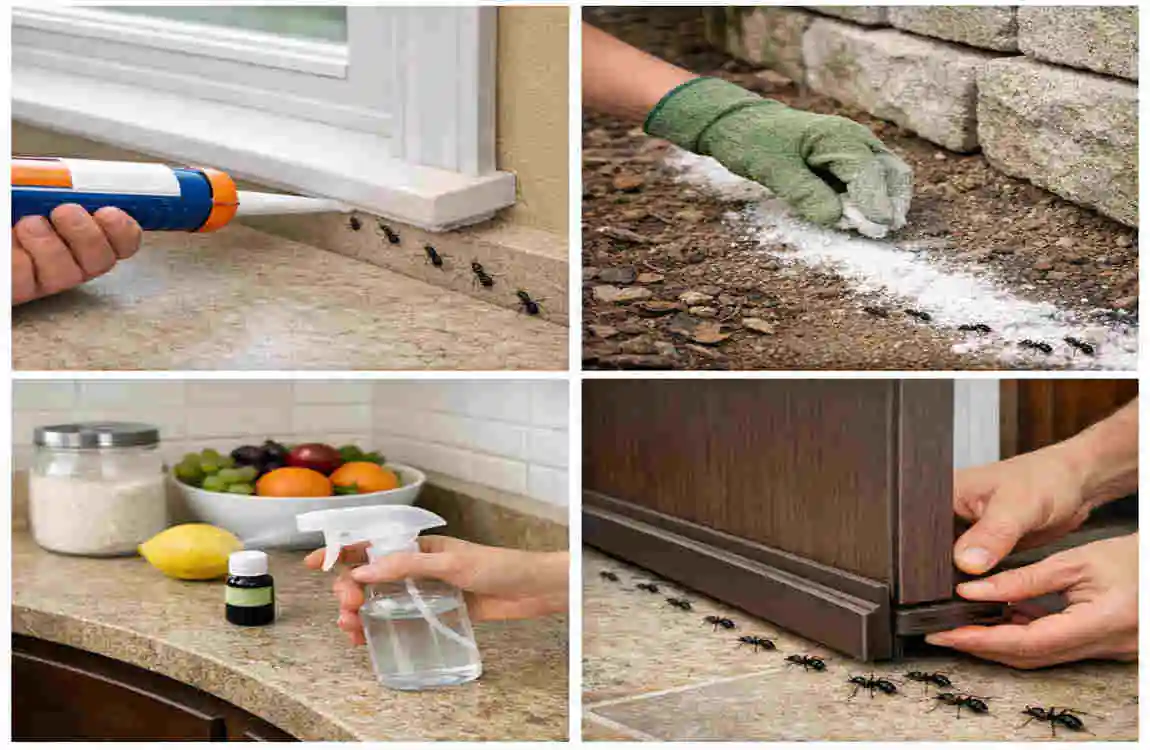
- Diatomaceous Earth (DE): This is a white powder made from fossilized algae. It is non-toxic to humans but deadly to ants. It acts like microscopic glass, cutting their exoskeletons and drying them out. Sprinkle food-grade DE around door thresholds and windows.
- Essential Oils: Ants hate strong smells. Peppermint oil, tea tree oil, and citrus oil act as natural repellents. Soak cotton balls in peppermint oil and wedge them into cracks where ants enter.
Seal the Fortress
Grab a caulk gun. Go around the exterior of your home.
- Seal cracks in the foundation.
- Seal gaps around utility pipes (where wires and pipes enter the house).
- Check the weatherstripping on doors and windows.
Advanced and Professional Solutions
Sometimes, the infestation is too deep, or the species is too resilient (like the Pharaoh ant). If you have tried the DIY steps for two weeks and still see ants, or if you suspect Carpenter ants are eating your beams, it is time to escalate.
Chemical Gels
Commercial ant gels usually contain Fipronil or Hydramethylnon. These are slow-acting poisons. They are more potent than Borax and work well for stubborn colonies. Apply tiny dots of gel in corners and cracks.
When to Call a Pro
You should call a professional exterminator if:
- You suspect Carpenter Ants: The structural risk is too high to gamble with. Pros have the equipment to inject foam into wall voids.
- Pharaoh Ants are present: DIY sprays will make them bud and spread. You need professional baits.
- Fire Ant Mounds: If they are close to your house foundation, you need professional yard treatment.
- Allergic Reaction: If anyone in the home has been stung and reacted poorly.
In regions like Lahore, professional pest control services often offer “termite and pest” packages that include ant control. Expect to pay between PKR 10,000 and 50,000, depending on the size of the home and the severity of the infestation.
Prevention: Keep Ants Out for Good
Winning the battle is great; avoiding the war is better. Are house ants dangerous? Only if you let them back in.
The Kitchen Routine
- Wipe down counters every night.
- Do not leave dirty dishes in the sink overnight.
- Store sugar, cereal, and flour in air-tight hard plastic or glass containers. Ants can chew through thin cardboard and paper bags.
Moisture Control
- Fix that leaky faucet under the sink.
- Ensure your gutters are directing water away from the house foundation.
- Use a dehumidifier in damp basements.
The Vegetation Buffer
- Trim tree branches and shrubs so they do not touch your house. Ants use branches as bridges to bypass your treated soil and walk right onto your roof or into your attic.
Costs of Ant Problems and Fixes
Ignoring an ant problem is almost always more expensive than fixing it.
- DIY Fix: A box of Borax, sugar, and some caulk might cost you PKR 1,000 to 5,000 ($5-$20).
- Professional Treatment: A one-time visit can range from PKR 10,000 to 20,000 ($50-$150).
- Carpenter Ant Repair: Replacing rotted and eaten structural beams can cost PKR 100,000+ ($1,000+).
It pays to be proactive.
Frequently Asked Questions (FAQ)
Are house ants dangerous to humans? Most common house ants (like sugar ants) are not physically dangerous to humans. They do not bite or sting effectively. However, they can carry bacteria to your food surfaces. Fire ants and Carpenter ants pose physical and structural threats, respectively.
Are ants in the house dangerous for pets? Yes, potentially. Fire ants can sting pets, causing severe pain. Also, if a pet eats a large number of ants, it can cause stomach upset. Be careful with DIY baits—keep sugary borax balls out of reach of dogs and cats.
How do I get rid of ants naturally without chemicals? The best natural method is the Borax and Sugar bait method, combined with a Vinegar spray, to disrupt their trails. Diatomaceous Earth is also a safe, chemical-free barrier.
Are Carpenter ants dangerous? They are dangerous to your house, not typically to your health. They can destroy a building’s wooden framework if left untreated for years. They bite only in defense and it feels like a sharp pinch.
Are ants in the kitchen dangerous? They are a sanitation risk. Ants walking across a kitchen counter can spread E. coli or Salmonella from garbage sources directly onto your food preparation areas.
