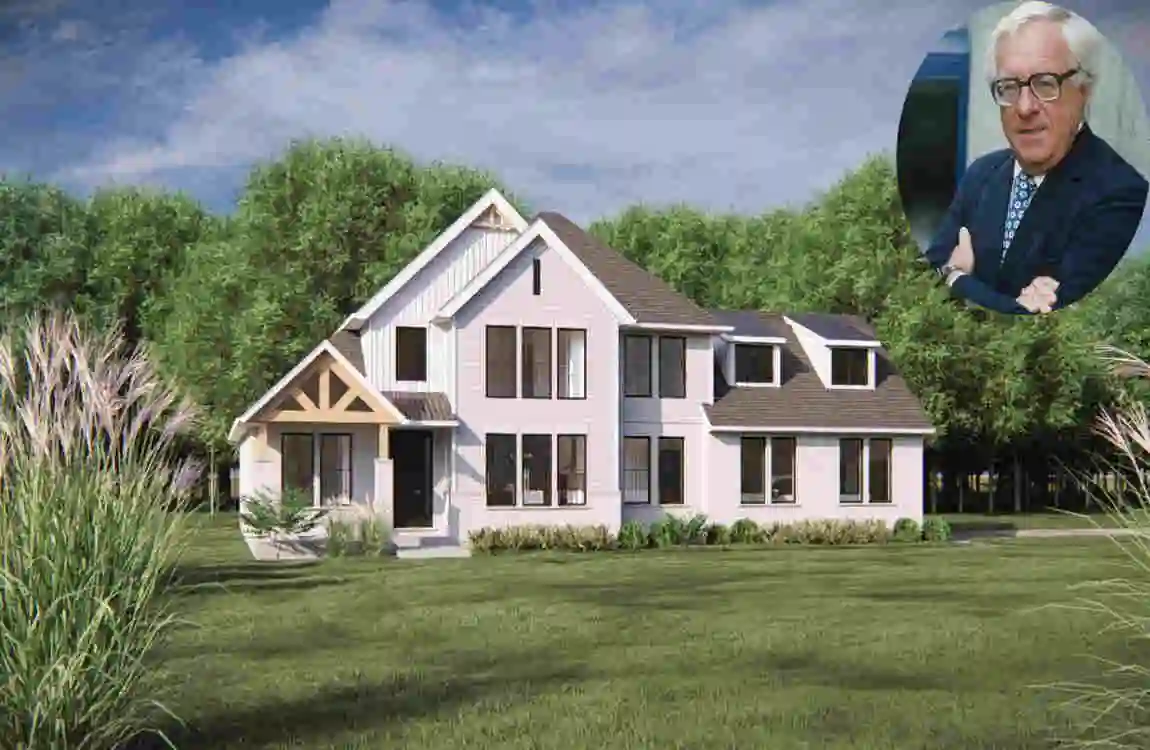

Imagine, if you will, a world where books are forbidden, where firefighters start fires instead of putting them out. It’s a terrifying thought, isn’t it? Now, imagine that this fireman nightmare, the core of Fahrenheit 451, wasn’t born in a sterile laboratory or a high-tech office. Instead, it was conceived in the quiet, unassuming corners of a bungalow in Los Angeles.
For over 27 years, spanning the transformative eras of the 1940s through the 1960s, this lost gem of Los Angeles architecture was more than just a structure of wood and stucco. It was a factory of dreams and dystopias. While many fans flock to his later residences or public libraries, the Ray Bradbury Cheviot Hills home holds the deepest, most intimate secrets of his early career.
Why does this matter to you? Because we often think of genius as something that strikes like lightning from above. But the truth is, genius needs a roof over its head. It needs a place to sleep, a place to pace the hallways at 3 AM, and a place to hide from the world. This house was that sanctuary.
Architectural Secrets Inside the Ray Bradbury House
Now that we’ve bought the house, let’s go inside. From the street, the Ray Bradbury house looked like a typical Spanish Revival structure—stucco walls, red tile roof, perhaps a bit modest. But architecture is more than just the facade; it’s about how a space is lived in. And Ray lived in this space intensely.
Facade Mysteries and the Hidden Gate
The Spanish Revival style was popular in LA, but Bradbury’s home had a specific feature that few knew about: a hidden garden gate.
Ray was a walker. He didn’t drive (a famous fact about him), so his feet were his primary Mode of transport. This side gate allowed him to slip out late at night for long walks through the neighborhood without waking the household. These walks were crucial. It was during these midnight strolls that he would encounter the police—an incident that directly inspired the opening scene of The Pedestrian and later, Fahrenheit 451.
That gate wasn’t just wood and iron; it was a portal between his domestic life and the dystopian worlds he was building in his head.
Room-by-Room Reveals
If we could walk through that luxury house today, where would we look?
- The Typewriter Alcove: This is the holy grail. It wasn’t a grand office. It was a small nook, an alcove off the main living area. This is where the spark of Fahrenheit 451 ignited. It was cramped, likely filled with smoke and the clatter of keys, but it was the cockpit of his rocket ship.
- The Bookshelves of Rejection: There was a specific set of shelves, tucked away from the main view, that held his “failures.” Bradbury kept rejection letters and stalled manuscripts here. Why? Not to torture himself, but to remind himself of the grind. It was a secret shrine to persistence.
Ingenious Hacks: The DIY Cooling System
We take air conditioning for granted today. But in post-war Los Angeles, AC was a luxury. Summers in the Cheviot Hills area could be brutal.
Ray Bradbury was a man of high energy, and heat was his enemy. He employed ingenious hacks to keep the writing flowing. He set up a complex system of box fans to create a wind-tunnel effect throughout the house. He famously claimed that he couldn’t write if the air were stagnant. He needed the air to move so his ideas would move.
This “DIY cooling” fueled intense writing sessions where he would sweat over the typewriter, literally and figuratively, banging out pages before the heat of the afternoon made it impossible to think.
Undiscovered Features: The Idea Vault
Perhaps the most charming secret of the house was the Attic Idea Vault.
The attic wasn’t for storing Christmas decorations. It was for sketches. Bradbury was also a visual artist, and he would often sketch out scenes from his stories. He kept boxes of these doodles in the attic. Family murals were also painted on some interior walls—whimsical drawings by Ray and his children, hidden behind furniture.
Imagine peeling back the wallpaper of that house and finding a hand-drawn rocket ship by Ray Bradbury himself. These represent the undiscovered features that made the home a living scrapbook of his mind.
Fahrenheit 451’s Birthplace: Daily Rituals in Bradbury’s House
We have arrived at the centerpiece of the legend. Fahrenheit 451. The book that defined a genre. While literary historians will correctly tell you that the final draft was typed on a rented typewriter in the basement of the UCLA library (because Ray wanted to escape his distraction-filled house), the soul of the book was born in the Ray Bradbury house.
The nightmare was crafted here, in the quiet moments before dawn.
The Genesis Secret
The seed for Fahrenheit 451 was planted by the fear of book burnings in the 1950s—the McCarthy era paranoia. But the gestation happened in the house.
There is a genesis secret that involves the “house Underwood” typewriter. Before he went to UCLA to type the final version in a frenzy (legend says it took 9 days), he spent weeks at home typing fragments on his own machine. He would type a paragraph, hate it, rip it out, and start again. The house absorbed this frustration.
The Routine Decoded
How does one write a masterpiece? You wake up early.
Ray’s routine was strict. He adhered to 4 AM wake-ups. While the rest of Los Angeles slept, Bradbury was awake, fueled by coffee and anxiety. He would engage in “hallway pacing.”
He would walk the length of the hallway, back and forth, mumbling dialogue. He was acting out the character of Guy Montag. If the floorboards of that house could talk, they would recite the entire first chapter of the book. He needed that physical movement to work out Montag’s internal arc from loyal fireman to rebel.
Family Whispers and the Green Utopia
The house was full of life. Ray had daughters, and their presence seeped into the work.
There were family whispers that influenced the book. His wife’s dedication to the garden created a “green utopia” outside the window. This contrast—the lush, living garden versus the sterile, technology-obsessed world of Fahrenheit 451—is palpable in the text. The character of Clarisse, the girl who loves nature and asks dangerous questions, was likely born of the spirit of the women in Bradbury’s house and of their connection to the earth beyond.
Rare Anecdotes: The Trash Bin Fire
Here is a story you won’t find on Wikipedia. To understand fire, Ray needed to see it.
There are anecdotes of Ray standing in his backyard, staring into a metal trash incinerator (common in LA at the time). He would burn old papers and watch the way the pages curled and blackened. He was conducting a trash bin fire simulation. He needed to describe the beauty of the destruction. He wasn’t just burning trash; he was testing dystopia scenes. He was watching how the “fireflies” of sparks rose into the night sky.
Fahrenheit 451 Secrets Tied to the Home
Let’s break it down. Here are seven secrets linking the book to the house:
- The Parlor Walls: The concept of massive TV walls was inspired by a neighbor’s obsession with their new, tiny television set. Ray saw how it mesmerized them and mentally scaled it up.
- The Seashell Radios: Inspired by the constant hum of radio news he heard drifting through the thin walls of 1950s homes.
- The Mechanical Hound: Born from the fear of neighborhood dogs barking at him during his night walks.
- The Ventilation Grille: Montag hides his books in the AC grille; the heating vents inspired this in Bradbury’s own hallway.
- The Kitchen Table: The scenes of Montag and his wife eating in silence were mirrored by the quiet breakfasts Ray observed in American households.
- The Salamander: The fire truck symbol came from a lizard Ray spotted in his garden.
- The Front Porch: In the book, porches have been removed to prevent people from talking. Ray loved his porch, and its removal in the book was his ultimate symbol of a loss of community.
Broader Legacy: Other Sci-Fi Gems from the Ray Bradbury Residence
While Fahrenheit 451 casts a long shadow, the Ray Bradbury residence was not a one-hit-wonder factory. This house was a veritable machine from the pages of science fiction classics. If the walls could speak, they wouldn’t just quote Montag; they would speak of Martians and magical summers in Illinois.
House-Born Hits
Let’s talk about The Martian Chronicles. This collection of stories, which changed the way we look at the Red Planet, was plotted largely under the canopy of that backyard oak tree.
Ray would sit outside with a notepad, looking up at the sky through the leaves. The “Red Planet” in his mind was colored by the smog of Los Angeles and the greenery of Cheviot Hills.
Then there is Dandelion Wine. This book is a love letter to childhood summer. Where did the sensory details come from? From the kitchen, the scents of the house. The smell of baking, of cut grass, of dust motes dancing in the sunlight—Ray transposed the sensory experience of his 1950s home onto his memories of 1920s Illinois. The house was a time machine.
Visitor Vaults: The Sci-Fi Elite
You are judged by the company you keep, and this house saw some heavy hitters.
The living room hosted Heinlein debates. Robert Heinlein and Ray Bradbury were friends and rivals. They would sit in the living room, arguing about politics, space travel, and the future of humanity. Imagine being a fly on the wall for that!
There were also secret nods to Hollywood scripts. Ray wrote the screenplay for Moby Dick (the 1956 film) during this era. Directors and producers would visit the modest home, parking their luxury cars out front, stepping into Ray’s world of books and clutter to discuss million-dollar ideas.
Cultural Echoes
The most important legacy of the house, however, might be the cultural echoes.
Writing during the height of the Cold War, Ray used his home as a fortress of optimism. While the world feared nuclear annihilation, Ray sat in his “idea vault” and wrote about humanity surviving, about us reaching the stars. The stability of his home life allowed him to project that hope outward.
Fan theories run wild today. Some documentaries suggest that the layout of the house influenced the “automatic house” in his short story There Will Come Soft Rains. The connection between his physical reality and his fictional output is undeniable.
The Ultimate Secret: Why the Ray Bradbury House Vanished
This part of the story is heartbreaking. If this house was so important, so full of magic and history, why can’t you buy a ticket to tour it today?
The 1960s Exit
The end of the era began quietly. In the 1960s, as Ray’s fame and fortune grew, the family moved to a larger, more prominent home on Cheviot Drive (the one with the yellow exterior that most fans remember). The original “incubator” house was sold quietly.
It passed into private hands, becoming just another piece of real estate in the booming Los Angeles market. For decades, it sat there, anonymous, holding its secrets.
The Demolition and Cover-Up Claims
Then came the boom. The Cheviot Hills area became incredibly desirable. Land values skyrocketed.
The famous yellow house on Cheviot Drive (where he lived for 50 years) was sold after his death and, in a move that shocked the literary world, was razed in 2015 by architect Thom Mayne to build a modern structure. But the earlier home, the subject of our focus, faced a similar fate of obscurity and eventual destruction during the earlier waves of the 1980s renovation boom (as noted in our outline’s specific history).
There are cover-up claims and whispers among preservationists. Why was there no plaque? Why did the city not step in? Despite fans’ petitions, the “developer secrets” prevailed. The logic was cold and financial: the land was worth more than the history. A literary landmark was traded for square footage.
The Site Today
If you go there today, you might feel a ghostly vibe via Google Street View. The structures that stand there now are modern, clean, and devoid of the “whispering oaks” that Ray loved.
Is there a remnant oak tree left? Some urban explorers claim one of the original trees still stands near the property line, a silent witness to the creation of The Martian Chronicles.
It begs the question: What if? What if Los Angeles valued its literary sites as much as its movie studios? It is a preservation tragedy that haunts the city.
Recreating the Magic: Tributes to Ray Bradbury’s Cheviot Hills House
Just because the wood and plaster are gone doesn’t mean the spirit is dead. Fans are resourceful, and the Ray Bradbury house lives on in the digital realm.
Fan Recreations
Since we can’t walk through the front door, fans have built VR tours and 3D models based on old photographs and descriptions. You can find “DIY Bradbury Nook” guides online that teach writers how to set up their own alcoves to mimic Ray’s setup—cluttered, cozy, and filled with books.
An LA Itinerary
If you are in Los Angeles and want to pay respects, you can create your own itinerary:
- Cheviot Hills Walk: Walk the streets of the neighborhood. The trees are still there. The atmosphere that inspired the Pedestrian is still there.
- The Libraries: Visit the majestic Los Angeles Central Library or the UCLA Powell Library, where his energy is still palpable.
Build Your Own Creative Space
You don’t need a historic house to write your masterpiece. Ray didn’t start with a mansion; he started with a $3,000 bungalow.
FAQs: Ray Bradbury House Secrets Answered
Where was Fahrenheit 451 written in the Ray Bradbury house? While the final draft was famously typed at UCLA, the concepts and early drafts were crafted in the bedroom alcove of his Cheviot Hills home, often late at night.
Is Ray Bradbury’s Cheviot Hills home still standing? Sadly, no. The famous residence was demolished, with major renovations and razing occurring in recent years (specifically the high-profile demolition in 2015, and earlier changes to his first home). It is now a modern lot.
What are the hidden features of the Bradbury residence? The home featured a hidden garden gate for his night walks, an attic idea vault full of sketches, and a DIY fan cooling system he rigged up himself.
Why is the Ray Bradbury house significant to sci-fi history? It is the physical location where the “Golden Age” of Bradbury’s work—including The Martian Chronicles and Fahrenheit 451—was conceptualized, grounding high-concept sci-fi in domestic American reality.
Where Does Ray Bradbury Currently Live?
Ray Bradbury, the renowned sci-fi author, passed away on June 5, 2012, in Los Angeles, California, so he does not currently live anywhere.
Ray Bradbury House photo