

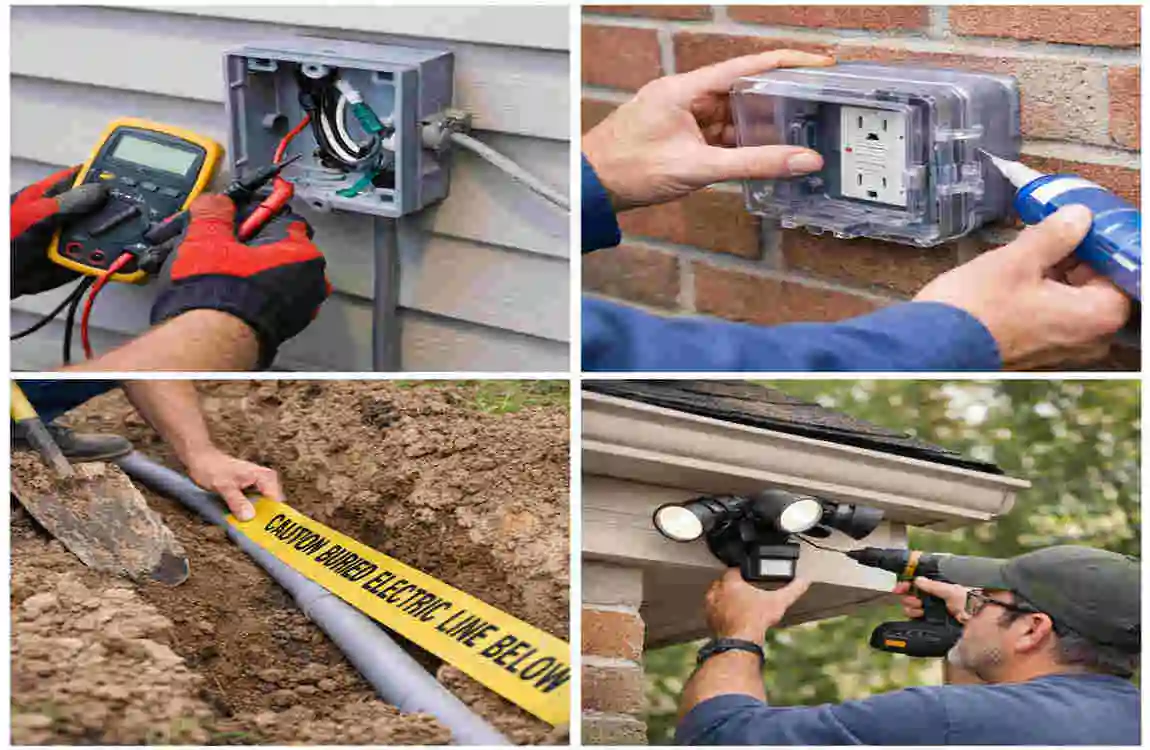
is a beautiful, breezy evening. The monsoon rains have just settled, leaving a cool chill in the air. You are sitting on your freshly renovated patio, with the string lights glowing, the water fountain trickling, and the barbecue grill sizzling. It sounds like the perfect backyard oasis.
But behind this beautiful scene lies a hidden danger if you do not plan things correctly. Electric wiring in an outdoor house environment requires meticulous planning, extreme caution, and specific materials. You cannot simply run a standard indoor extension cord through your garden and hope for the best.
In fact, recent statistics highlight a concerning trend. There has been a 20% rise in outdoor electrical shocks over the last few years, mostly stemming from improper, DIY electrical installations. Water and electricity are a deadly combination, and our local weather makes this an urgent issue.
When you install proper electrical wiring in your outdoor home, you unlock incredible benefits. You can safely power up stunning landscape lights, run motorized water fountains, plug in outdoor entertainment systems, and safely operate electric BBQs. It extends your living space into the fresh air.
Why Outdoor Wiring Matters So Much Today
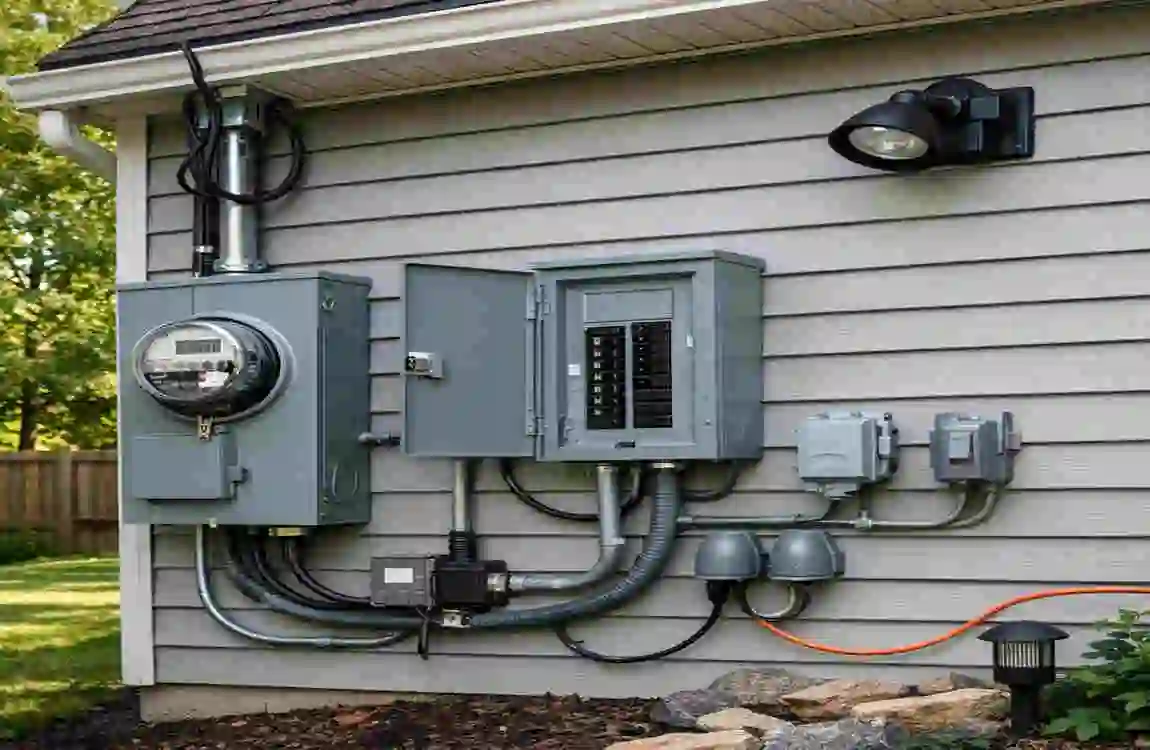
Have you noticed how much our backyards have changed recently? There is a massive, rising demand for backyard upgrades across urban homes. We are no longer satisfied with a simple patch of grass. Today, homeowners want outdoor kitchens, automated pergolas, high-end security cameras, and ambient garden lighting.
But with these incredible upgrades comes a heavy responsibility. Outdoor electrical safety is not just a suggestion; it is an absolute necessity.
To keep your family safe, international electrical codes require specific installations. For instance, you must install at least one GFCI (Ground Fault Circuit Interrupter) outlet at both the front and the back of your home. Furthermore, professionals recommend mounting these outdoor receptacles at a maximum height of 6.5 feet above the ground. This ensures they remain easily accessible while staying out of reach of pooling floor water.
Why do we need such strict rules? The risks are too high. You face severe risks, such as moisture corrosion and circuit overloads, especially in the famously humid weather.
When the heavy monsoon rains hit, any exposed wire or unsealed junction box becomes a fast track for water to enter your home’s main electrical panel. A proper outdoor wiring plan protects your expensive appliances, secures your property from fire hazards, and most importantly, keeps your loved ones safe from accidental shocks.
Essential Safety Codes You Must Follow
When you plan your backyard electrical setup, you cannot cut corners. Following established safety codes is the only way to guarantee a secure installation. Let’s break down the essential NEC and standards you must implement.
GFCI Protection is Absolutely Mandatory
If you take only one piece of advice from this guide, let it be this: GFCI protection is mandatory for all outdoor outlets.
A GFCI outlet acts as a highly sensitive safety monitor. It constantly measures the electrical current flowing in and out of the outlet. If it detects even the slightest imbalance—which usually means electricity is escaping and finding a new path to ground, possibly through a person—it cuts power in milliseconds. This prevents fatal shocks in wet areas.
Bury Wires at the Correct Depth
You cannot just lightly cover electrical wires with dirt and call it a day. If you are running wires underground to a garden shed or a fountain, you must bury your wires 18 to 24 inches deep inside a protective conduit.
Why so deep? Because you want to completely avoid accidental shovel strikes when someone is planting a tree or digging a garden bed later on. If you prefer not to use a conduit pipe, you must use a specialized UF-B (Underground Feeder) cable designed for direct burial in soil.
Install Proper Weatherproof Covers
Your outdoor outlets face the wrath of nature every single day. Therefore, you must install heavy-duty weatherproof covers.
Do not use the flimsy, flat covers that only protect the outlet when nothing is plugged in. You need “in-use” covers that open to 90 degrees and feature a deep hood. This allows you to keep an appliance plugged in while the cover remains firmly shut, completely blocking rain from hitting the exposed prongs. Additionally, never install these boxes below grade level where water naturally forms puddles.
Quick Reference Safety Code Table
Here is a quick breakdown of the non-negotiable codes you need to follow for your backyard electrical safety:
RequirementDepth/HeightPurpose
Conduit Bury 18″ minimum. Provides essential physical protection against shovels and tools.
Outlet Height ≤ 6.5 ft ensures easy accessibility and safety from standing water on the floor.
GFCI Coverage: All wet areas. Offers immediate shock prevention in rain-exposed environments.
Choosing the Right Materials for Outdoor Wiring
Using indoor materials for an outdoor project is a guaranteed recipe for disaster. You need specialized, rugged equipment designed to survive the elements. Let’s look at the materials that will keep your system running smoothly.
Wire, Conduit, and Boxes
Always demand THWN-2 wire for your outdoor conduit runs. The “W” stands for wet-rated, meaning its insulation can handle moisture without degrading.
You should house these wires inside a PVC conduit. PVC will never rust, unlike metal pipes, making it ideal for wet gardens. Pair these with heavy-duty weatherproof electrical boxes made of cast aluminum or high-impact PVC to seal your connections tight.
Breakers vs. Receptacles
You have two choices for GFCI protection: install a GFCI circuit breaker in your main panel, or install individual GFCI receptacles (outlets) outside.
A GFCI breaker protects the entire wire run from the house to the yard, which is highly recommended for underground lines. For lighting, consider LED low-voltage options. They run on just 12 volts, making them incredibly safe for garden beds where pets dig and children play.
Wiring Tips
If you live, you know how brutal the summer humidity and monsoon rains can get. Therefore, prioritize corrosion-resistant materials at every step.
Local experts highly recommend trusting reputable brands for your cabling. Brands like Pioneer Cables or Fast Cables offer Premium copper wiring that heavily resists degradation in our local climate. Do not buy unbranded, cheap cables from the local hardware store; the insulation will crack under the harsh sun within a year.
Step-by-Step Installation Guide
Ready to see how the professionals do it? While you should always hire a licensed electrician to make the final connections, understanding the step-by-step process helps you plan better and monitor the work.
plan the Electrical Load
Before you dig a single hole, you must calculate your amps. Do not overload your home’s electrical panel.
Add up the wattage of the lights, the water pumps, and the appliances you plan to plug in. A standard rule of thumb is that your total continuous load (like lights running all night) should never exceed 80% of the circuit’s total capacity. If you have a 15-amp circuit, keep your load under 12 amps.
Map the Backyard Layout
Grab some graph paper and map out your yard. You want to find the shortest, safest route from your house’s power source to your outdoor features.
Avoid dense vegetation and large tree roots, as these will make digging a nightmare. Once you have a plan, use spray paint or wooden stakes with string to mark the exact trench lines across your lawn.
Dig the Trench Safely and install Conduit
Now comes the hard work. Grab a spade and start digging along your marked lines.
Remember the code: dig your trench at least 18 inches deep if you are using PVC conduit. Once the trench is ready, lay your PVC pipes inside. Glue the joints securely with PVC cement so underground water cannot seep in.
Pull the Wires and Mount the Boxes
Once the conduit is glued and set, use a “fish tape” to pull your wet-rated THWN-2 wires through the pipe. Leave plenty of extra wire at both ends.
Next, securely mount your weatherproof electrical boxes to your walls or outdoor posts. Connect the wires to your heavy-duty GFCI receptacles, ensuring you tighten the screws firmly over the copper wire. Wrap the outlet’s sides with electrical tape for a secondary layer of protection.
Test Everything and Hire a Pro
Before you bury the trench, you must test the system. Use a digital multimeter to verify the voltage and check for any ground faults.
Crucial Advice: Unless you are a certified expert, this is the exact moment you should hire a licensed electrician. Let them inspect your conduit runs, connect the final wires to your main breaker box, and officially sign off on the safety of your project.
Common Mistakes You Must Avoid
Even with the best intentions, homeowners often make dangerous errors when attempting backyard electrical work. Avoid these critical mistakes to protect your home.
Skipping the GFCIs
We mentioned it before, but we will say it again: skipping GFCI protection is a massive fire and shock risk. Do not try to save a few hundred rupees by installing standard indoor outlets outside. If water touches a regular outlet while you are using it, the results can be fatal.
Using Exposed Wires or Undersized Gauges
Never leave cables exposed to the open air without a conduit, unless it is specifically rated sunlight-resistant UF-B cable. Furthermore, using undersized wire gauges is a massive fire hazard. If you try to push 20 amps through a thin wire rated for 10 amps, the wire will literally melt, catch fire, and destroy your garden.
Overloading Circuits Summers
summers are notoriously hot. Your home’s main panel is already working overtime to power multiple air conditioners.
If you haphazardly add heavy outdoor loads—like heavy-duty patio cooling fans and electric grills—to an already stressed circuit, you will constantly trip your breakers. Plan a dedicated outdoor circuit right from the main breaker box to avoid overloading circuits in PK summers.
Ignoring Permits and Local Inspections
Do not try to hide your electrical work. Ignoring permits or local inspections can get you into trouble. In many residential societies, you need approval to make significant structural or electrical changes. If you skip this, you might face heavy fines, or worse, your insurance company might reject a claim if an electrical fire occurs.
Maintenance Best Practices for Longevity
Installing your outdoor wiring is only half the battle. To keep it functioning safely for decades, you need a solid maintenance routine.
First, conduct monthly GFCI tests. Every GFCI outlet has a “Test” and a “Reset” button. Press the test button once a month; you should hear a loud click, and the power should cut off immediately. If it doesn’t, the outlet is broken and needs to be replaced immediately.
Next, actively clear away debris and vegetation. Do not let creeping vines, damp leaves, or grass overgrow your outdoor outlets. This traps moisture right against the electrical box.
Because experiences extreme humidity during the monsoon, schedule annual professional inspections, and have an electrician open the boxes once a year to check for hidden rust or loose connections. Finally, consider upgrading to smart outdoor switches. These let you control your outdoor lighting directly from your smartphone, so you never accidentally leave the lights on during a heavy rainstorm.
Breaking Down the Costs
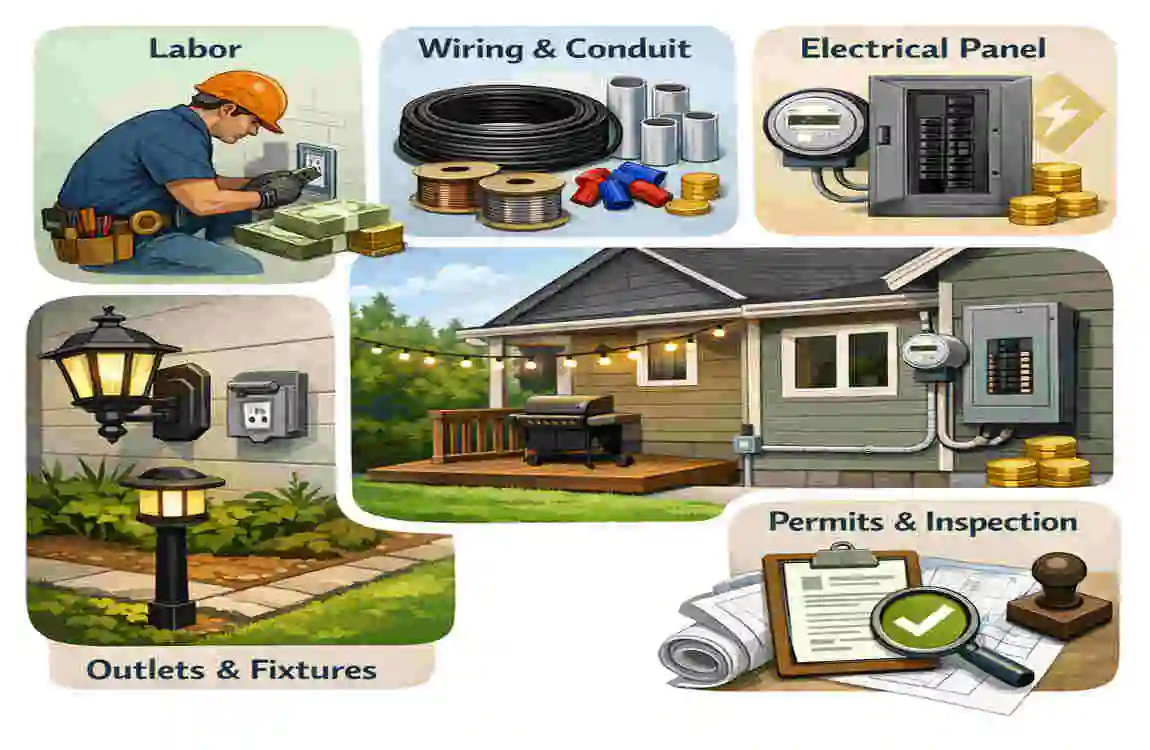
Budgeting for an outdoor electrical project is crucial. Let’s look at the estimated costs for setting up a standard, safe outdoor patio space in a local context.
Item Needed, Estimated Cost (PKR), Important Notes
Materials (approx. 20m) 15,000 – 25,000 Includes high-quality PVC conduit and branded copper wire (e.g., Pioneer).
Professional Labor 20,000 – 40,000 Based on standard rates for licensed electricians handling trenching and panel connections.
GFCI Outlets (4x) 5,000. An essential investment for your family’s safety.
Estimated Total: You should expect to spend roughly 40,000 to 70,000 PKR for a basic, secure, and code-compliant patio setup. It is a small price to pay for absolute peace of mind.
Frequently Asked Questions (FAQs)
How deep for outdoor house wiring? To meet basic safety codes, you must bury PVC conduit at least 18 inches deep. If you use direct-burial UF cable without a conduit, you must dig down to 24 inches to prevent accidental shovel strikes.
Can I use indoor wire outside if it is in a pipe? No. Even inside a sealed PVC pipe, underground environments build up condensation. You must use wet-rated wires, such as THWN-2, to prevent the insulation from rotting.
What happens if rain gets into my outdoor outlet? If you have a properly installed GFCI outlet, it will instantly trip and cut the power, preventing a shock. If it is a standard outlet, it could spark, short-circuit, or cause a dangerous electrical fire.
Do I really need a licensed electrician for backyard electrical safety? Yes. While you can dig the trench and lay the pipes yourself to save on labor, a licensed electrician should always make the final connections to the main breaker to ensure total backyard electrical safety.
Why does my outdoor GFCI keep tripping in the summer? It could be due to moisture entering an improperly sealed box, or you might be overloading the circuit by running too many heavy appliances at once.
