

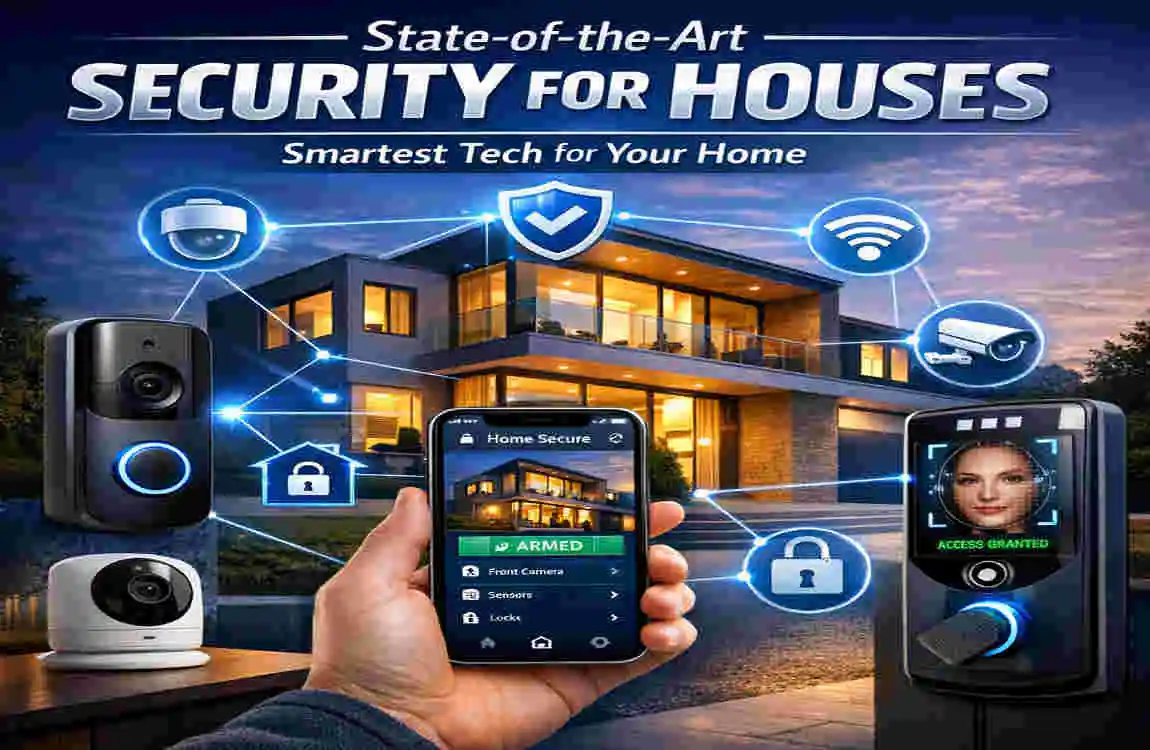
Imagine coming home after a long day at work. You pull into the driveway, and before you even step out of your car, your house knows you’re there. The exterior lights warm up to a welcoming glow, the front door unlocks with a scan of your face, and your security system disarms itself automatically. This isn’t a scene from a sci-fi movie; it is the reality of state-of-the-art home security in 2026.
In today’s world, peace of mind is more valuable than ever. Recent statistics paint a concerning picture: nearly 62% of U.S. homes now utilize video cameras, a surge driven largely by the rampant rise of “porch piracy” and urban theft. But mounting a camera on your wall is no longer enough. The burglars of 2026 are tech-savvy, and the threats are evolving. That is why your home defense needs to evolve, too.
Gone are the days of clunky keypads and ear-piercing sirens that neighbors ignore. The new standard for safety is a seamless, intelligent ecosystem. We are talking about predictive AI that can distinguish between a stray cat and a prowler, biometric locks that know your fingerprint better than you do, and cyber safeguards that protect your digital life as fiercely as your physical one.
Why Upgrade to State-of-the-Art security?
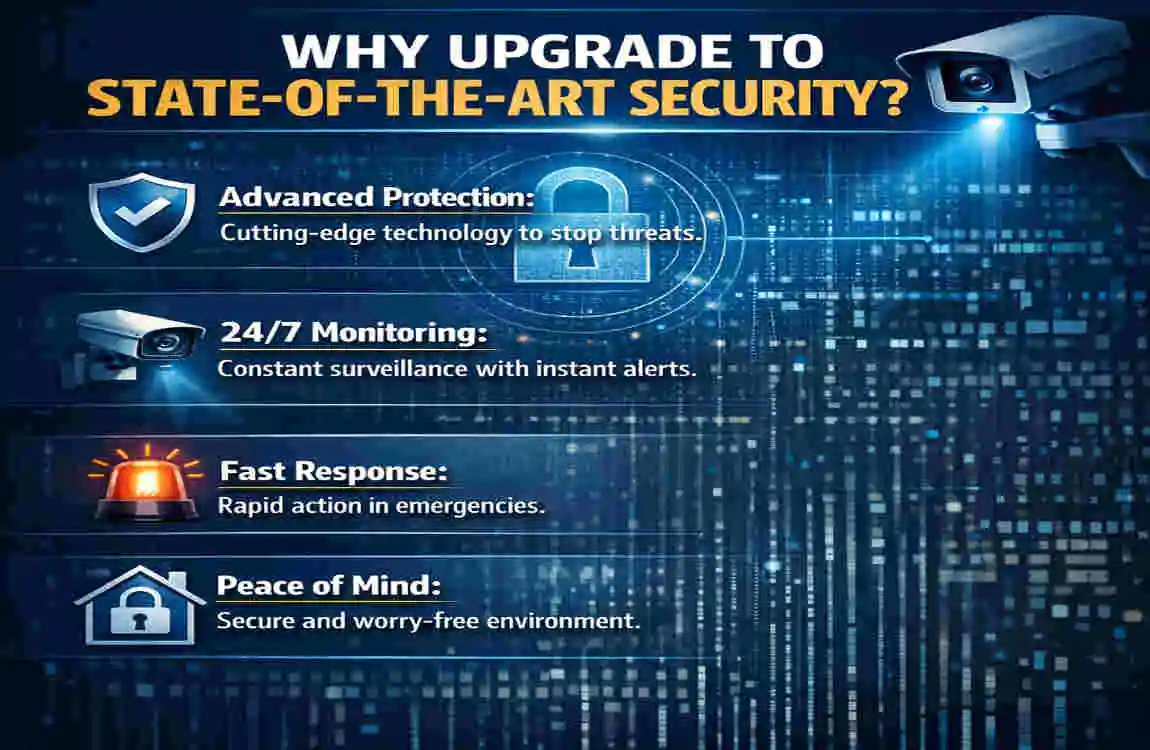
You might be asking yourself, “My old alarm system works fine, so why should I spend money on an upgrade?” It is a fair question. However, the security landscape has shifted dramatically in the last few years. The systems of the past were reactive—they alerted you after a window was broken. State-of-the-art security for houses in 2026 is proactive. It stops threats before they escalate.
Rising Threats in 2026
The nature of crime is changing. Urban crime spikes have forced homeowners to rethink their perimeters, but the physical threat is only half the story. With over 18 billion IoT (Internet of Things) devices connected globally, our homes are more digital than ever. This connectivity brings convenience, but it also opens the door to hackers. A vulnerability in an outdated smart fridge or a cheap Wi-Fi camera can give cybercriminals a backdoor into your private life.
Furthermore, environmental risks are becoming a major focus for modern security. Carbon monoxide (CO) leaks, flash floods, and electrical fires pose just as much danger to your family as an intruder. Modern systems integrate environmental monitoring to detect these invisible killers instantly. It is no wonder that projections show AI camera adoption jumping from 45% to 65% this year alone; homeowners are realizing that a passive recording device isn’t enough to handle these multifaceted risks.
Benefits Over Traditional Systems
When you upgrade to a modern system, you aren’t just buying gadgets; you are buying a service that works for you 24/7. One of the most significant advantages is the combination of professional monitoring and AI. In the past, a motion sensor would trigger a false alarm whenever a curtain blew in the wind, causing frustration. Today, anomaly detection algorithms analyze movement patterns to filter out false positives, ensuring that when your phone buzzes, it is something that actually needs your attention.
There is also a financial incentive. Insurance companies love state-of-the-art security for houses. Many providers now offer Premium discounts of up to 20% for homes equipped with monitored, smart security systems. Over a few years, these savings can cover the cost of the equipment itself.
To visualize the leap in technology, let’s look at how modern systems stack up against the old guard:
FeatureTraditional AlarmsState-of-the-Art security (2026)
Detection : Basic motion sensors (often triggered by pets) , AI predictive analytics (distinguishes people, pets, cars)
Response Local siren (relies on neighbors hearing it) Instant app alerts + direct police/fire dispatch
Integration None (standalone system) Full Smart Ecosystem (smart locks, lights, thermostats)
Connectivity : Landline or basic cellular , High-speed Wi-Fi with Cellular & Battery Backup
Control Wall-mounted keypad only, Remote app control, Voice commands, Bio-authentication
Key Trends in Smart Home security 2026
The “smart home” concept has matured. It is no longer about showing off cool tricks to your friends; it is about integrated, intelligent protection. Three major trends are dominating the market this year, redefining what it means to be safe.
AI-Driven Cameras and Sensors
Artificial Intelligence is the brain behind the operation. In 2026, AI home security has moved beyond simple motion detection. Cameras now possess “contextual awareness.” This means your driveway camera doesn’t just see “movement”; it recognizes that a delivery truck has pulled up and a person in a uniform is walking toward the door with a package. It can then send you a specific notification: “Package delivered at front door.”
Conversely, if a stranger lingers near your back window at 2:00 AM, the system identifies this as suspicious behavior. It can trigger outdoor spotlights to flash and play a pre-recorded warning message, such as “You are being recorded,” often scaring off intruders before they even attempt a break-in.
Sensor technology has also seen massive growth, with a 55% increase in the adoption of specialized sensors. We aren’t just talking about door/window contacts anymore. We have glass-break sensors that detect the characteristic frequency of glass breaking, and water leak sensors that automatically shut off your main water valve if a pipe bursts. Top picks like the SimpliSafe Gen 4 have integrated these AI capabilities directly into their sensors, allowing for faster processing without relying entirely on the cloud.
Biometric and Keyless Entry
Fumbling for keys in the dark is a thing of the past. Biometric house locks are becoming the standard for new entryways, with a projected 40% adoption rate among new homeowners this year. These locks use the unique markers of your biology—your fingerprint or your facial geometry—to grant access.
Imagine walking up to your door with your arms full of groceries. You don’t need to put anything down. You look at the doorbell camera, the system recognizes you, and the deadbolt slides open. Brands like Liberty Safe are even implementing Multi-Factor Authentication (MFA) in high-security areas (such as gun safes or home offices), requiring both a passcode and a fingerprint for entry. This ensures that even if someone guesses your code, they still can’t get in without you.
Network and Cyber Defenses
As we fill our homes with smart devices, we create a computer network that needs protection. Security in 2026 adopts a “Zero-Trust” approach. This means your security system assumes that no device is safe until proven otherwise.
Advanced routers now come with built-in network segmentation. They automatically place your insecure IoT devices (like that smart toaster or cheap lightbulb) on a separate “guest” network, isolating them from your critical devices, such as your laptop or security cameras. This prevents a hacker from using a vulnerable smart bulb as a stepping stone to access your personal data. Furthermore, using VPNs (Virtual Private Networks) for remote access ensures that when you check your cameras from a hotel Wi-Fi halfway across the world, the connection remains encrypted and private.
Top State-of-the-Art security Systems
Choosing the right system can be overwhelming with so many options on the market. To help you decide, we’ve compared three leading providers that are defining state-of-the-art security for homes in 2026.
System Strengths Price Range Best For Rating
SimpliSafe Gen 4 Excellent DIY setup, AI-powered alerts, contract-free $250+ Budget-conscious homes & Renters
ADT Professional installation, deeply integrated monitoring, brand reliability $500+ Homeowners wanting full-service handling
Vivint Superior smart home automation integration, high-end equipment $600+ Luxury setups & Tech enthusiasts
SimpliSafe Gen 4
SimpliSafe continues to dominate the DIY space. The Gen 4 system is a marvel of efficiency. It is designed for users who want powerful protection without drilling holes in every wall. The peel-and-stick sensors are stronger and smaller than ever, and the base station now acts as a smart home hub. Its “Fast Protect” technology allows monitoring agents to speak directly through the camera to intruders, a feature proven to stop burglaries in progress. If you are renting or want to save on installation fees, this is your best bet.
ADT
ADT is the titan of the industry, and for good reason. In 2026, they significantly modernized their offering. They now partner with Google Nest products, giving you the best of professional monitoring with top-tier smart home tech. The real value here is the service. If you aren’t comfortable climbing ladders to mount cameras or wiring up panels, ADT’s professional installers handle everything. Their monitoring centers are redundant and highly trained, ensuring that if you have an emergency, help is on the way immediately.
Vivint
If you want your house to feel like a futuristic fortress, Vivint is the way to go. Their equipment is sleek and highly integrated. The “Smart Deter” feature on their outdoor cameras is a game-changer; it uses light and sound to warn lurkers they’ve been spotted. But where Vivint truly shines is automation. Their system learns your routine. It knows when you leave for work and can automatically lock doors, arm the system, and adjust the thermostat to save energy. It is a Premium price tag, but for a truly “smart” experience, it is unmatched.
Implementing Layered security Strategies
Buying the gear is step one. Implementing it effectively is step two. Security professionals recommend a “layered” approach, creating multiple circles of defense around your valuables.
Perimeter Defenses
Your first line of defense is your property line. You want to deter criminals before they even set foot on your property.
- Visibility is Key: install motion-activated floodlights in dark corners. Criminals hate the spotlight.
- Driveway Sensors: These alert you the moment a vehicle or person enters your property, giving you valuable time to react.
- Signage: Never underestimate the power of a “Protected by…” yard sign. It is a psychological barrier that makes opportunists think twice.
Interior and Environmental Layers
If someone bypasses your perimeter, the interior layer takes over.
- Entry Points: Every exterior door and accessible window should have a sensor.
- Motion Zones: Place motion detectors in high-traffic areas, such as hallways and living rooms.
- Safe Rooms: For maximum safety, consider reinforcing a designated room (such as a master closet) with a solid-core door and a deadbolt, where your family can retreat in a worst-case scenario.
- Environmental Safety: Integrate smart smoke and CO detectors. The best ones can automatically shut off your HVAC system if smoke is detected to prevent the spread of the fire, and unlock smart doors to allow firefighters easy access.
Automation Tips
Automation makes security easier to use, which means you are more likely to use it.
- Zone Scheduling: Set your system to automatically arm the “Perimeter” zone (doors/windows) at 10:00 PM every night, so you are safe while you sleep without triggering motion alarms when you get a glass of water.
- Vacation Mode: Use smart lights to mimic your presence. Have them flicker on in the kitchen at 7:00 PM and off at 11:00 PM to make it look like someone is home.
- Privacy First: If you are tech-savvy, consider self-hosting some of your video data to keep it off the cloud, ensuring total privacy.
Your 2026 security Checklist:
- Assess Risks: Are you in an urban area (high theft risk) or rural (slow emergency response)? Tailor your system accordingly.
- Hardwire Critical Devices: Wi-Fi is great, but hardwiring cameras (PoE) ensures they work even if the Wi-Fi is jammed.
- Test Monthly: A security system is only good if it works. Test your sensors and cameras on the first of every month.
Installation and Cost Guide
DIY vs. Professional
The debate between DIY and professional installation comes down to time vs. money. DIY (e.g., SimpliSafe) is incredibly fast. You can set up a whole house in under an hour. It is portable, making it perfect for renters. However, you are responsible for maintenance and troubleshooting. Professional (e.g., ADT) guarantees a perfect setup. They will hide wires, optimize camera angles, and ensure every sensor is functioning. The downside is the installation fee and the scheduling hassle.
Budget Breakdown
How much should you budget for state-of-the-art security for houses?
- Starter Kits: Expect to pay between $200 and $500 for a basic setup (Base station, keypad, a few sensors).
- Full Systems: For a comprehensive setup with cameras, smart locks, and environmental sensors, costs can exceed $1,000+.
- Subscriptions: Don’t forget the monthly fee. Professional monitoring ranges from $15 to $50 per month.
Pro Tip: Remember to factor in the ROI (Return on Investment). Between insurance discounts (up to 20%) and potential burglary loss prevention, the system often pays for itself within 3-5 years.
FAQs on State-of-the-Art security for Houses
Q: What is the absolute smartest home security tech available in 2026? A: The integration of AI with biometrics is the pinnacle of current tech. Systems that can recognize your face, disarm automatically, and adjust the home’s environment to your preference offer the highest level of security and convenience.
Q: How much does a typical 2026 system cost? A: As detailed in our breakdown, you can get started for as low as $250 for equipment, but a robust “state-of-the-art” system usually falls in the $600 – $1,200 range for hardware, plus monitoring fees.
Q: Are these systems compatible with Alexa or Google Home? A: Yes, almost all modern systems are designed to work seamlessly with major smart home ecosystems. You can ask Alexa to “arm the system” or view your Google Nest camera feed directly on your refrigerator’s smart hub.
