

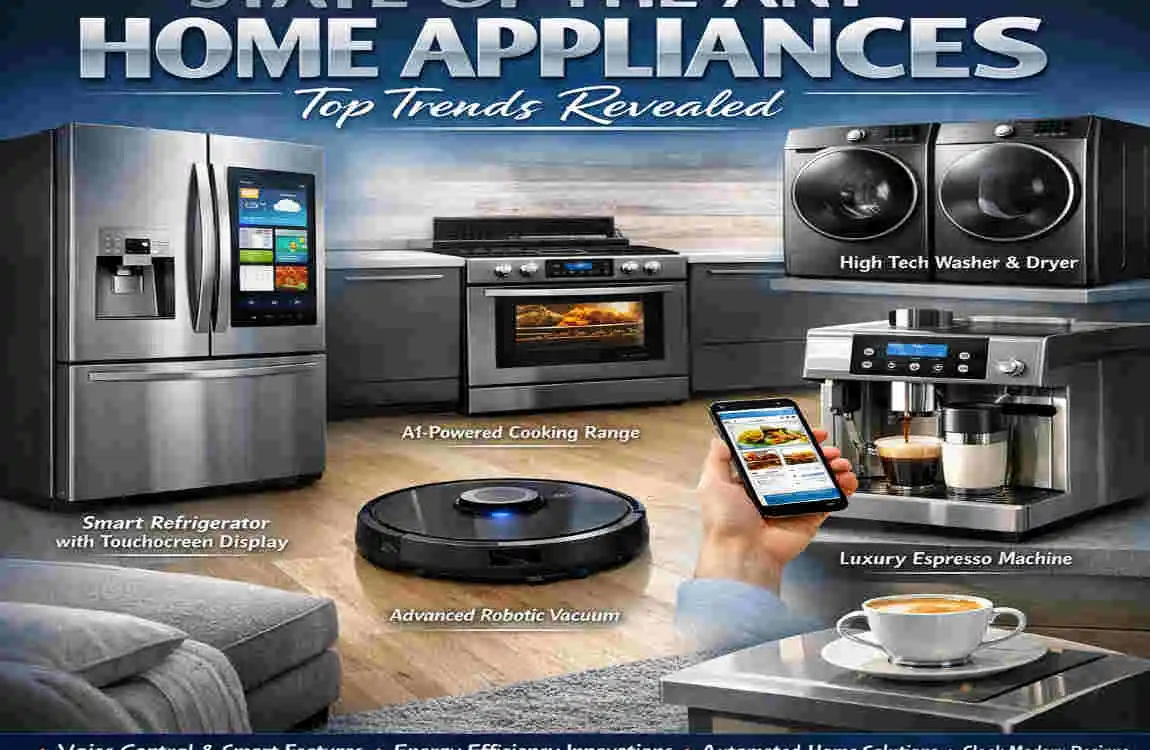
You walk into your kitchen after a long workday, and your refrigerator has already reordered milk and eggs because it noticed supplies running low. The oven preheats to your favorite recipe, and your washer sends a notification when your clothes are fresh and sanitized—no more forgotten laundry!
Welcome to the world of state-of-the-art home appliance innovation in 2026, where smart technology is transforming everyday living into something convenient, efficient, and even a little magical.
Why is this such a big deal now? The global smart home market has exploded, surpassing $150 billion this year and showing no signs of slowing. More homeowners crave smarter, cleaner, and greener living spaces. They want less hassle and more harmony—appliances that think, predict, and adapt, making life smoother at every turn.
Why State-of-the-Art Home Appliances Matter in 2026
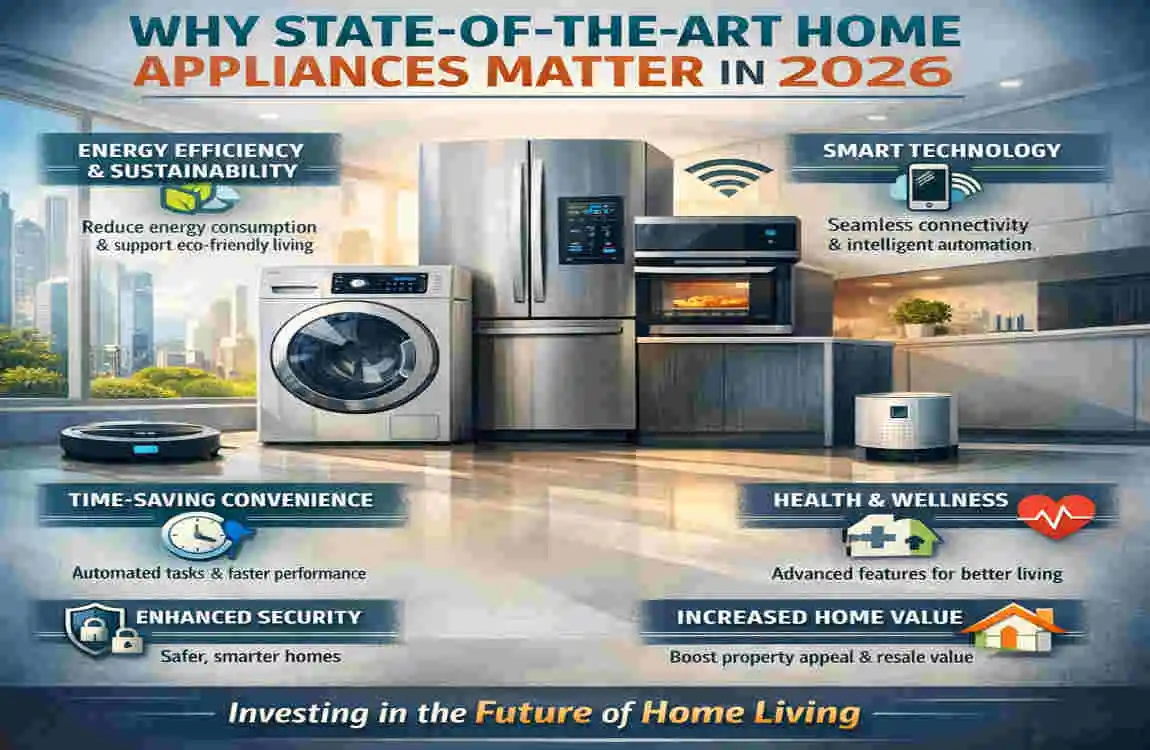
The Shift from Old-School to Smart Living
Let’s face it: Traditional appliances once got the job done, but they didn’t make your life easier. Fast-forward to 2026, and homes are evolving at lightning speed. It’s not just about having a fridge or oven—it’s about having a partner in your daily routines.
Market Boom: A Tech Revolution at Home
According to Statista, the smart appliance market is growing at a jaw-dropping 25% year over year. That’s millions of new devices entering homes, from AI-powered refrigerators to self-cleaning washers.
Lifestyle Upgrade: Save Time, Money, and Hassle
- 30% Less Time Cooking: Automation means dinner is ready faster, with less stress.
- 20-40% Lower Energy Bills: Smart sensors and efficient motors cut waste.
- No More Forgotten Laundry: Get reminders and remote controls, so you’re never left with a musty load.
Sustainability Push: Eco-Friendly Living
With climate change on everyone’s mind, eco-friendly appliances are now a must. Today’s machines:
- Use less water and energy,
- Last longer,
- And even recycle water and heat.
Pain Points Solved: Everyday Worries Gone
Ever opened the fridge to find spoiled food? Or run a second cycle because you forgot the laundry? These headaches are history with modern appliances that remind, alert, and even fix themselves.
Feature Comparison Table
Feature Traditional Appliances State-of-the-Art Home Appliances
Energy Use High (e.g., 500 kWh/year) Low (e.g., 300 kWh/year)
Connectivity : None Wi-Fi, app, voice control
Lifespan ~10 years 15+ years (AI maintenance)
Top 7 Trends in State-of-the-Art Home Appliances
The state of the art in home appliance technology is evolving daily. Here are the hottest trends for 2026, complete with real examples and practical tips.
AI-Powered Predictive Appliances
Imagine a fridge that knows what you need before you do. AI-powered appliances use sensors and data to anticipate your needs—like a washer that detects fabric types, or a fridge that tracks what’s running low.
Example: The Samsung Bespoke AI Fridge can:
- Scan contents,
- Suggest recipes,
- Order groceries online.
Pros:
- Reduces food waste by up to 25%,
- Voice-activated for hands-free help.
Cons:
- Higher upfront cost (often $2,000+),
- Requires internet connectivity.
Why it matters: These smart helpers make daily chores feel effortless.
Energy-Efficient Smart Ovens and Cooktops
Cooking gets an eco-friendly upgrade. Today’s ovens use induction technology for faster, safer, and greener meals. Many connect to apps that guide you step-by-step through recipes.
Example: The Thermador Freedom Induction Cooktop offers:
- Flexible zones,
- App-based recipe suggestions,
- Remote preheating.
Trend stat: 40% more homes now use smart ovens compared to 2024.
Top Energy-Saving Features:
- Self-cleaning cycles
- Precise temperature controls
- Automatic shut-off
Why it matters: You save time, energy, and can even cook remotely!
Self-Cleaning and Antimicrobial Washers/Dryers
No more lingering odors or germs. New washers use UV sanitization and antimicrobial coatings to kill 99.9% of bacteria.
Example: The LG WashTower offers:
- All-in-one stacking,
- UV sanitization,
- App alerts for completed loads.
Infographic:
Before: 1 in 3 loads harbored bacteria; After: 99.9% eliminated with UV.
Why it matters: Perfect for families, allergy sufferers, or anyone who wants cleaner clothes with less effort.
Voice-Activated Refrigerators and Freezers
Talk to your fridge—really! Modern fridges work with Alexa, Google Assistant, and other voice services. You can check ice levels, set temperatures, or add items to your grocery list—all hands-free.
Example: The GE Profile Smart Fridge integrates seamlessly with smart home systems.
Integration Tips for a Smart Ecosystem
- Connect all appliances to a single hub (e.g., an Amazon Echo).
- Set up routines (e.g., fridge tells you what’s running low every Friday).
Why it matters: Your smart home becomes truly connected, making life smoother.
Modular and Customizable Kitchen Suites
Say goodbye to cookie-cutter kitchens. Modular appliances let you mix and match according to your needs and space.
Example: The Miele Dialog Oven can be installed anywhere and upgraded as tech evolves.
Pros:
- Fits any kitchen size or style
- Easy to upgrade (future-proof investment)
Why it matters: You get a kitchen that grows with your family and technology.
Eco-Friendly Dishwashers with Water Recycling
Wash dishes guilt-free. New dishwashers recycle up to 70% of their water, cutting waste and saving money.
Example: The Bosch 800 Series uses sensors to optimize water and detergent usage, and recycles rinse water for the next load.
Sustainability Angle:
- Reduces household water use
- Supports green living trends
Why it matters: You help the planet—and your wallet—without sacrificing performance.
Multi-Functional Robot Vacuum-Mops
Cleaning, reimagined. Today’s robot vacuums don’t just sweep—they mop, map, and even talk to your other appliances.
Example: The iRobot Roomba Combo:
- Uses AI mapping,
- Avoids obstacles,
- Syncs with other smart devices.
Best AI Home Appliances 2026:
- Robot vacuums that learn your schedule,
- Smart dishwashers that run when energy is cheapest,
- Ovens that adjust recipes for your dietary needs.
Why it matters: Your home stays spotless, almost on autopilot.
Must-Have State-of-the-Art Home Appliances for 2026
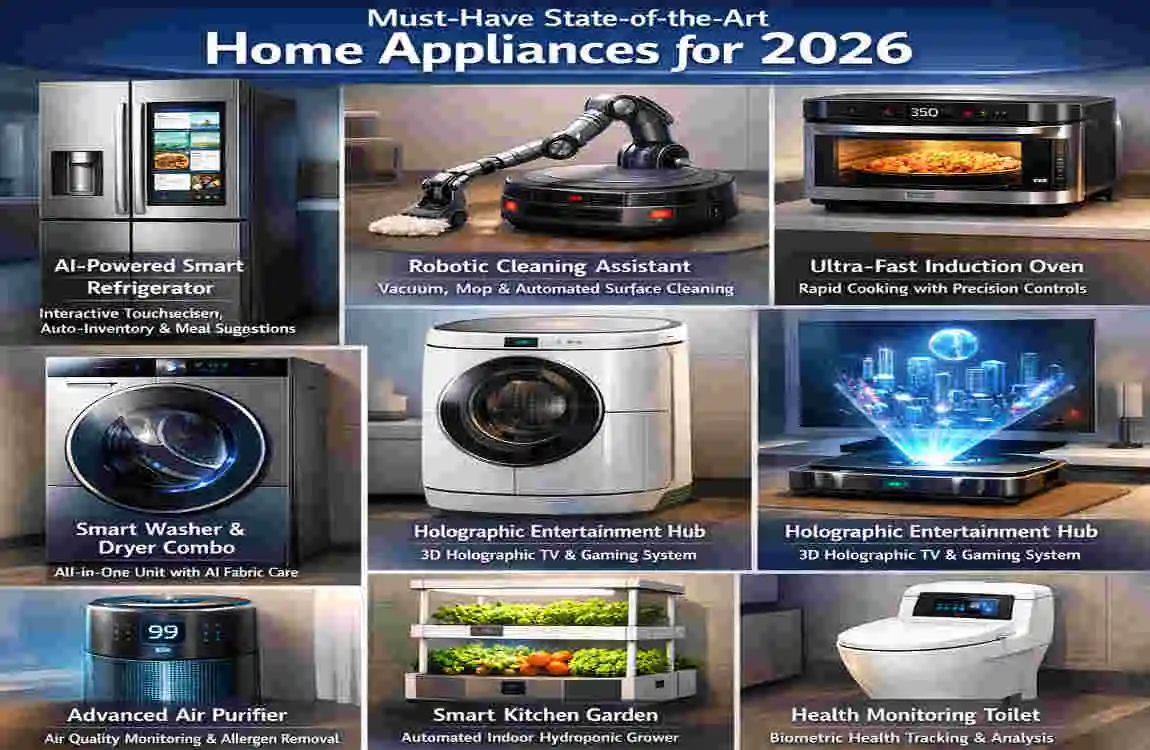
Ready to shop smarter? Here’s a quick glance at the buyer’s guide to 2026’s best picks.
Appliance Key Features Price Range Best For Rating (out of 5)
Samsung Family Hub Fridge AI Vision, touchscreen, recipes $3,000-$5,000 Families 4.8
Whirlpool Smart Washer Load-sensing, app notifications $1,200-$2,000 Busy pros 4.7
Wolf Induction Range Wi-Fi, precision cooking $4,500+ Chefs 4.9
GE Profile Smart Fridge Voice-activated, Wi-Fi $2,500-$4,000 Smart homes 4.6
Bosch 800 Dishwasher Water recycling, quiet, app $1,000-$1,600 Eco-friendly 4.8
Buying Factors to Consider
- Compatibility:
- Look for the Matter standard—this means your appliances will play nicely with other smart home devices, no matter the brand.
- Warranty:
- Prefer appliances with 5+ year warranties for peace of mind.
- Budget Picks:
- You don’t have to spend a fortune!
- Wyze Robot Vacuum: $300, great for small homes.
- Insignia Smart Air Fryer: $100, app-controlled.
Benefits and Challenges of Upgrading to State-of-the-Art Home Appliances
Why Upgrade?
Benefits List:
- Time Savings: Automate up to 2 hours of daily chores.
- Cost Recovery: Many smart appliances pay for themselves in 3-5 years via lower utility bills.
- Home Value: Boost resale value by 5-10%—buyers love smart homes.
But Consider the Challenges
- Upfront Cost: The latest tech isn’t always cheap.
- Privacy Concerns: Smart appliances collect data—always check privacy policies.
- Learning Curve: It may take a little time to master new features.
Smart Solutions
- Start small: Upgrade one appliance at a time.
- Use guest networks: Keep appliances on a separate Wi-Fi for security.
- Regular updates: Keep software up to date to patch vulnerabilities.
How to Choose and Integrate State-of-the-Art Home Appliances
Step-by-Step Guide:
- Assess Your Needs:
- Decide which area—kitchen, laundry, or cleaning—needs a tech boost.
- Check Compatibility:
- Make sure new appliances work with your existing smart home gear (look for Matter, Alexa, or Google compatibility).
- Read Reviews:
- Use trusted sources like Consumer Reports for honest ratings.
- Budget for Installation:
- Some features require professional setup; factor this into your budget.
Pro Tip:
Use a smart hub like Amazon Echo or Google Nest Hub to control all your state-of-the-art home appliances from a single app or via voice commands.
