

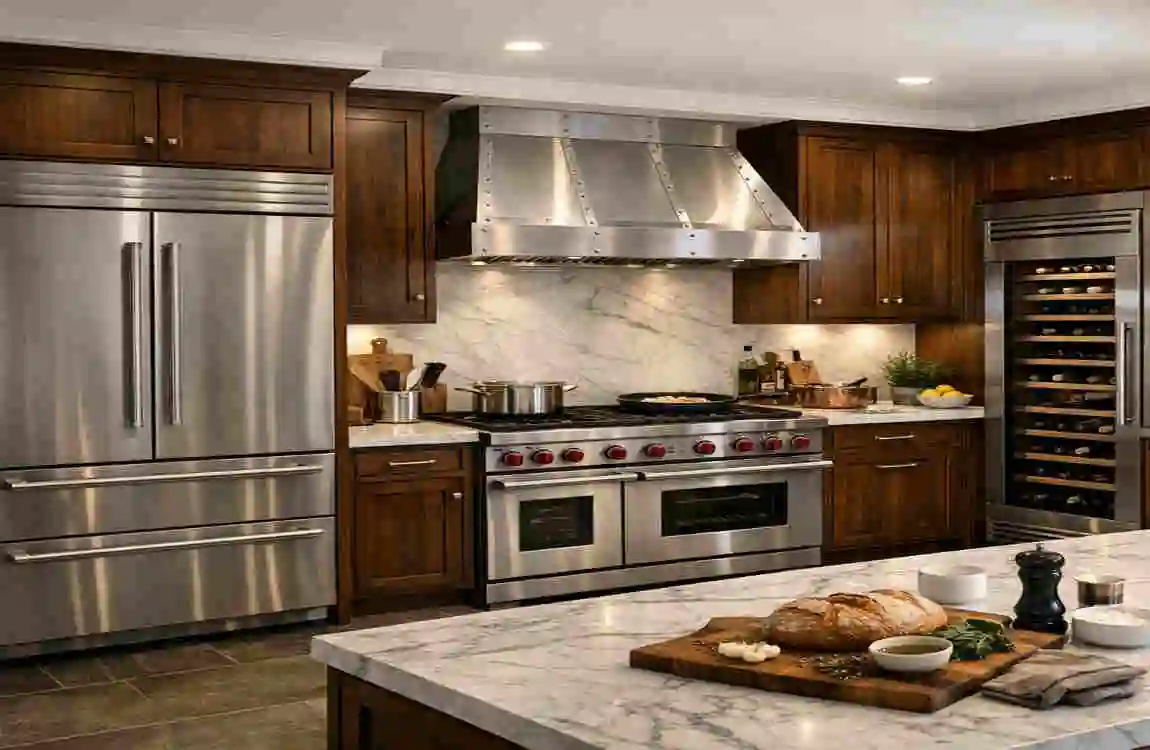
Now, imagine the same scenario in a kitchen equipped with a pro-grade appliance suite. The turkey roasts evenly with precise convection airflow, the water boils in seconds on a high-BTU burner, and the sauce holds a perfect temperature without scorching.
This isn’t just a daydream; it’s the reality for home chefs who have switched to professional-grade equipment.
A pro-grade appliance isn’t just a shiny object to impress your neighbours. It is commercial-quality equipment engineered for heavy usage, extreme durability, and culinary precision. These are machines designed to bridge the gap between a high-end restaurant line and your home sanctuary. According to recent Statista data, demand for these high-performance machines is skyrocketing, with the global market projected to grow significantly as more homeowners seek to replicate the restaurant experience at home.
What Makes a Pro-Grade Appliance Stand Out?
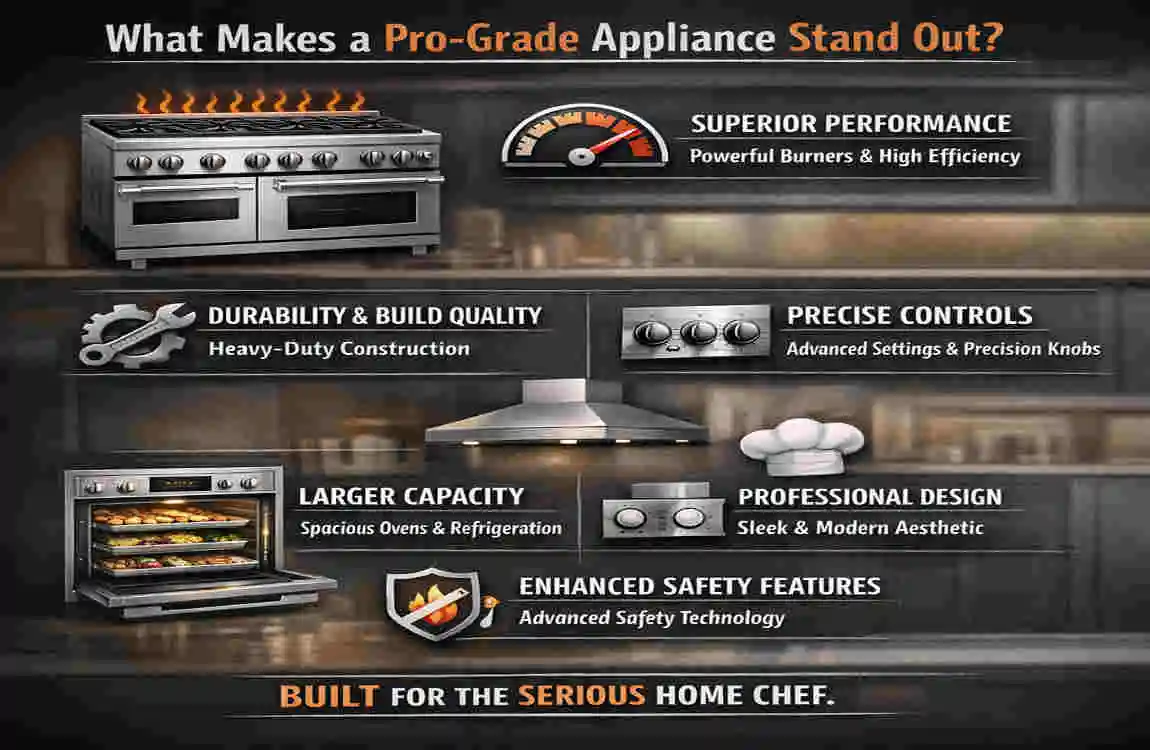
If you walk into a big-box store, you will see rows of sleek refrigerators and ranges. But peel back the stainless steel facade, and the difference between a consumer model and a pro-grade appliance becomes immediately apparent. It is like comparing a reliable family sedan to a high-performance tank. Both will get you to the grocery store, but only one is built to survive a war zone—or in this case, a marathon holiday cooking session.
Superior Build Quality
The most obvious difference is the materials. Standard appliances often use plastic components for gears, knobs, and shelving supports. A pro-grade appliance, however, relies on heavy-gauge stainless steel and cast iron.
We are talking about reinforced hinges that can support a heavy oven door for decades, and shelving that doesn’t bow under the weight of a heavy roast. While a standard appliance might last you 8 to 12 years before the electronics fry or the motor gives out, pro-grade equipment is engineered for a lifespan of 20+ years. It is built to be repaired, not replaced.
Power and Precision
Have you ever tried to sear a steak on a standard electric stove? You often end up steaming it instead because the pan loses heat as soon as the meat comes into contact with it.
Pro-grade ranges solve this with raw power. We measure this power in BTUs (British Thermal Units). A standard burner might give you 10,000 BTUs. A pro-grade appliance range, like a Wolf or Viking, can pump out 20,000 to 25,000 BTUs. This means rapid boiling and restaurant-quality searing.
But power is nothing without control. These appliances also offer the “low end”—the ability to hold a flame so small it can melt chocolate on a paper plate without burning the paper. That is precision.
Advanced Tech and Testing
It’s not just about brute force; it’s about brains, too. Modern pro-grade units feature advanced convection systems that circulate air so perfectly you can bake three racks of cookies without rotating them. Many now include smart integrations that let you monitor internal meat temperatures via Wi-Fi.
Furthermore, these machines undergo durability testing that would destroy a normal appliance. Many are NSF-rated (National Sanitation Foundation), meaning they meet strict public health standards for commercial kitchens.
To give you a clearer picture, let’s look at a direct comparison:
FeaturePro-Grade Appliance (e.g., Wolf/Sub-Zero)Standard Appliance (Big Box Brands)
Lifespan 20–30 Years 8–12 Years
BTU Output 15,000 – 25,000+ BTUs 7,000 – 12,000 BTUs
Temperature Variance +/- 1°F Accuracy +/- 20°F Variance
Materials : Heavy-gauge Steel, Cast Iron, Glass , Plastic, Thin Steel, Enamel
Repairability High (parts available for decades) Low (often cheaper to replace)
Why Invest in Pro-Grade Appliances for Lifetime Kitchens?
I know what you are thinking: These price tags are steep. And you are right. But when you shift your mindset from “buying a stove” to “investing in your home’s infrastructure,” the math starts to make sense.
Longevity Saves Money
Think about the cycle of disposable appliances. You spend $1,000 on a dishwasher. Five years later, the pump fails, and the repair costs $600. So, you buy a new one. Over 20 years, you might buy three or four dishwashers.
A pro-grade appliance is a “one-and-done” purchase. When you amortise the cost of a $10,000 range over 25 years, the annual cost is often comparable to replacing cheap units every few years, minus the headache of removal and installation.
Enhanced Cooking Results
This is the emotional ROI. If you love to cook, your equipment matters.
- Even Baking: No more burnt edges and raw centres.
- Perfect Searing: Locking in juices exactly like your favourite steakhouse.
- Freshness: Pro-grade fridges have air scrubbers (like NASA technology) that remove ethylene gas, keeping your greens crisp for weeks, not days. This reduces food waste, saving you money on your grocery bill.
Resale Value Boost
Real estate agents will tell you that the kitchen sells the house. According to the National Association of Realtors (NAR), a kitchen remodel with high-end, commercial-style appliances can significantly boost a home’s resale value, potentially adding 5% to 10% to the final sale price.
When a potential buyer walks in and sees that iconic red-knobbed range or the heavy stainless-steel fridge, it signals luxury and quality throughout the home.
Energy Efficiency
Surprisingly, power doesn’t always mean waste. Many pro-grade appliances, particularly induction cooktops and sealed refrigeration units, are incredibly energy-efficient. They are insulated better than standard models, meaning they don’t have to work as hard to maintain temperature.
Top Pro-Grade Appliance Picks by Category
Now for the fun part. If you are ready to build your dream kitchen, where should you start? I’ve scoured Consumer Reports, Wirecutter, and professional chefs’ feedback to bring you the heavy hitters.
Pro-Grade Refrigerators
The refrigerator is the heart of the kitchen. In the pro world, we look for dual compressors. This means there is one motor for the fridge and a separate one for the freezer. Why does this matter? Because moist air is good for lettuce but bad for frozen peas (it causes freezer burn). Pro-grade fridges keep these climates separate.
Sub-Zero BI-36U Over-and-Under. This is the gold standard. Sub-Zero pioneered the built-in look.
- Why it wins: It features an air purification system based on NASA technology to scrub bacteria and mould.
- Durability: Built to last 20+ years.
- Design: It can be fitted with a custom panel to disappear into your cabinetry.
Thermador Freedom Collection. Thermador is famous for its “columns”—separate fridge and freezer towers that you can place anywhere in the kitchen.
- Why it wins: Incredible customisation and heavy-duty soft-close drawers that feel like closing the door of a luxury car.
Pros and Cons of Pro-Refrigeration:
- Pros: Food lasts 2-3x longer, stunning aesthetics, holds temperature perfectly.
- Cons: Expensive ($8,000-$15,000+), requires professional maintenance.
Pro-Grade Ranges and Cooktops
This is the engine room. You want high heat, low simmers, and heavy grates.
Wolf 48″ Dual Fuel Range. You have seen this range. It’s the one with the famous red knobs (though you can get black or stainless).
- The Power: It offers dual-stacked sealed burners. This means two rings of flame per burner—one for high-heat searing (20,000 BTU) and a lower tier for delicate simmering.
- The Oven: The “Dual Fuel” means gas cooking on top and electric convection ovens below, which is the preferred setup for bakers who need consistent dry heat.
- Bonus: You can configure it with an infrared griddle or charbroiler.
Viking 7 Series Viking is the brand that started the commercial-home trend.
- The Power: The 7 Series features Elevation Burners that reach a staggering 23,000 BTUs.
- Hygiene: The burners are elevated from the surface, making cleanup much easier than traditional commercial ranges.
Pro-Grade Ovens and Wall Units
If you prefer a wall oven setup, you are looking for capacity and a variety of modes.
Miele H 7880 BP Miele is German engineering at its finest.
- Tech: This isn’t just an oven; it’s a computer. It has a camera inside so you can watch your roast on your phone.
- Steam-Combi: It injects bursts of steam during baking. This is the secret to crusty bread that is fluffy on the inside.
BlueStar 30″ Wall Oven. If Miele is high-tech, BlueStar is high-touch.
- Feature: It fits a full commercial baking sheet (most home ovens don’t).
- Heat: It uses a ceramic heater for intense, even heat, perfect for pizzas.
Pro-Grade Dishwashers
You want a silent machine and scrubs pots without pre-rinsing.
Bosch Benchmark Series Bosch essentially owns the high-end dishwasher market.
- Silence: At 38-44 dBA, you literally have to shine a light on the floor (which it does) to let you know it’s running.
- The Rack: The flexible third rack creates space for silverware and ramekins, freeing up the bottom for pots.
Miele G 7000 Series
- Innovation: It features the AutoDos system with a PowerDisk. You insert a detergent disk, and the machine automatically dispenses the exact amount needed based on how dirty the dishes are.
- Warranty: Miele designs components for 20 years of use.
Ventilation and Small Appliances
Do not overlook ventilation. If you buy a Wolf range and put a cheap microwave hood over it, you will fill your house with smoke and grease.
- Ventilation: Look for brands like Fantech or Vent-A-Hood. You need at least 600-1200 CFM (Cubic Feet per Minute) of airflow to handle a pro-grade appliance range.
- Mixers: The KitchenAid Pro Line or Wolf Gourmet stand mixers have DC motors that maintain speed even when mixing thick bread dough.
Real Chef Reviews and Case Studies
It is one thing to read specs; it is another to hear from the people using these beasts daily.
We spoke to “Chef Sarah,” a former sous-chef who now runs a catering business from her home. “When I renovated, I splurged on the BlueStar range. People thought I was crazy to spend that much. But last Christmas, I cooked for 25 people. I had the turkey, the stuffing, and the pies all going at once. The temperature recovery time—how quickly the oven heats back up after you open the door—is instant. You can’t put a price on that confidence.”
Case Study: The Lahore Kitchen Transformation. Let’s look at a specific example to show how this translates globally. A passionate home chef in Lahore, Pakistan, recently decided to overhaul their traditional kitchen. They enjoy heavy frying and slow-cooked stews (Nihari), which require consistent low heat for hours.
The Challenge: Their standard gas stove flickered at low settings, ruining the stews, and the ventilation couldn’t handle the spices and smoke from frying.
The Solution: They installed a 36-inch pro-grade appliance range with a high-CFM commercial hood.
- The Result: The simmer burner allowed the stews to cook unattended for 8 hours perfectly. The hood captured 95% of the grease and odour, protecting the rest of the open-concept home.
- Visual Proof: Before, the cabinets were sticky with oil residue. Six months after the upgrade, the kitchen remains pristine. This demonstrates that pro-grade equipment isn’t just for Western cooking styles; it adapts to any cuisine that demands power and precision.
Cost Breakdown and Budgeting for Pro-Grade Appliances
Let’s have a “reality check” moment regarding your wallet. Upgrading to a full pro kitchen is a significant financial commitment.
Entry-Level Pro: You can dip your toes in with “pro-style” ranges (like Bertazzoni or high-end GE Café) for around $4,000 – $6,000 per unit. True Pro-Grade: For the top-tier brands (Wolf, Sub-Zero, Miele), expect to pay:
- Range: $8,000 – $15,000
- Fridge: $9,000 – $14,000
- Dishwasher: $1,500 – $2,500
Total Kitchen Budget: A full suite often lands between $25,000 and $50,000+.
Budgeting Tips
- Prioritise the Range: If you have limited funds, allocate them to the cooking surface. You can live with a cheaper fridge, but a bad stove ruins food.
- Look for Package Deals: Manufacturers often offer “buy a range, get a dishwasher free” promotions during major sales events.
- Floor Models: Visit high-end appliance showrooms. They frequently sell display models for 20-40% off. These have never been used to cook; they’ve just been touched.
- Financing: Many dealers offer 0% financing for 12-24 months, allowing you to spread the cost.
Installation, Maintenance, and Maximising Lifespan

Buying the appliance is only half the battle. You cannot just plug these in.
Installation is critical. A 48-inch range can weigh 600 pounds. It often requires an upgraded gas line and a dedicated electrical circuit. Always hire a certified installer. If you don’t, you might void that amazing 20-year warranty.
Maintenance Hacks for a 30-Year Life
- Vacuum the Coils: For your expensive fridge, vacuum the condenser coils every 6 months. Dust makes the compressor work harder, shortening its life.
- Clean the Igniters: On gas ranges, keep the igniters clean with a toothbrush. Grease buildup leads to clicking sounds and failed starts.
- Stainless Care: Do not use bleach or harsh abrasives. Use specialised stainless steel cleaners and wipe with the grain to keep it looking new.
- Annual Service: Just like a luxury car, it pays to have a technician come out once a year to calibrate thermostats and check seals.
FAQs
Here are some common questions we get about switching to pro-grade gear.
1. What exactly qualifies as a “pro-grade appliance”? A pro-grade appliance is defined by its commercial-grade construction (heavy stainless steel), high-performance capabilities (high BTUs, dual compressors), and the absence of decorative plastic components. They are built for repairability and longevity.
2. Do pro-grade appliances really save money in the long run? Yes, primarily through longevity. While a standard fridge may need to be replaced every 8-10 years, a pro-grade model can last 20-30 years. Additionally, they add significant resale value to your home.
3. What are the best pro-grade appliance brands for 2026? The top contenders remain Sub-Zero/Wolf, Thermador, Miele, Viking, and BlueStar. Each excels in different areas (e.g., Sub-Zero for refrigeration, BlueStar for gas cooking).
4. Do I need special ventilation for a pro-grade range? Absolutely. High-BTU burners produce more heat, smoke, and grease. You need a hood rated for at least 600-1200 CFM to maintain air quality in your home.
5. Are pro-grade appliances harder to clean? Actually, often easier. They are designed to be taken apart. Burner grates can usually go in the dishwasher, and the stainless steel surfaces are designed to withstand heavy scrubbing (with the right non-abrasive tools).
6. Can I install a pro-grade appliance in standard cabinetry? Sometimes, but usually not. Pro-grade appliances are often deeper and wider than standard units. They also require specific heat-safety clearance. Always check the “rough-in” specs before buying.
