

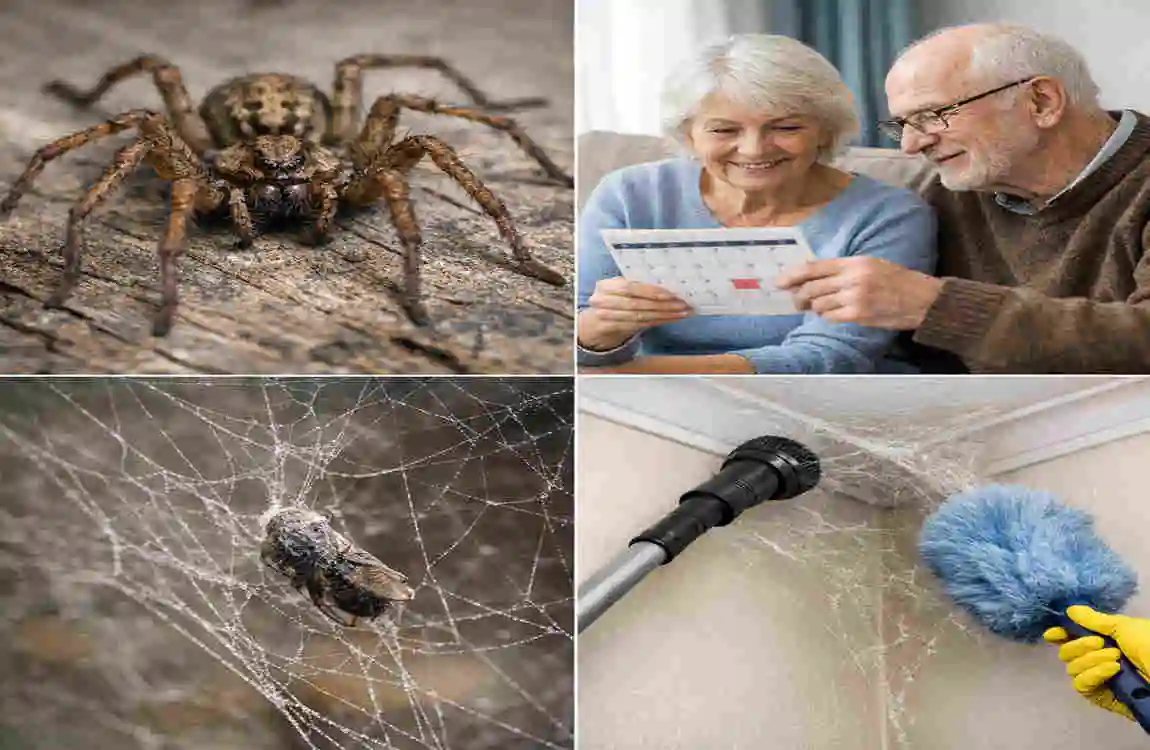
If you have ever walked into a quiet room, looked up at a corner, and noticed a web glinting near the ceiling, you are not alone. Most homeowners have had the same moment of curiosity, followed by a very common question: how long do house spiders clean before they disappear again?
That question sounds simple, but it usually comes from a mix of ideas. Some people mean, “How long do spiders stay active in the house?” Others are really asking about web maintenance behavior—the way spiders repair, rebuild, and reuse their webs. And then some people imagine spiders somehow “tidying” the home like tiny cleaners, which is not how it works at all.
this topic matters more than ever, as many homes are warmer, more airtight, and more attractive to insects than before. That creates a comfortable space for common indoor spiders such as the giant house spider and common house spider, which often settle into corners, basements, lofts, and quiet storage areas. They are not usually dangerous, but they can be frustrating if you keep finding webs in the same places.
| Activity | Frequency/Duration | Details |
|---|---|---|
| Prey Consumption (Center Clearing) | Daily, within hours of capture | Spiders eat insects caught in webs, naturally clearing the center area; uneaten parts may drop or stay. |
| Silk Recycling/Repair | Every 1-3 days | Damaged sections are eaten and rebuilt using fresh silk; full webs last 1-4 weeks before major overhaul. |
| Debris Accumulation | Weekly buildup | Dust, skin flakes, and dead bugs collect; spiders vibrate webs to dislodge some, but don’t fully clean. |
| Web Abandonment/Rebuild | Every 1-2 months | Unproductive webs are deserted; new ones spun in 24-48 hours if food is available. |
| Overall “Cleaning” Span per Spider | Matches lifespan: 1-3 years | Tied to adult life indoors; females maintain longer (up to 3 years) than males (6-12 months). |
House Spider Basics
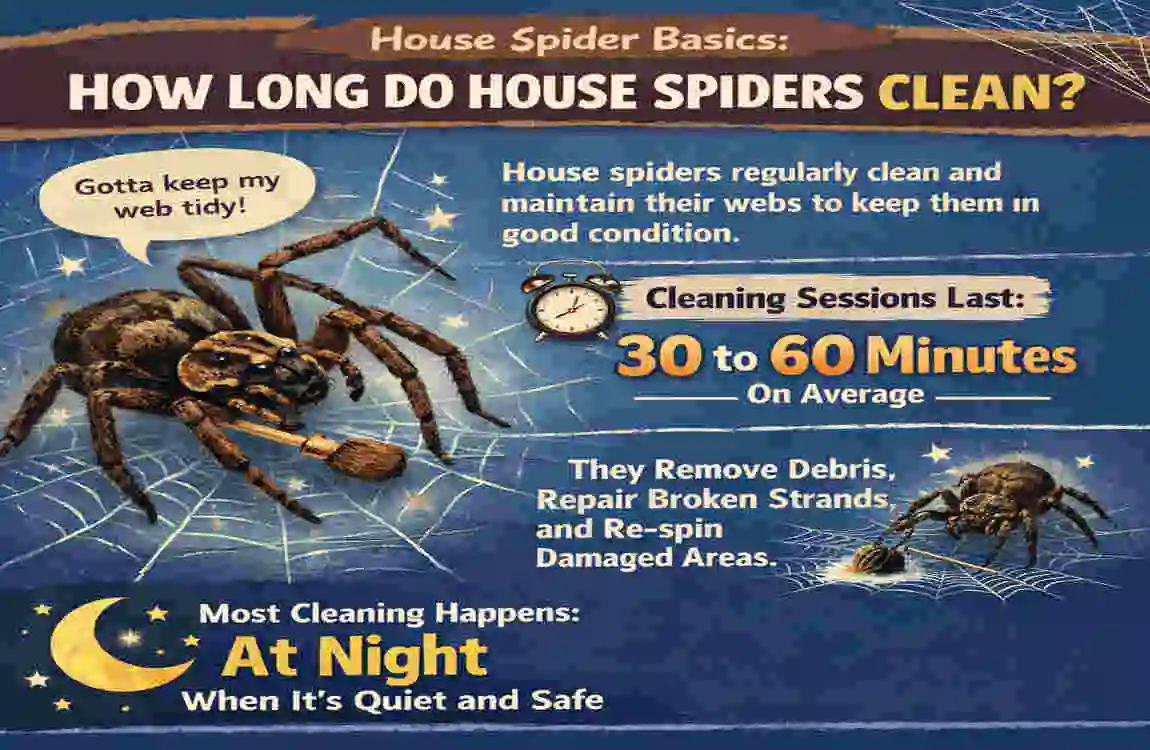
Before we can answer how long house spiders clean, it helps to understand what house spiders actually are and why they show up in the first place. A lot of fear comes from not knowing the basics. Once you understand their habits, they become much less mysterious.
Types Commonly Found in Homes
Most spiders found inside homes are not random visitors. They are species that have adapted well to indoor life. In many homes, the most familiar ones are the giant house spider and the common house spider. These spiders are not the only species that enter homes, but they are among the most common.
The giant house spider is usually larger, with long legs and a fast-moving body. People often spot it in damp areas such as basements, garages, and bathrooms. The common house spider is smaller and more likely to hide in corners, behind furniture, or near window frames.
You may also see other small indoor spiders from time to time, but the same basic pattern applies. They look for quiet places, nearby food, and low disturbance. If your home provides all three, they will often stay.
Why They Thrive Indoors
Spiders do not come indoors to annoy you. They come inside because your home gives them what they need to survive.
Most house spiders thrive indoors for a few simple reasons:
- Warmth: Homes stay warmer than the outdoors, especially in colder months.
- Food supply: If your home has flies, moths, ants, or other tiny insects, spiders have something to eat.
- Shelter: Corners, cracks, closets, and loft spaces give them safe hiding places.
- Less danger: Indoors, they often face fewer predators and less weather stress.
This is why understanding the basics helps answer the question of how long house spiders clean in the first place. Their web work is not about housekeeping. It is about survival. If they stay in your home, it usually means the space feels safe enough to keep hunting.
How House Spiders Live Day to Day
House spiders are patient hunters. They do not move around constantly like some insects. Instead, they sit in or near their webs, waiting for vibrations. When a fly, moth, or other insect touches the silk, the spider senses movement and rushes in.
That means most of their day is spent waiting, resting, or making small repairs to the web. They are not “cleaning” in the human sense. They are maintaining a hunting tool.
That distinction matters because it changes how you think about them. If you keep asking how long house spiders clean, the better question might be, “How often do spiders repair or replace their webs?” That answer depends on food, weather, and disturbance, which we will explore in detail below.
Spider Type Comparison Table
Here is a simple comparison of the most common house spiders:
Spider Type Size (inches)Web Style Indoor Prevalence
Giant House Spider 1–2 Funnel-shaped High in damp areas
Common House Spider 0.5–1 Irregular Corners, basements
Other Small House Spiders vary, mixed styles, moderate
A Helpful Way to Think About It
If you remember one thing, remember this: house spiders are not living in your home to clean it. They are living there to survive. Their webs are hunting equipment, not little vacuum cleaners.
That is why the phrase how long do house spiders clean is a bit misleading. What most people notice is web upkeep, not household hygiene.
Lifespan Facts
Now, let us move to one of the most important parts of the topic: how long house spiders actually live. Their lifespan plays a big role in how long they may keep rebuilding webs in your home.
Average Longevity Indoors
Most house spiders live for 1 to 3 years indoors, depending on the species and conditions. Some live a little less, some a little longer, but that is the usual range.
That is longer than many people expect. Many homeowners assume spiders appear, stay for a few weeks, and then vanish. In reality, if the conditions are good, a spider may stay in the same general area for a long time.
Why do they live longer indoors?
- They are protected from the weather.
- They do not face constant outdoor predators.
- They often have access to food from other insects.
- Indoor temperatures are more stable.
So when people ask how long house spiders clean, they are often seeing the same spider or the same spider family returning over time. That repeated web presence can make it feel like the spider never leaves.
Male and Female Lifespans
There is also a difference between male and female spiders. In many species, females live longer than males.
- Males often live around 6 to 12 months.
- Females can live up to 3 years in sheltered indoor conditions.
This difference matters because female spiders often stay in one location longer. They may keep a website active, especially if they have egg sacs or a steady food supply.
Males tend to roam more, especially when searching for mates. That means they may not stay in one web area as long. Females, on the other hand, are more likely to keep a territory and maintain it over time.
Factors That Affect Lifespan
Several things change how long a house spider lives:
Food Supply
If your home has plenty of insects, spiders can stay longer and reproduce more successfully. More food means more energy.
Humidity
Too much dampness or too much dryness can affect spider health. Many indoor spiders prefer places with a little moisture, such as bathrooms, basements, or laundry rooms.
Disturbance
If you keep moving furniture, vacuuming corners, or shaking down webs, spiders may relocate. A quiet room is much more attractive to them than a busy one.
Seasonal Change
Spiders become more noticeable in fall and winter, when they move indoors for warmth. This is often when homeowners start wondering how long house spiders clean because the webs seem to appear more often.
Outdoor vs Indoor Lifespan
Indoor spiders often live longer than outdoor spiders. Outside, they must survive rain, cold, predators, and food shortages. Indoors, those pressures are much lower.
That means the same spider species may live only a few months outside but survive for years inside your home. This is why indoor spider control is more about prevention than waiting for them to “go away.”
Key Lifespan Stats
Here is a quick summary:
- Male house spiders: usually 6–12 months
- Female house spiders: often up to 3 years
- Indoor lifespan overall: commonly 1–3 years
- Outdoor lifespan: usually much shorter, often only a few months
If you think about those numbers, the answer to how long do house spiders clean becomes much clearer. They may maintain web spaces for months or even years, but only if the environment stays favorable.
Web Maintenance Habits
This is the section most readers are really curious about. When people ask how long house spiders clean, they are usually noticing web repairs, changes in the web, or the way spiders seem to keep their spaces tidy.
Do House Spiders Actually Clean?
The short answer is no, not in the human sense.
Spiders do not sweep, dust, or tidy a room. They also do not “clean” webs because they care about neatness. What they do is much more practical. They repair damaged silk, recycle parts of old webs, and abandon webs that no longer help them catch food.
So where does the idea come from?
It comes from the way spiders sometimes seem to maintain a web area. They may remove damaged silk, rebuild a strand, or consume old web material for a homeowner, which can look like cleaning. But it is really just survival behavior.
This is the real meaning behind how long house spiders clean. The answer is not a fixed time period. It refers to how long they keep maintaining a website, which can be daily, weekly, or not at all, depending on the website’s usefulness.
The Web Maintenance Cycle
House spiders follow a simple pattern when managing webs.
Daily Activity
If a web catches prey, the spider will often go to the center, wrap the insect, and eat it. This clears the web of a trapped insect and gives the spider energy.
Weekly Repairs
If a web gets damaged by dust, a draft, a hand, or a passing object, the spider may repair only part of it. Some web sections are rebuilt while others remain.
Full Abandonment
If a web is no longer useful, the spider may abandon it after 1 to 2 months. This often happens if the area stops producing prey or if the web is repeatedly disturbed.
This is why the question of how long house spiders live can be answered by looking at the web’s life cycle. They maintain what helps them hunt. Once that tool stops working, they move on.
Why Webs Look Dirty Over Time
Even though spiders may consume old silk or repair strands, webs still gather dust, pet hair, dead insects, and tiny bits of debris. That is normal. A web is not meant to stay spotless.
If the spider is active, the web may look almost fresh after repairs. But if it is left alone, dust will build up quickly. That is why many people think the spider is “cleaning” the web when, in fact, it is simply maintaining a hunting tool.
What a Spider’s Web Actually Does
A web is more than a trap. It is also a sensor. Every vibration tells the spider something about the outside world. A strong, intact web helps the spider detect movement, avoid danger, and catch food.
So when you spot a web in the corner, you are not just looking at silk. You are looking at a survival system. That is why understanding how long house spiders clean helps you understand their behavior much better.
Visual Idea for This Section
Image placeholder: A close-up photo of a house spider repairing its web, showing silk recycling behavior.
Infographic idea: A simple timeline showing the web lifecycle:
- Day 1: Web built
- Day 2–7: Repairs and prey capture
- Week 2–4: Partial weakening
- Month 1–2: Web abandoned if unproductive
How This Helps You as a Homeowner
If you know a spider is not “cleaning” in the human sense, you can stop expecting web disappearance to happen by itself. You need to manage the environment around it.
That is where regular cleaning and smart prevention come in. In a way, your vacuum becomes the thing that outpaces how long house spiders clean by disrupting the web before the spider can keep using it.
Myths Debunked
House spiders have inspired many myths. Some are harmless misunderstandings. Others lead homeowners to tolerate webs longer than they should. Let us clear them up one by one.
Spiders Clean the House
This is the biggest myth of all.
Some people think spiders are helpful because they “clean” by eating dust or keeping areas tidy. That is not true. Spiders catch insects. They do not sanitize a home.
Yes, they may remove trapped prey from the web. Yes, they may recycle silk. But that has nothing to do with human cleaning. So if you still hear someone ask how long house spiders clean as if it means household tidying, the honest answer is: they do not.
House Spiders Only Live for Weeks
This is another common mistake. Many people assume a spider in the house is temporary and will die off quickly.
In reality, many indoor spiders live for 1 to 3 years. That is a long time, especially if they find a quiet corner and enough food. If you keep seeing webs in the same room, it may not be a new spider every week. It could be the same spider or a few spiders using the same sheltered area.
All House Spiders Are Dangerous
Most house spiders are not dangerous to people. They may look intimidating, especially if they are large, but they are usually more interested in insects than in humans.
Some species may bite if trapped or threatened, but serious bites are uncommon. For most homeowners, the real issue is not danger. It is the nuisance of webs, movement, and the general feeling of unwelcome company.
A Web Means the Spider Lives There Forever
A web tells you a spider has been active there, but it does not necessarily mean the spider will stay forever. If the area stops producing food or if the web gets disturbed often, the spider may leave.
Still, some species are loyal to a good location. If a corner stays quiet, dark, and full of bugs, the spider may remain there for a very long time.
Myth-Busting List
Here is a quick list to remember:
- Spiders do not clean homes as humans do.
- Most indoor house spiders live for years, not weeks.
- Most house spiders are not medically dangerous.
- A web means activity, not permanent residency.
- Frequent web control works better than waiting for spiders to leave on their own.
When people misunderstand these points, they often keep asking how long house spiders clean, when the better question is whether web maintenance is still happening at all.
Home Web Control Tips
Now that you know what house spiders do and do not do, let us talk about what you can do. The good news is that spider control does not have to be complicated. A few steady habits can make your home far less inviting.
Prevention Starts with Reducing Food
Spiders follow their food. If you reduce insects, you reduce spider interest.
That means sealing cracks, closing gaps around windows, and keeping your home as bug-free as possible. It also means being smart with lighting. Bright outdoor lights can attract moths and flies, which in turn attract spiders.
Try these simple habits:
- Seal small cracks near doors and windows.
- Repair torn screens.
- Use outdoor lighting only when needed.
- Keep food sealed and crumbs cleaned up.
- Empty bins regularly.
This is one of the best ways to outsmart how long house spiders clean because spiders cannot maintain a web for long if nothing keeps getting caught in it.
Cleanliness Matters More Than You Think
Regular cleaning does not just make your home look nice. It removes the quiet corners spiders love.
Vacuum corners, under furniture, behind curtains, and around ceilings. Dust shelves and move stored items periodically. The more often you disturb their spaces, the less likely they are to stay.
You do not need to scrub your home obsessively. You need consistency. Weekly vacuuming is often enough to interrupt web-building before it becomes a habit.
Natural Remedies You Can Try
Some homeowners prefer low-toxicity or natural methods for spider control. These can help, especially when used consistently.
Method: How to Use It: Effectiveness
Peppermint Oil Spray corners and entry points monthly High
Diatomaceous Earth Dust lightly along baseboards Medium
Conkers placed near entryways, as folklore suggests, Low
Peppermint oil is popular because spiders tend to dislike strong scents. Diatomaceous earth can help in dry places, though it works best as part of a broader prevention plan. Conkers are often mentioned in folklore, but their effectiveness is at best weak.
Why Humidity Control Matters in Lahore Homes
If you live in a humid area, especially during monsoon season, spider activity can increase. Humid spaces often attract insects, and that creates more food for spiders.
In Lahore, managing humidity can make a big difference. Use exhaust fans in bathrooms and kitchens. Repair leaking taps quickly. Keep storage areas dry. A dryer home is usually less attractive to both insects and spiders.
Natural Control Table
Here is a simple control plan you can use:
Tip: Why It Helps. Best Used In
Vacuum weekly. Remove webs and hiding places from corners, ceilings, and under furniture.
Seal cracks, block spider entry, windows, doors, and wall gaps
Use peppermint oil to deter spiders from settling in entryways and corners
Control humidity, reduce insects, and provide nesting comfort. Bathrooms, basements, kitchens
The Big Picture
When you combine these methods, you make your house much less appealing. And that matters more than guessing how long house spiders clean. If you control the environment, you control the spider problem.
When to Call Professionals
Most spider issues are manageable with regular cleaning and prevention. But sometimes, you need backup.
Signs You May Need Help
You should call a professional if:
- You are seeing more than 10 websites in different areas.
- Spiders keep returning after repeated cleaning.
- You find egg sacs in several rooms.
- You have trouble reaching high corners or loft spaces.
- You feel overwhelmed or uncomfortable dealing with it on your own.
What Pros Can Do
A pest control professional can identify where spiders are entering, treat the problem safely, and recommend long-term prevention measures. They can also spot larger issues, such as insect infestations that feed the spiders.
For many homeowners, professional help brings peace of mind. It also saves time. If the spider problem keeps coming back, the root cause may be hidden in the walls, roof space, or damp areas.
Typical Cost Range
In many local markets, an initial spider control visit may cost around PKR 5,000 to 15,000, depending on the size of the home and the severity of the issue.
That is often worth it if the web problem is persistent. Instead of wondering how long house spiders clean, you get a clear answer from someone who can inspect the home and treat the actual source.
Internal Links to Support the Reader
If you want to keep reading, you can also explore:
- Best Natural Spider Repellents
- Pest Control for Lahore Homes
These related topics can help you build a stronger long-term plan for a cleaner, less spider-friendly home.
FAQ: Common Questions About House Spiders
How long do house spiders live in Pakistan?
They do not “clean” in the human sense anywhere, including Pakistan. What they do is maintain webs for as long as the website remains useful in warm, sheltered homes, which can last weeks or months.
How long do house spiders live indoors?
Most house spiders live 1 to 3 years indoors, depending on species, food, humidity, and disturbance.
Why do I keep seeing webs in the same corner?
That corner likely offers warmth, shelter, and a steady supply of insects. Spiders return to areas that help them survive.
Do spiders rebuild their webs every day?
Not always. Some repair daily, some make weekly changes, and some abandon a web if it stops working.
Are house spiders dangerous?
Most are not dangerous. They are usually more of a nuisance than a threat.
How can I stop spiders from returning?
Vacuum regularly, seal entry points, reduce insect activity, and keep corners dry and clean.
