

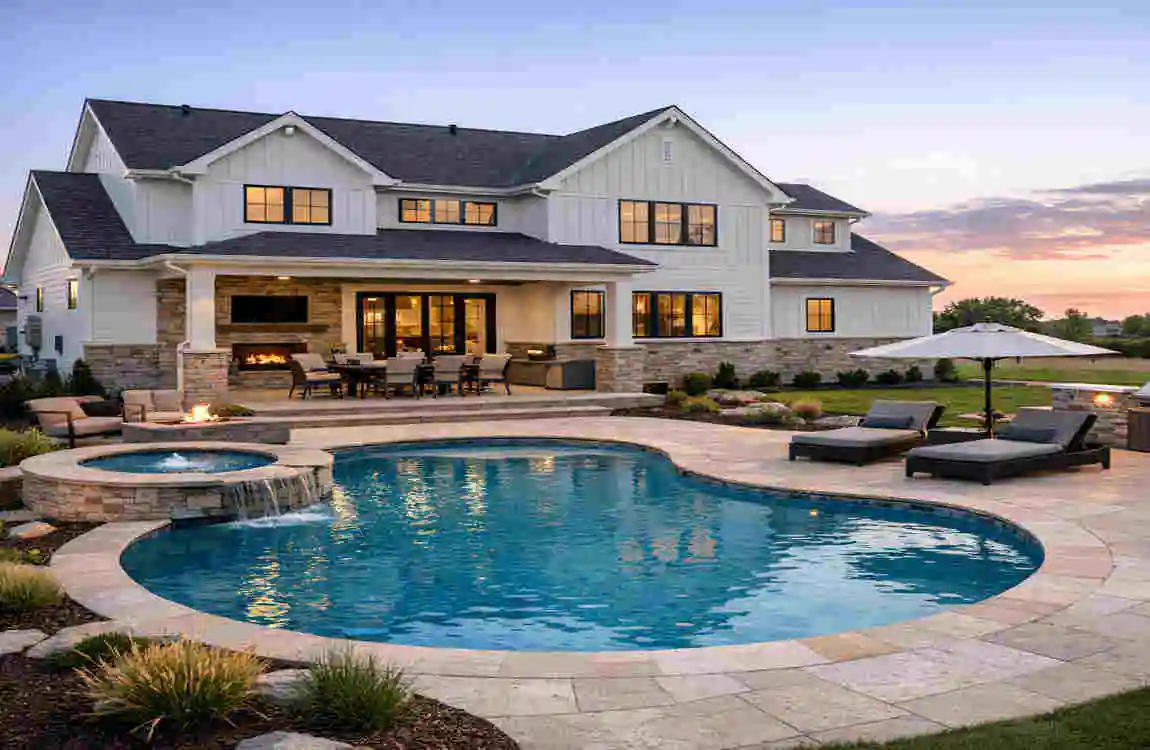
Imagine this: You are standing in the middle of a muddy lot, looking at the wooden skeleton of what will soon be your dream home. You can already see where the couch will go, how the kitchen light will hit the breakfast nook, and where you’ll hang your family photos. But then, you look out toward the backyard.
You don’t just see grass and a fence. You see a shimmering blue oasis. You see summer barbecues, the sound of splashing water, and a place to cool off during those sweltering July afternoons. Naturally, the big question pops into your head: Can you add a pool to a new construction home?
The short answer is a resounding yes. In fact, adding a pool while your home is being built is often the smartest move you can make. However, it isn’t as simple as just digging a hole while the builders are on lunch. It requires a delicate dance of timing, budgeting, and expert planning.
Why Add a Pool During New Construction? Key Advantages
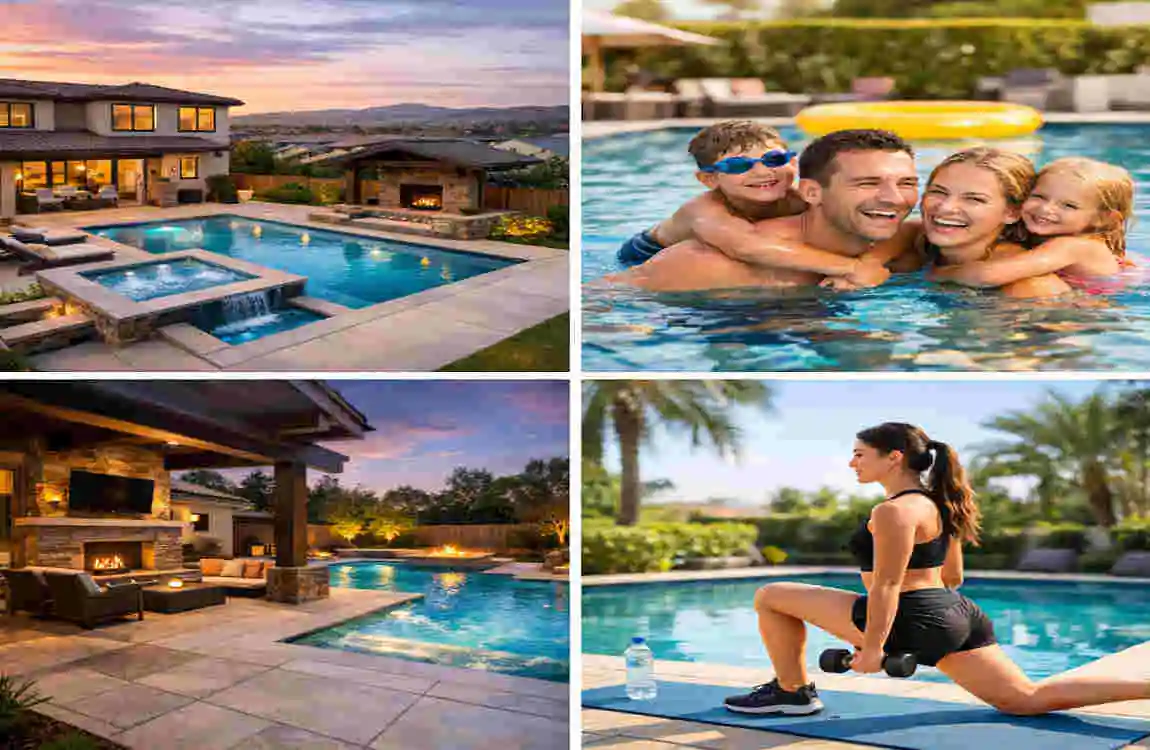
If you are wondering why you should deal with the headache of a pool installation now rather than waiting a few years, there are some massive benefits to consider. Many homeowners regret waiting because retrofitting a pool into an established yard is often more expensive and much more destructive.
Massive Cost Efficiency in Foundation Work
When you are building a new home, heavy machinery is already on-site. You already have excavators, dump trucks, and crews moving dirt. If you hire a pool contractor to come in while the home’s foundation is being prepped, you can often save thousands of dollars on mobilization fees.
Think about it this way: the hardest part of building a pool is getting the big machines into the backyard. In a new build, there are no fences to tear down and no pristine landscaping to ruin.
Seamless Architectural Synergy
Have you ever seen a house where the pool looks like an afterthought? Maybe the patio stone doesn’t match the house siding, or the pool is tucked into a weird corner. When you plan the pool alongside the home, you create a “master plan.”
You can ensure the indoor-outdoor flow is perfect. Your sliding glass doors can lead directly to a sun deck that matches your interior flooring, creating a high-end, integrated look that boosts your home’s aesthetic value.
Integrated Utilities and Plumbing
This is a “behind the scenes” benefit that saves a lot of stress later. If you know where the pool is going, your builder can run the electrical lines and gas pipes (for the pool heater) before the driveway is poured or the sod is laid. This prevents you from having to dig up your beautiful new yard two years from now just to run a power line.
Immediate Boost in Resale Value
In many markets, especially in warmer climates, a pool is a “must-have.” Statistics show that a well-designed pool can boost a home’s value by 5% to 8%. By including it in the initial build, you are essentially baking that equity into your home from day one.
Common Pros at a Glance:
- Lower excavation and dirt removal costs.
- Easier permitting when bundled with home permits.
- No “double mess”—your yard is finished once, and that’s it.
- Better financing—sometimes pool costs can be rolled into the primary mortgage.
Feasibility Check: Can You Add a Pool to a New Construction Home?
Before you pick out the tile colors, we need to do a reality check. Not every lot is “pool-ready,” and several “invisible” factors could stop your project before it starts.
Understanding Zoning and HOA Rules
Your local municipality and your Homeowners Association (HOA) have a lot to say about what you can do with your land. You need to check for easements—areas where utility companies have the right to access underground lines. You cannot build a pool over an easement.
Additionally, look at setback requirements. Most cities require the pool to be a certain distance from the property line and the house.
Soil Type and Lot Slope
The ground beneath your feet matters. If your lot is on a steep hill, you might need a retaining wall, which can add $10,000 to $30,000 to your budget.
If your soil is “expansive clay” or very rocky, the excavation will be more difficult and expensive. We always recommend a geotechnical report (a soil test) during the early stages of home construction to assess conditions underground.
The “Impervious Surface” Limit
Many modern developments have rules about how much of your lot can be covered by “non-porous” materials like concrete or pool water. If your house is very large, you might run out of “coverage space” for a large pool and deck. Always ask your architect to calculate the impervious surface ratio before you sign a pool contract.
Quick Feasibility Quiz
Use this table to see if your lot is ready for a pool.
QuestionYesNo
Is your lot free of major utility easements in the backyard? (+1 Point) (Check Plans)
Does your HOA allow inground pools? (+1 Point) (Stop & Ask)
Is your lot relatively flat (less than 3ft slope)? (+1 Point) (Budget for Walls)
Do you have at least 10ft of side-yard access for machinery? (+1 Point) (Manual Dig Needed)
Score Result: 3-4: Green Light 0-2: Consult Pro
Optimal Timing: When to Add a Pool in Your New Build
Timing is everything. If you wait until the house is finished to start the pool, you’ve missed the “Golden Window.” To get the best results, you need to coordinate the pool installation with specific phases of the home build.
The Pre-Design Phase The Blueprint Stage
This is the ideal time. You should bring your pool designer and your home architect together. Why? Because the pool’s location might change, you might need to move the back porch or the master bedroom windows. If you want a “vanishing edge” pool, the house foundation needs to be designed to handle the specific drainage requirements.
The Foundation Phase
Once the home’s foundation is poured, the heavy-duty dirt-moving equipment is usually still on site. This is when you want to excavate the pool hole. If you do it now, the pool contractor doesn’t have to worry about hitting the house’s eaves or damaging finished siding.
The Framing Stage
While the “bones” of the house are going up, the pool’s “plumbing rough-in” should happen. This is when the pipes are laid in the ground. It’s much easier to connect the pool’s filtration system to the home’s main water and electrical panels while the walls are still open.
The Finishing Phase
The actual interior finish of the pool (the plaster or pebble-tec) should be one of the very last things done. You don’t want construction dust from the house tiling or painting blowing into your brand-new pool water.
Pro Tip: Always remember that “Change Orders” are your enemy. If you decide to add a pool halfway through the build, it can trigger expensive redesign fees. Decide early!
Cost Breakdown: How Much Does It Cost to Add a Pool to New Construction?
Let’s talk numbers. Adding a pool is a significant investment, but doing it during a new build offers some unique “bundled” savings. Generally, you can expect to pay anywhere from $50,000 to over $150,000, depending on the materials and features.
Comparing Pool Types and Costs
There are three main types of pools, each with its own price tag and longevity.
Pool TypeBase Cost (New Build)ProsCons
Vinyl Liner $45,000 – $75,000 Lowest initial cost; smooth surface. The liner needs to be replaced every 7-10 years.
Fiberglass $65,000 – $110,000 Fast install; very low maintenance. Limited shapes; high shipping costs.
Concrete (Gunite) $85,000 – $160,000+ Fully custom; lasts forever. Highest cost; long installation time.
Hidden Fees to Watch Out For
When budgeting, don’t just look at the pool itself. You need to account for:
- Permits and Engineering: $2,000 – $5,000.
- Safety Fencing: Most states require a 4-foot fence with self-closing gates ($3,000 – $10,000).
- Dirt Haul-Away: If you can’t use the dirt from the pool hole to level your yard, you have to pay to truck it away ($2,000+).
- Pool Decking: The concrete or stone area around the pool. This is often priced per square foot.
Savings Hacks for New Builds
One of the biggest ways to save is to bundle the excavation. If your home builder’s crew digs the pool hole while they are excavating the basement or foundation, you can save $5,000 to $10,000.
Also, consider the utility run. Ask your electrician to install a sub-panel in the backyard during the initial wiring of the house. This is much cheaper than adding one later when they have to cut through finished drywall.
Custom Pool Designs That Complement New Homes
A new construction home is a blank slate. This is your chance to move away from the “cookie-cutter” kidney-shaped pools of the 90s and create something that looks like it belongs in a magazine.
The Modern Minimalist Look
If your new home has a modern or contemporary design, go for a geometric pool. Clean lines, sharp corners, and a dark interior finish (like navy or charcoal) create a mirror-like effect that looks stunning against a modern home’s glass walls.
The Family-Friendly “Beach Entry.”
If you have kids or plan to entertain, consider a tanning ledge (also called a Baja shelf). This is a shallow area (about 6-12 inches deep) where you can place lounge chairs or where toddlers can splash safely. It gives your backyard a high-end resort feel.
Smart Pools for Smart Homes
Since you are building a new home, you likely have some smart technology. Why not extend that to the pool? You can control your pool heater, LED lighting, and salt-chlorination system directly from your smartphone. You can even set “moods”—one tap on your phone can turn on the waterfalls and dim the purple lights for a dinner party.
Eco-Friendly Integration
With rising energy costs, many new homeowners are opting for variable-speed pumps and solar heating. These systems are much easier to install during the initial build. They can save you hundreds of dollars in monthly utility bills.
Step-by-Step Guide: How to Add a Pool to Your New Construction Home
If you’re ready to take the plunge, follow this step-by-step process to ensure a smooth build.
- Phase 1: Research & Budget (Month 1): Determine what you can afford. Talk to your mortgage lender to see if you can include the pool in your construction loan.
- Phase 2: The “Dream Team” Assembly (Month 2): Introduce your pool contractor to your home builder. They need to be on the same page regarding the schedule and site access.
- Phase 3: Design & Permitting (Months 2-3): Finalize the 3D renders. Ensure the pool permits are filed alongside the house permits to avoid delays.
- Phase 4: The Big Dig (Month 4): Coordinate the excavation with the home’s foundation work. This is the “messy” stage.
- Phase 5: Rough-In (Months 5-6): While the house is being framed and “dried in,” the pool’s plumbing and steel rebar are installed.
- Phase 6: The Finishing Touches (Post-Construction): Once the heavy machinery for the house is gone, the pool deck is poured, the interior is finished, and the water is added.
- Phase 7: Landscaping: The final step is adding the grass, trees, and lighting that tie the whole backyard together.
Legal, Safety, and Maintenance Considerations
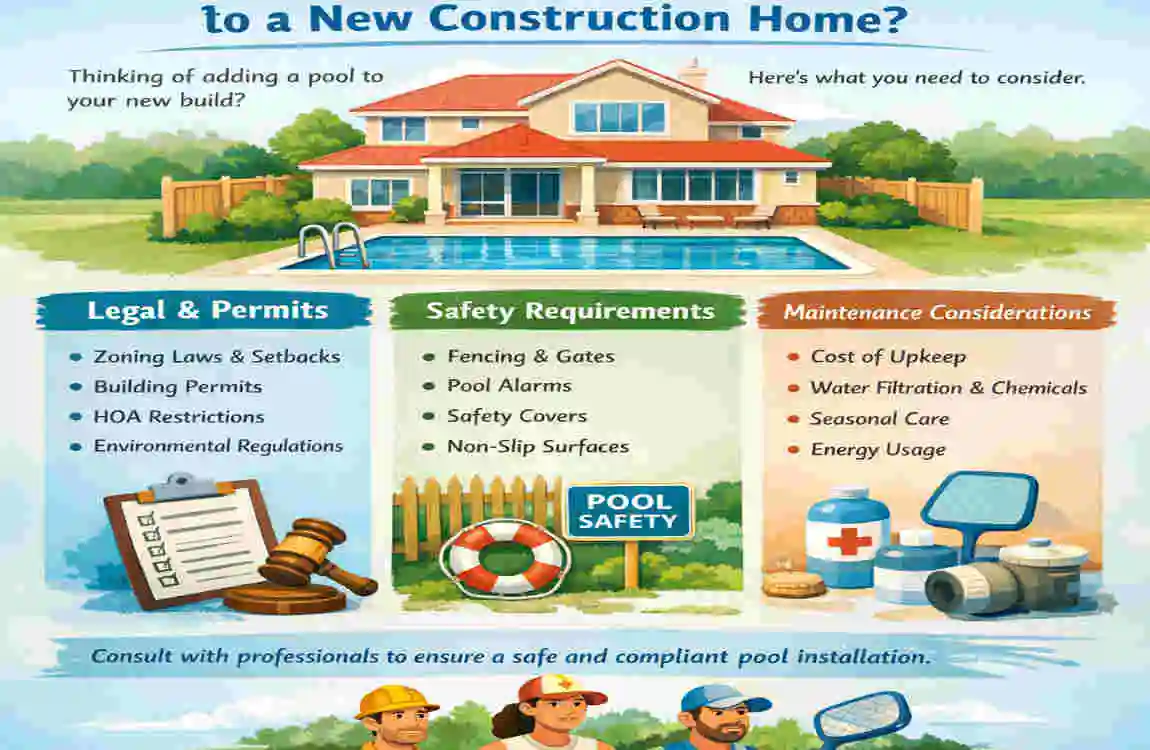
Before you jump in, remember that a pool comes with responsibilities.
Safety is non-negotiable. Most jurisdictions require a “barrier of entry.” This usually means a fence, but it can also include door alarms on any door leading from the house to the pool area. If you have young children, look into automatic pool covers. They are expensive ($10k+), but they provide incredible peace of mind and keep the pool clean.
Maintenance is the other big factor. A modern pool requires about 30 minutes of work a week if you do it yourself, or about $150 a month if you hire a service. Since you are building new, invest in a saltwater system. It’s gentler on the skin and eyes, and it automates much of the chemical balancing.
FAQs: Adding a Pool to New Construction Homes
Q: Can I add a pool to a new home on a sloped lot? A: Yes, but it requires “structural engineering.” You will likely need a vanishing edge or a retaining wall to level the area. It adds cost but creates a stunning visual.
Q: Will adding a pool delay my home’s move-in date? A: Usually, no. If coordinated correctly, the pool work happens alongside the homework. However, if the pool contractor falls behind, it can sometimes interfere with the final landscaping inspection.
Q: Is it cheaper to do it now or later? A: Almost always now. You save on excavation, utility runs, and the “headache” of living in a construction zone twice.
Q: Can I use my home construction loan for the pool? A: Many lenders allow this if the pool is part of the original contract. This is a great way to finance a pool at a lower interest rate than a separate personal loan.
