

Are you tight on space? We have all been there. You walk into your apartment or small villa, and the walls feel just a little too close together. You start wondering if you need to knock down a wall or sell all your furniture to breathe. But before you call a contractor or start throwing away your favorite sofa, there is a secret weapon in interior design that you might have overlooked: your floors.
Believe it or not, the best floor color for a small house can visually expand your rooms by a staggering 20% to 30%. It is not magic; it is simple optical science. The right floor acts like a canvas, reflecting light and tricking the eye into seeing more surface area than actually exists.
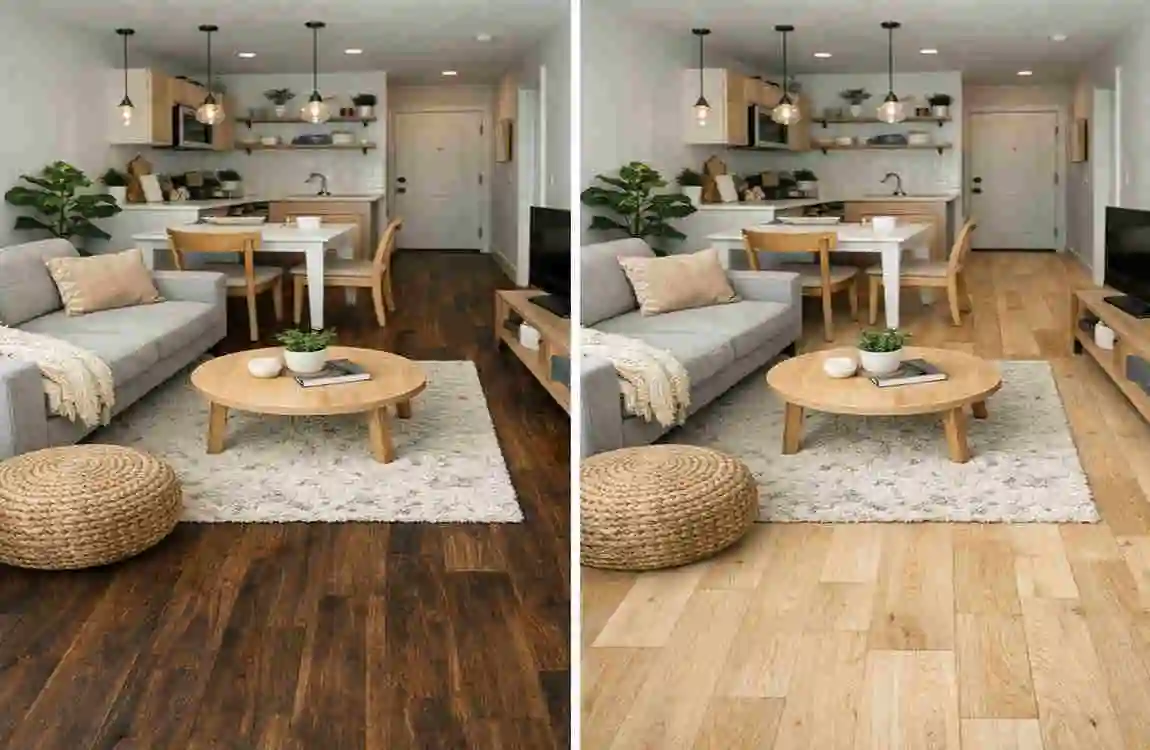
Dark floors might look moody and dramatic in a magazine, but in a small footprint, they tend to suck the light out of the room, effectively shrinking your space. Our goal today is to show you the opposite approach. We want to help you pick shades that make your small house feel airy, modern, and open, without requiring a single structural renovation.
Why Floor Color Matters in Small Houses
You might be thinking, “It’s just a floor, does the color really make that big of a difference?” The short answer is: absolutely. In interior design, the floor is the second-largest surface area in a room, right after the walls. It anchors the entire visual field.
When you use dark floor colors, they absorb light. This “grounds” the room, which is great for huge, cavernous halls that need to feel cozy, but it is a disaster for a 10×12 bedroom. In contrast, light floors visually lift the ceilings. They blur the boundaries between the floor and the walls, especially if the wall color is also light. This seamless flow prevents your eye from getting stuck on corners and edges, creating an optical illusion of vastness.
Shift
As we look toward the design trends of 2026, we are seeing a massive shift. There is a projected 40% rise in pale, wood-look tiles and vinyl. Why? Because people are prioritizing mental well-being and open spaces. In hot climates like Pakistan, lighter colors are also psychologically and physically cooling. They reflect heat rather than absorb it, helping keep indoor spaces cooler during those scorching summer months.
The Perks of Light Floors in Small Houses
Choosing the best floor color for a small house comes with a laundry list of benefits:
- Light Reflection: Light floors can make a room feel 10-15% brighter by bouncing sunlight (or artificial light) back up toward the ceiling.
- Seamless Flow: When your floor color complements your walls, the room feels continuous and unbroken.
- Maintenance: Surprisingly, very dark floors show dust and scratches much more than light floors. In dusty environments, a pale beige or gray floor hides daily accumulation much better than a dark ebony wood floor.
So, what is the best floor color for a small house? Light neutrals win every time, especially in Lahore’s humidity, where you want the home to feel fresh and airy, not heavy and damp.
Key Principles for Choosing Floor Colors
Before we jump into the specific colors, we need to arm you with three key principles. Understanding these will ensure you don’t just pick a pretty color, but the right color for your specific situation.
Light Reflectance Value (LRV)
This sounds technical, but it is actually quite simple. LRV is a scale from 0 (absolute black) to 100 (pure white) that measures how much light a color reflects. To make a small room feel bigger, choose a flooring material with an LRV of 50 or higher. The higher the number, the more light bounces around the room. If you pick a dark walnut wood with an LRV of 10, it will absorb 90% of the light hitting it. That is a recipe for a cave-like room.
Undertones
Every color has an underlying hue.
- Cool Undertones (Blue, Green, Purple): These recede from the eye, making walls and floors seem further away. Cool grays are excellent for a modern, sleek look.
- Warm Undertones (Yellow, Orange, Red): These advance toward the eye, making a space feel cozy. However, in small spaces, light warm tones (like honey oak) work well because they mimic sunlight.
Material Matches and Budget
You don’t need real hardwood to get the look. In fact, in humid areas, real wood is a bad idea.
- Tiles: Ceramic or Porcelain tiles can mimic wood grain perfectly and are cool underfoot.
- Vinyl: Luxury Vinyl Plank (LVP) is the budget king. It looks high-end but costs a fraction of the price.
- Cost in Pakistan: You can find excellent wood-look tiles or vinyl for Rs. 200 to Rs. 500 per sq. ft., depending on quality.
Lahore Specific Tips
If you are living in Lahore or a similar climate, you have to think about the monsoon. Humidity can warp real wood.
- Moisture Resistance: Always opt for water-resistant or waterproof flooring.
- Anti-Slip: High-gloss tiles look big, but they are dangerous when wet. Look for a matte or satin finish, which also hides footprints better.
Best Floor Colors for Small Houses: Trending Shades
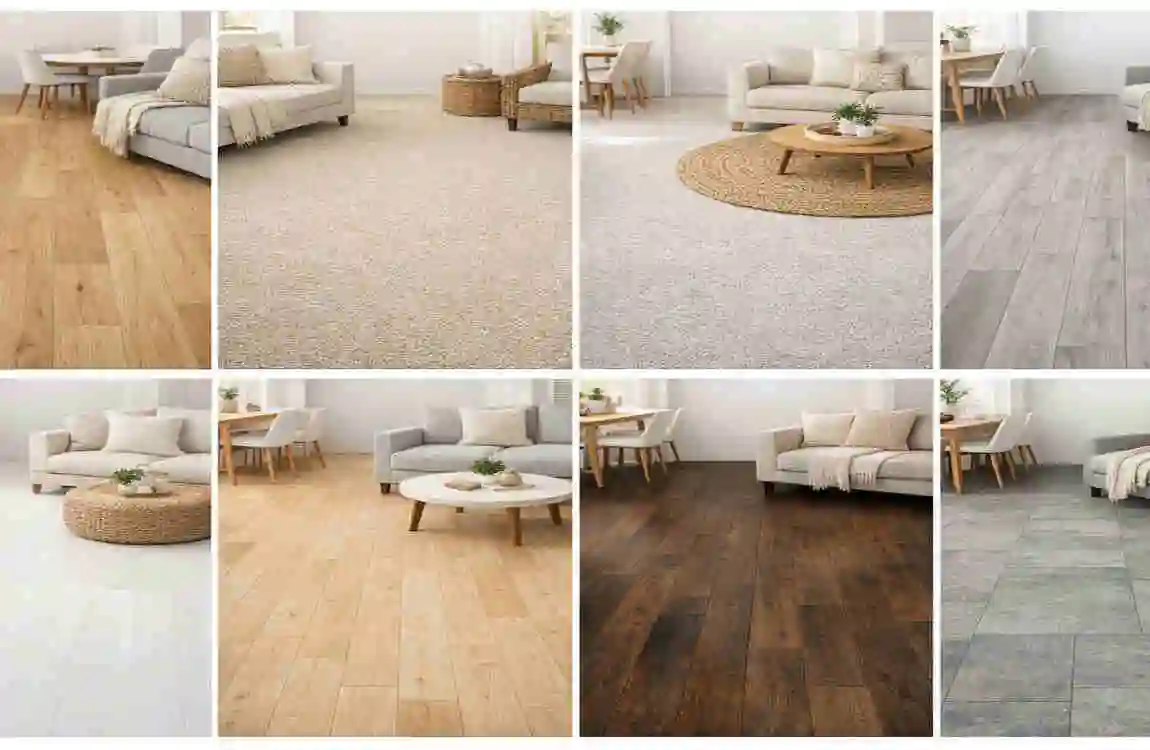
Now, let’s get into the fun part. You are ready to choose, but the options are overwhelming. To help you narrow it down, we have curated a list of the best floor colors for a small house, featuring 8 Pinterest-hot picks for 2026. These shades are timeless, trendy, and practical.
Light Oak
Light Oak is the quintessential choice for a reason. It brings a natural, organic warmth to a room without darkening it. Imagine the color of fresh honey or straw. In a small house, this shade connects you to nature.
- Why it works: It creates a cozy atmosphere while enlarging the space by roughly 25% compared to dark walnuts. It mimics sunlight’s color, making even windowless hallways feel happier.
- Best for: Bedrooms and living areas where you want to relax.
- Pairing: It looks stunning with crisp white walls or soft sage greens.
- Local Tip: Look for “vinyl plank sheets” in this shade; they are widely available in Pakistani markets and withstand the mopping culture well.
Pale Gray
If you love the modern, minimalist aesthetic, Pale Gray is your best friend. This is the color of urban sophistication. It is cool, clean, and incredibly chic.
- Why it works: Gray is a cool tone, so it visually “recedes,” making the floor area look expansive. It also reflects the “coolness” of air conditioning, psychologically making a hot Lahore apartment feel refreshing.
- Best for: Living rooms, kitchens, and home offices.
- Pairing: Pairs beautifully with charcoal accents, navy blue sofas, or bright mustard yellow cushions for a pop of color.
Soft Beige
Soft Beige is the unsung hero of the flooring world. It is warmer than gray but more neutral than Oak. It gives you that lovely “sand between your toes” vibe.
- Why it works: This is arguably the most practical best floor color for a small house in dusty regions. Beige creates a seamless neutral background that lets your furniture shine.
- Best for: High-traffic areas like entryways and dining rooms.
- Pro: It hides dust incredibly well! If you miss a day of sweeping, Soft Beige won’t tell.
Blonde Wood
Think Scandinavian design. Think IKEA catalogs. Blonde Wood is extremely pale, almost white, but with a wood-grain texture.
- Why it works: This shade offers maximum light bounce. It is as close to white as you can get while still having the warmth of wood texture. It makes a small room feel airy and cheerful.
- Best for: Very small bedrooms or nurseries.
- Vibe: Youthful, energetic, and clean.
Ash Gray
Ash Gray differs from Pale Gray because it often has a subtle blue or green undertone. It is a bit moodier but still light enough to expand a room.
- Why it works: The slight color undertone adds depth and character without closing the walls in. It feels very contemporary and works perfectly in modern apartments.
- Best for: Bathrooms and kitchens that need a sterile, clean look that isn’t boring.
- Design Note: This color hides water spots well, making it great for wet areas.
Cream Tile (Porcelain)
For those who want a touch of luxury on a budget, Cream Porcelain tiles (often mimicking marble) are the way to go.
- Why it works: The high reflectivity of the tile, combined with the cream color, creates a mirror-like effect for light. It feels expensive and grand, even in a 500 sq. ft. apartment.
- Best for: Drawing rooms or main lounges where you entertain guests.
- Budget: You can find excellent ceramic copies of Italian marble that fit a modest budget.
Drifted Wood
Drifted Wood creates a “beachy” or coastal feel. It is usually a mix of light gray and light brown, often with a weathered texture.
- Why it works: The texture adds visual interest, so the room doesn’t feel flat. Because it blends gray and brown, it is the ultimate “greige” that matches literally any furniture color you own.
- Best for: Open plan living/dining areas.
- Texture: The textured surface is great for grip, making it a safe choice for homes with elderly parents or kids.
Pale Limed Oak
Hex Reference: #EDE4D9
This is a vintage look, where the wood grain appears to have been rubbed with white paint (whitewashed).
- Why it works: It is incredibly airy. The white grain reflects light, while the wood tone keeps it warm. It gives a small house a charming, rustic cottage feel.
- Best for: Bedrooms with a romantic or vintage theme.
- Trend: This is rapidly becoming a favorite for the 2026 small home floor trends in Pakistan.
Quick Comparison Table
ShadeLRV (Approx)Best RoomPairs Best WithVibe
Light Oak 65 Living/Bedroom Sage Green Walls Cozy & Natural
Pale Gray 70 Kitchen/Lounge Navy Blue Accents Modern & Cool
Soft Beige 75 Entryway/Hall Warm White/Cream Practical & airy
Blonde Wood 80 Small Bedroom Pastels Scandi Bright
Ash Gray 60 Bathroom Teal/White Edgy & Clean
Cream Tile 82 Drawing Room Gold Accents Luxe
Drifted Wood 55 Open Plan Linen/Jute textures Coastal/Relaxed
Limed Oak 78 Master Bed Floral prints Vintage Charm
How to Pair Floor Colors with Walls and Furniture
Choosing the best floor color for a small house is only the first step. Step two is making sure it doesn’t clash with everything else.
The Monochromatic Trick
For the absolute maximum illusion of space, go monochromatic. This means choosing a floor color (like Pale Gray) and painting your walls a lighter shade but in the same color family (like an off-white with cool undertones). When the eye can’t easily tell where the floor ends and the wall begins, the room feels infinite.
The Contrast Rule
If you love color, you can still use it. The rule of thumb for small spaces is to keep the floor 1 to 2 shades darker than the ceiling. This keeps the room from feeling top-heavy.
- Floor: Light Oak
- Walls: Cream or Off-White
- Ceiling: Bright White
The Lahore Palette
To bring in a local touch, pair those trendy Pale Gray floors with Terracotta or brick-red accents. This creates a “Cultural Pop.” The cool floor balances the heat of the red, creating a balanced, modern Pakistani aesthetic.
Testing Tip: Don’t just guess! You can buy peel-and-stick samples or even grab paint chips. Put them on the floor and look at them at different times of the day (morning sun vs. evening tube light).
Material Options and Installation Tips
You know the color, now pick the material. Here is a quick breakdown for the practical homeowner.
Vinyl Plank (LVP)
- Cost: Affordable (Approx Rs. 300/sq. ft.).
- Pros: 100% Waterproof (crucial for mopping), soft underfoot, quiet.
- Installation: Usually “click-lock.” You can even DIY this over a weekend if you are handy.
Porcelain Tile
- Cost: Varies (Rs. 200 – 800+ /sq. ft.).
- Pros: Extremely durable. It will last 50 years. It stays cool in the summer heat.
- Cons: Hard to stand on for long periods; grout lines can get dirty.
Laminate
- Cost: Budget King.
- Pros: Looks exactly like wood.
- Cons: Generally not waterproof. If a pipe bursts or monsoon rain gets in, it can swell. Only use high-quality water-resistant laminate.
DIY Installation Steps (Brief)
If you are doing click-lock flooring:
- Acclimate: Leave the flooring boxes in the room for 48 hours to allow them to adjust to the temperature.
- Clean: Sweep the subfloor perfectly.
- Underlayment: Lay down a foam sheet for sound dampening.
- Click & Lock: Start from a corner and snap the planks together like a puzzle.
- Expansion Gap: Leave a tiny gap (covered by trim) at the walls because floors expand in heat!
Common Mistakes and Fixes
Even with the best intentions, things can go wrong. Here is how to avoid the common traps when hunting for the best floor color for a small house.
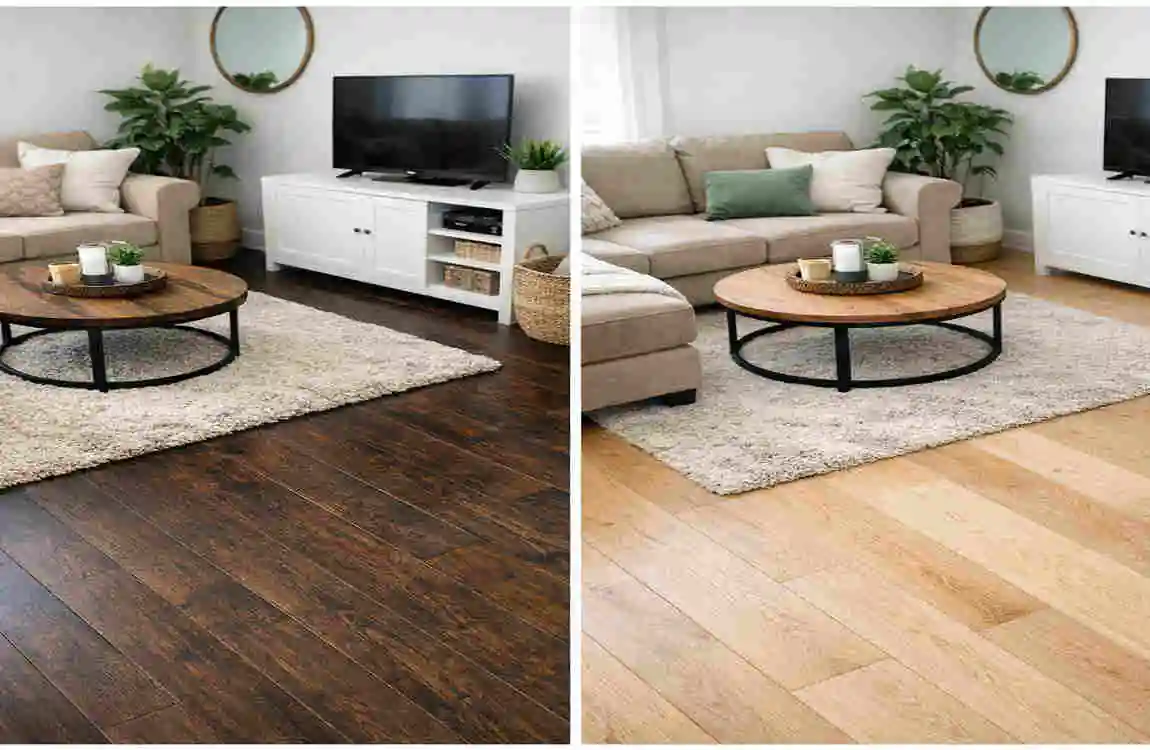
- Mistake: Going Too Dark. You saw a photo of a moody, black-floored library and loved it.
- The Fix: Use mirrors. If you already have dark floors, place a large, light-colored rug (cream or beige) that covers 70% of the floor. Add large mirrors on the walls to bounce light.
- Mistake: Pattern Overload. Using tiles with busy geometric patterns makes the floor look “cluttered.”
- The Fix: Stick to subtle grains. If you want a pattern, use it in a tiny space like a powder room, but keep the main living areas solid or subtle wood grain.
- Mistake: Ignoring Humidity. Installing real wood in a ground-floor apartment in a humid city.
- The Fix: Seal the edges. If you have laminate/wood, ensure the edges are sealed with silicone to prevent moisture from creeping in during the rainy season.
FAQs: Best Floor Color for a Small House
Q: What is the best floor color for a small house with low light? A: Blonde Wood or Pale Gray. These shades have high Light Reflectance Values (LRV) and will make the most of whatever little light you have, preventing the room from feeling like a cave.
Q: What is the best floor color for a small house in Pakistan, specifically? A: Light Oak or Soft Beige. These are champions at hiding the fine dust common in our cities. Plus, they offer a cooling visual effect against the intense summer heat.
Q: Do light floors really make rooms feel bigger? A: Yes. It is a proven optical principle. Light surfaces reflect light, which the brain interprets as “more space.” Dark surfaces absorb light, defining the room’s boundaries more sharply, highlighting how small it is.
Q: Any cheap, best floor color ideas for a small house? A: Go for Vinyl sheets or planks in beige or light gray tones. They are significantly cheaper than tile or wood but give the same visual expansion effect.
Q: What are the trending 2026 floor colors for small homes? A: We are seeing a move toward Limestone tones and Whitewashed woods. People want natural, earthy, calming textures that feel organic and spa-like.
