

Water is essential to every aspect of our daily lives, from drinking and cooking to bathing and cleaning. However, the quality of water in many homes is far from ideal. Studies show that over 60% of U.S. households face water contamination issues, including sediment, chlorine, and heavy metals. These contaminants not only affect your health but can also damage appliances and plumbing systems over time.
This is where a whole-house water filter comes in. Unlike under-sink or faucet filters, a whole-house water filter treats all the water entering your home, ensuring clean, safe water at every faucet and appliance. But to maximize its effectiveness, where should a whole-house water filter be installed?
| Location | Pros | Cons | Best For |
|---|---|---|---|
| Basement (post-shutoff) | Easy access; protected from weather; near main line | May require ladder for some homes | Most homes with basements |
| Garage/Utility Room | Dry space; simple plumbing tie-in | Temperature swings; less secure | Slab homes or no basement |
| Near Water Meter (indoor) | Filters everything first; quick install | City access issues possible | Municipal supply homes |
| Pre-Water Heater | Protects heater/appliances from sediment | Hot water can clog filters faster | Cartridge-based systems |
What Is a Whole House Water Filter?
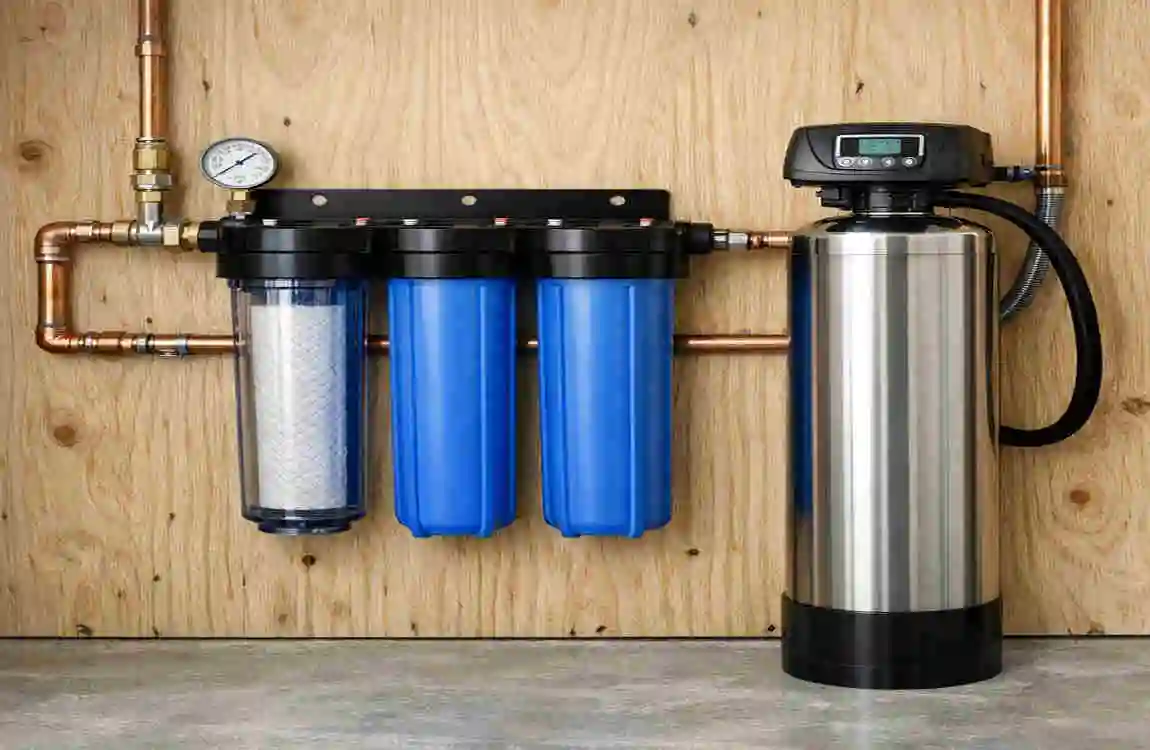
A whole-house water filter is a point-of-entry (POE) filtration system that treats all water entering your home. Unlike localized filters, such as under-sink or shower filters, this system ensures that every drop of water—from your kitchen faucet to your washing machine—is clean and safe.
Types of Whole House Water Filters
There are several types of whole-house water filters, each designed to address specific water quality issues:
- Sediment Filters: Remove dirt, sand, and rust particles.
- Carbon Block Filters: Reduce chlorine, bad odors, and organic compounds.
- Reverse Osmosis Systems: Eliminate heavy metals, nitrates, and other dissolved solids.
Flow Rates and Coverage
Whole-house water filters typically have a flow rate of 10-20 gallons per minute (GPM), which is sufficient for most households. This ensures that all water-using appliances and fixtures receive filtered water without a noticeable pressure drop.
Why POE Placement Matters
The placement of a whole-house water filter is critical because it determines how effectively the system treats your home’s water supply. Installing it at the main water entry point ensures that all water entering your home is filtered before it reaches any faucets or appliances.
Why Proper Placement Is Critical
The location of your whole-house water filter can make or break its performance. Let’s explore why proper placement is so important.
Risks of Poor Installation
- Reduced Water Pressure: Installing the filter in the wrong spot can lead to pressure drops, especially if the flow rate is mismatched with your home’s water demand.
- Uneven Filtration: If the filter is installed after certain branches of your plumbing system, some areas of your home may bypass the filtration system entirely.
- Frequent Clogging: Poor placement can expose the filter to excessive sediment or debris, leading to frequent clogs and higher maintenance costs.
Benefits of Optimal Placement
- Protects Appliances: Filtering water before it reaches your water heater, dishwasher, and washing machine can extend their lifespan by preventing scale buildup and corrosion.
- Healthier Water: Proper placement ensures that all water entering your home is free from harmful contaminants.
- Ease of Maintenance: Installing the filter in an accessible location makes it easier to replace cartridges and perform routine maintenance.
Placement FactorPoor Location Impact Optimal Location Benefit
Accessibility Hard maintenance Easy filter changes
Water Flow Pressure drops Consistent 15+ GPM
Protection Freezing/exposure Indoor durability
Where Should a Whole House Water Filter Be Installed?
The ideal location for a whole-house water filter is at the main water entry point, immediately after the shut-off valve. This ensures that all water entering your home is filtered before it reaches any faucets, appliances, or fixtures.
Prime Installation Spots
- Basement: This is the most common location for whole-house water filters, as it provides easy access to the main water line and protects the filters from temperature fluctuations.
- Garage: For homes without basements, the garage is a convenient alternative. However, you’ll need to ensure the filter is protected from freezing temperatures.
- Utility Room: A utility room near the main water line is another excellent option, offering accessibility and protection from the elements.
Before or After the Water Heater?
- Before the Water Heater: Always install the filter before the water heater to protect it from sediment and scale buildup. This also ensures that both hot and cold water are filtered.
- Avoid Post-Heater Installation: Installing the filter after the water heater can expose it to high temperatures, potentially damaging the filter and reducing its lifespan.
Basement Installation Guide
Installing a whole-house water filter in the basement is straightforward. Here’s how to do it:
Step-by-Step Instructions
- Locate the Main Water Line: Identify the main water line entering your basement. This is usually near the shut-off valve.
- Turn Off the Water: Shut off the main water supply and open a faucet to drain any remaining water from the pipes.
- Cut the Pipe: Use a pipe cutter to cut into the main water line at the desired location.
- Install the Filter Housing: Mount the filter housing to the wall using brackets. Ensure there’s enough clearance below the housing for cartridge changes.
- Connect the Pipes: Attach the filter to the main water line using union fittings and Teflon tape to prevent leaks.
- Flush and Test: Turn the water back on and flush the system to remove any debris or air pockets. Check for leaks and ensure proper water pressure.
Tools Needed: Pipe cutter, Teflon tape, adjustable wrench, mounting brackets.
Step-by-Step Installation Process
If you’re installing the filter yourself, follow these detailed steps for a successful setup:
- Turn Off the Water: Shut off the main water supply and open a faucet to relieve pressure.
- Choose the Installation Spot: Select a location with enough clearance for maintenance and cartridge changes.
- Cut the Pipe: Use a pipe cutter to make a clean cut in the main water line.
- Install Shut-Off Valves and Bypass: Add shut-off valves on either side of the filter and include a bypass loop for easy maintenance.
- Mount the Filter Housing: Secure the housing to the wall using brackets.
- Connect the Pipes: Attach the filter to the main water line using union fittings.
- Flush the System: Turn the water back on and flush the system to remove debris.
Safety Tip: Always wear protective gear and follow the manufacturer’s instructions for your specific filter model.
Common Mistakes to Avoid
Even with careful planning, mistakes can happen. Here are some common pitfalls to watch out for:
- Installing Too Close to the Meter: This can create access issues for city water inspections.
- Skipping the Bypass Loop: Without a bypass, you’ll need to shut off water to the entire house during filter maintenance.
- Ignoring Pipe Size Mismatches: Ensure the filter’s fittings match your home’s plumbing size to avoid leaks and pressure drops.
Best Whole House Water Filter Systems
Here are some top-rated whole-house water filters for 2026, along with placement tips:
ModelFlow RatePlacement TipPrice Range
Home Master 15 GPM Basement post-shutoff $400-600
Aquasana Rhino 14 GPM Garage inline $800-1000
SpringWell CF 20 GPM Utility pre-softener $1200+
Maintenance After Installation
Regular maintenance is essential to keep your whole-house water filter running smoothly:
- Change Pre-Filters: Replace sediment filters every 3-6 months, depending on water quality.
- Monitor Pressure Gauges: A pressure drop may indicate a clogged filter.
- Annual Inspection: Have a professional inspect the system annually to ensure optimal performance.
Cost Breakdown and ROI
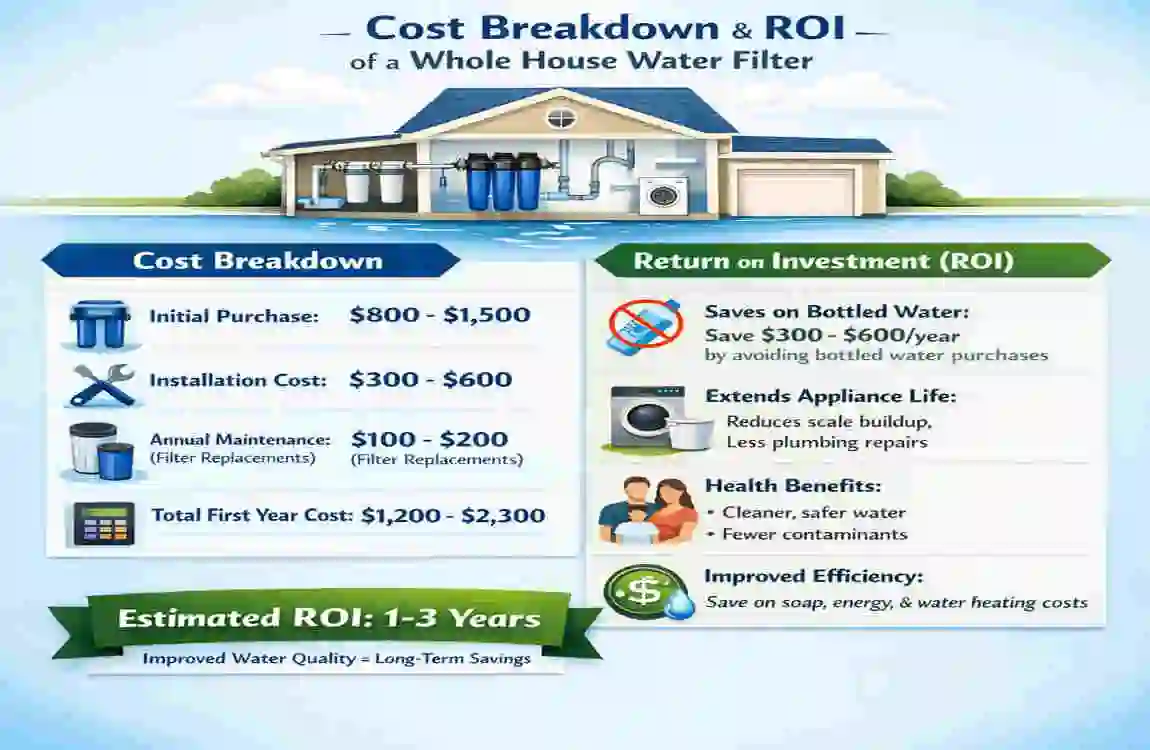
Installing a whole-house water filter is an investment, but it pays off in the long run:
- Initial Costs: $300-$1500 for the filter, plus $200-$500 for professional installation.
- Annual Savings: Save up to $500 per year on bottled water and appliance repairs.
FAQs
Can I install a whole-house water filter before the water softener?
Yes, installing the filter before the softener protects it from sediment and extends its lifespan.
Is outdoor placement okay?
Outdoor placement is not recommended in freezing climates, as it can damage the filter.
