

Picture this scenario: It is the middle of the heavy monsoon season. The rain is pouring outside, and you are enjoying a quiet evening in your living room. Suddenly, you hear a strange, rhythmic dripping sound. You walk into your kitchen and find a puddle of water growing under your sink. Your old, rusted metal pipes have finally given out, and water is slowly ruining your expensive wooden cabinets.
If you are a homeowner, this is a nightmare you want to avoid at all costs. When you finally call a professional plumber to fix the mess, they will likely suggest tearing out the old metal and replacing it with modern plastic piping. But when you visit the local hardware market to buy supplies, you are instantly overwhelmed by rows and rows of different colored pipes. You might find yourself scratching your head and asking the ultimate question: What type of PVC is used for house plumbing?
You do not need to be a master plumber to understand the basics of your home. The most straightforward answer to that question is this: the most common PVC type for house plumbing is Schedule 40 PVC for your general cold water and drainage lines, and CPVC for your hot water lines.
Why Choose PVC for House Plumbing?
Before we get into the specific categories of pipes, we need to understand why PVC (Polyvinyl Chloride) has completely taken over the residential construction market. If you look at older homes built fifty years ago, you will mostly find heavy galvanized iron or copper pipes. Today, PVC holds a massive 70% market share in residential plumbing. Why did the entire world make this switch?
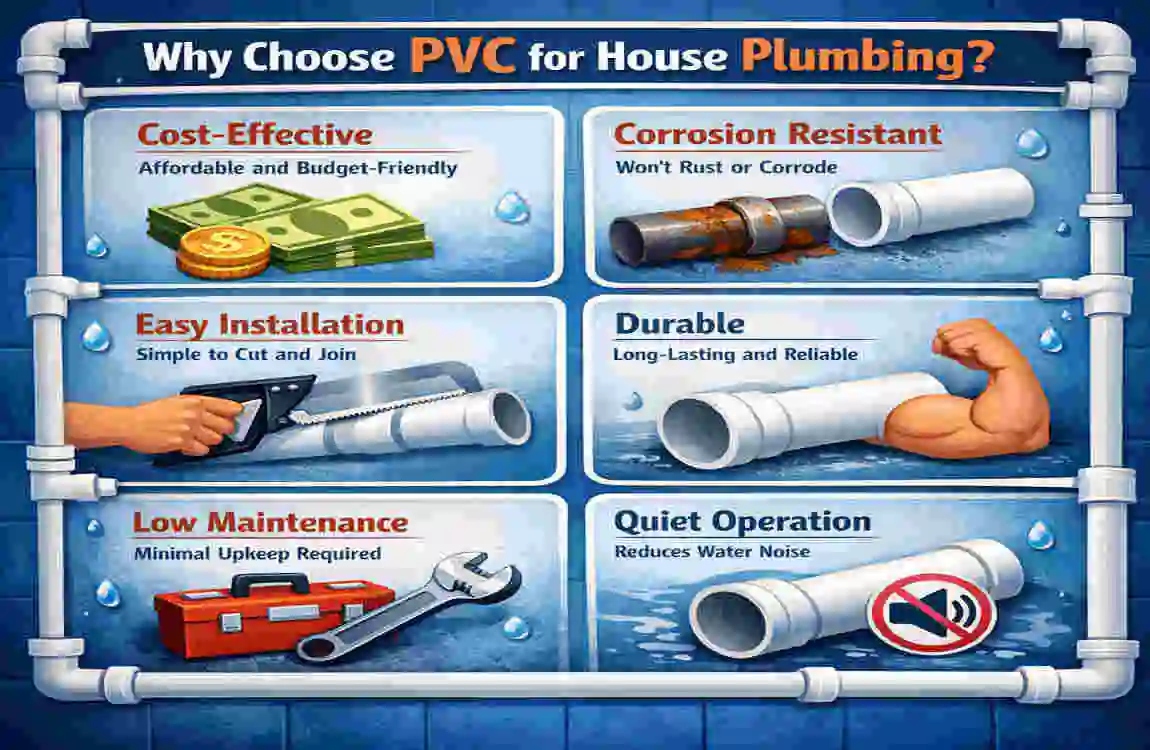
The answer comes down to durability, ease of use, and incredible cost savings. Metal pipes have a fatal flaw: they react with water and oxygen, which eventually causes them to rust and corrode. When iron pipes rust from the inside, they restrict your water pressure and turn your tap water a nasty brown color. PVC completely solves this problem. Because it is a form of hard plastic, it is 100% immune to rust and chemical corrosion.
Let us take a closer look at the advantages and disadvantages of using this popular material.
The Major Pros of PVC
- Incredible Longevity: When installed correctly, high-quality PVC pipes easily last 50 to 70 years. You can install them once and practically forget about them for the rest of your life.
- Highly Affordable: Building a house is expensive, but your plumbing does not have to be. PVC is incredibly budget-friendly, typically costing PKR 100-300 per meter in the market, depending on thickness.
- Lightweight and Easy to install: Have you ever tried to lift a massive iron pipe? It requires serious muscle. PVC is so light that a single plumber can easily carry multiple long pieces up a flight of stairs. Furthermore, you do not need dangerous blowtorches to weld PVC; you use a special chemical glue to bind the pieces together.
- Smooth Interior Walls: The inside of a PVC pipe is as smooth as glass. This means water flows through it with zero friction, maintaining excellent water pressure for your showers and sinks.
The Few Cons of PVC
- Temperature Limitations: Standard PVC cannot handle boiling water. If you run extremely hot water through regular PVC, the plastic will soften, warp, and eventually burst.
- Vulnerability to Sunlight: You should never leave standard white PVC pipes exposed to direct sunlight for years. The ultraviolet (UV) rays from the sun break down the plastic molecules, making the pipe brittle and prone to cracking under pressure.
- Freezing Risks: While not a major issue’s hot climate, standard PVC can crack if water inside it freezes and expands in extremely cold, snowy climates.
When you compare PVC to other modern plastics like PPR (Polypropylene Random Copolymer) or HDPE (High-Density Polyethylene), PVC usually wins for indoor residential use because it is vastly cheaper and much easier for local plumbers to repair.
Types of PVC Pipes Used in House Plumbing
Now we arrive at the core of our guide. When you’re in the hardware store, you need to know exactly which type of PVC is used for house plumbing. You cannot just grab the first white pipe you see. Different pipes serve entirely different purposes in your home’s ecosystem.
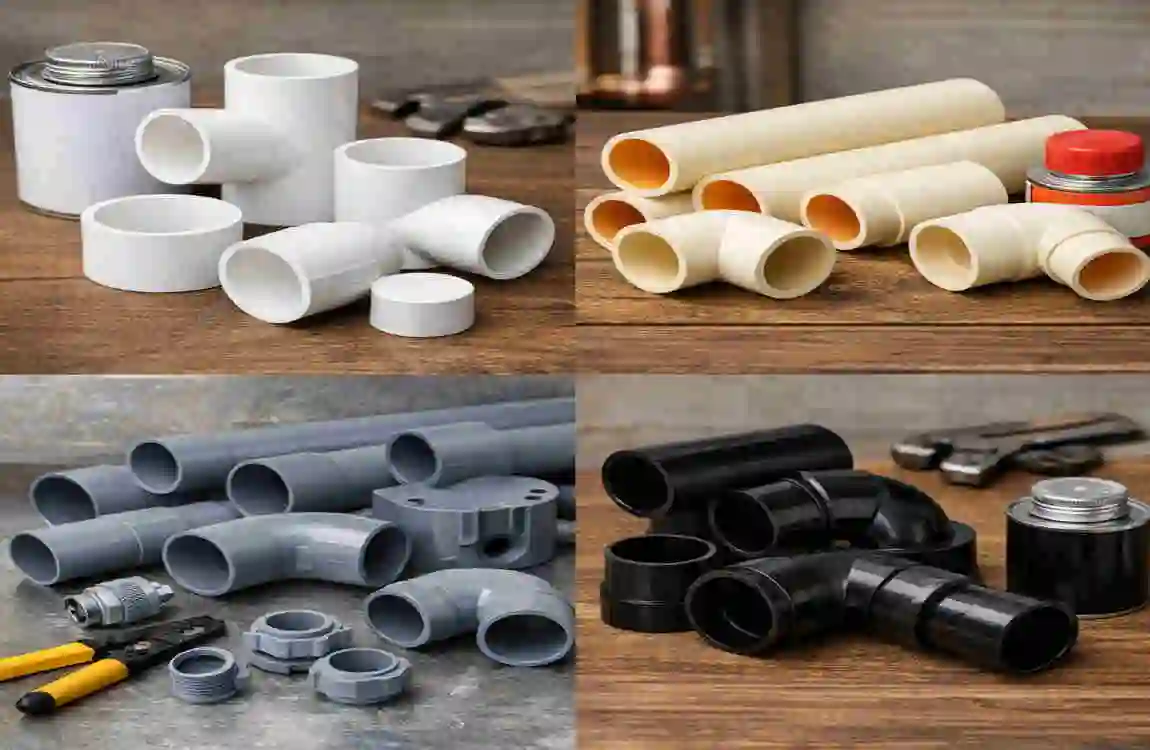
Let us break down the four most common house plumbing PVC types you will encounter.
The Standard Workhorse
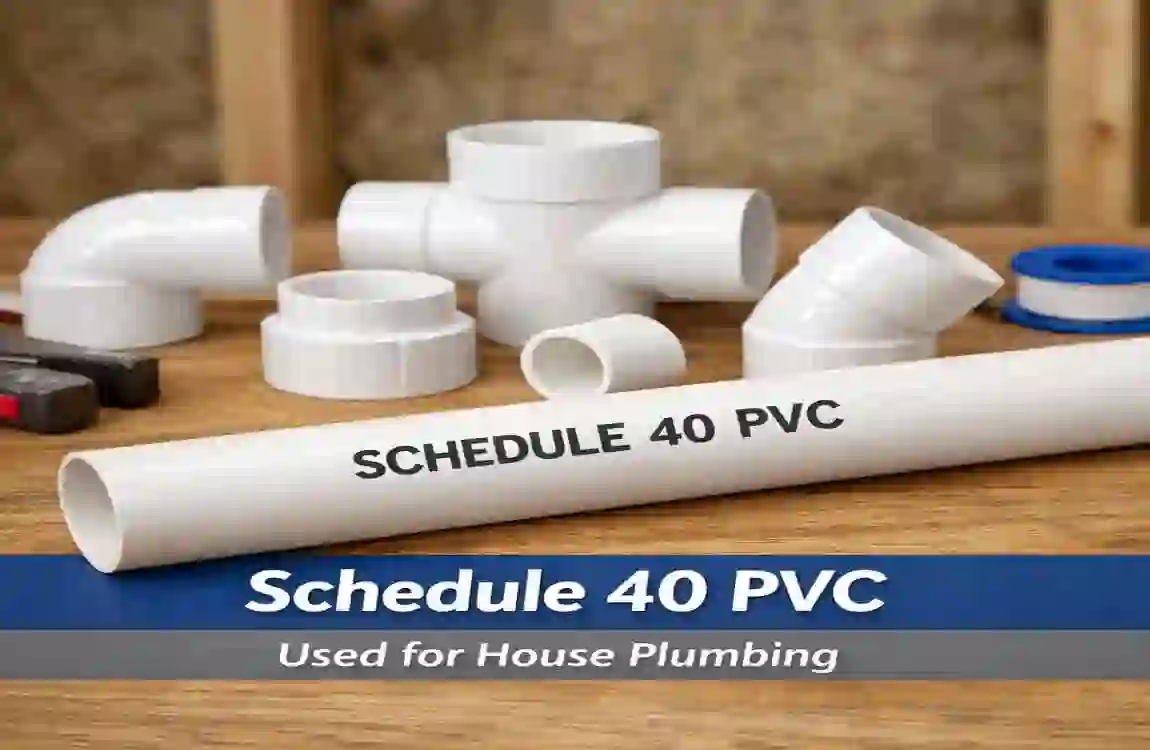
When you close your eyes and picture a standard white plastic plumbing pipe, you are thinking of Schedule 40 PVC. The word “Schedule” is just a technical manufacturing term that refers to the thickness of the walls of the plastic pipe.
Schedule 40 is the absolute standard for residential homes. Plumbers use it for cold-water supply lines, drainage systems under your sinks, and venting pipes that run up through your roof. It typically comes in stark white. It is available in various diameters, ranging from tiny 1/2-inch pipes for your bathroom sink to massive 6-inch pipes for your underground sewer connections.
Why is Schedule 40 so popular? It offers the perfect balance of strength and affordability. It carries a pressure rating of anywhere from 160 to 280 PSI (Pounds per Square Inch). To put that in perspective, the standard water pressure from a city water line into your house is only 40-60 PSI. This means Schedule 40 is more than strong enough to handle everyday water flow without breaking a sweat. It is the ideal, affordable choice for homes that use standard water pump systems to fill rooftop water tanks.
The High-Pressure Heavyweight
If Schedule 40 is a standard passenger car, Schedule 80 is a heavy-duty armored truck. Schedule 80 pipes have the same outside diameter as Schedule 40 pipes. Still, their internal plastic walls are manufactured to be significantly thicker. Because the walls are thicker, the inside hole where the water flows is slightly smaller.
You can usually spot Schedule 80 PVC easily because manufacturers often color it a dark grey instead of white. Because of its thick walls, it boasts a massive pressure rating of 400 PSI or more.
You generally do not need Schedule 80 for the pipes running to your bathroom sink. Plumbers reserve this heavy-duty pipe for areas that require extreme strength. For example, if you have a highly pressurized main water line running from the street into your house, or if you have pipes exposed in a garage where a car door might accidentally hit them, you want the extra protection of Schedule 80. Keep in mind that, because it uses more plastic, it is generally 20% to 30% more expensive than its thinner counterpart.
CPVC (Chlorinated PVC): The Hot Water Hero
We mentioned earlier that standard PVC melts and warps when exposed to hot water. So, how do you get hot water from your geyser to your shower? The answer is CPVC.
CPVC stands for Chlorinated Polyvinyl Chloride. During the manufacturing process, engineers add extra chlorine to the plastic resin. This simple chemical alteration creates a pipe that can easily withstand temperatures up to 200°F (93°C) without losing its structural integrity.
This is the pipe you absolutely must use for your hot water lines. In a climate, where residents rely heavily on high-temperature gas or electric geysers during the chilly winter months, CPVC is non-negotiable. It is completely safe and globally approved for carrying potable water (safe for drinking). You can visually identify CPVC at the hardware store because it usually has a distinct cream or slightly yellowish tint, unlike the bright white of standard PVC.
When considering the debate between Schedule 40 and CPVC, remember the golden rule: Schedule 40 is for cold water, and CPVC is for hot water.
DWV PVC: The Gravity Drainer
Finally, we have DWV PVC. DWV stands for Drain, Waste, and Vent.
Unlike the pipes that bring clean water into your home under high pressure, DWV pipes are designed to take dirty water out of your home using nothing but the natural force of gravity. Because the water inside these pipes is not under pressure, DWV pipes have much thinner walls than Schedule 40 pipes.
You use these pipes to connect your toilets, showers, and kitchen sinks to the main sewer line. You also use them for “venting.” In plumbing, you must run empty pipes up through your roof to let fresh air into the sewer system. This air prevents vacuum formation and allows wastewater to flow smoothly down the drain. Because DWV uses less plastic, it is the cheapest type of PVC you can buy, but you must never, ever use it to carry pressurized drinking water.
Quick Reference Comparison Table
To help you make sense of these options quickly, here is a handy cheat sheet comparing the different materials:
PVC Type Best House Use Pressure Rating Cost (PKR/meter)Heat Tolerance
Schedule 40 Cold water, general drainage 160-280 PSI 150-250 Up to 140°F
Schedule 80 High-pressure mains, exposed areas 400+ PSI 200-350 Up to 140°F
CPVC Hot and cold potable water 100-400 PSI 250-400 Up to 200°F
DWV Unpressurized drains and roof vents Non-pressurized 100-200 Up to 140°F
How to Choose the Best PVC for Your House Plumbing
Knowing the types of pipes is only half the battle. Now you need to make the right purchasing decisions for your specific living situation. You want to buy the best PVC pipes for homes, but the “best” pipe depends entirely on your unique environment.
Here are the major factors you must consider before handing over your cash.
Evaluate Your Water Pressure and Home Size
The size of your home dictates the pipe diameter you need. If you are building a large 3- to 4-bedroom house (commonly referred to as a 3-4 BHK), you will need a substantial water supply to keep multiple bathrooms functioning simultaneously.
For a house this size, use large 1-inch or 3/4-inch Schedule 40 PVC pipes for the main trunk lines from the rooftop water tank. As the pipes branch off to individual sinks and toilets, you can reduce the size to standard 1/2-inch pipes. If you install pipes that are too small, you will experience terrible water pressure when someone flushes a toilet while you are taking a shower.
Consider Your Local Climate
Your local weather plays a massive role in plumbing. Let us look , as a prime example. experiences scorching summers, with temperatures routinely reaching 45°C (113°F), and chilly winters that drop to near-freezing.
During the summer, the cold water sitting in your rooftop tank practically boils under the sun. If you use cheap, thin pipes, the naturally heated water can slowly warp your cold-water lines. Because of these extreme temperature fluctuations, many modern builders now opt to use CPVC for both hot and cold indoor water lines, just to be safe. It costs slightly more upfront, but it provides incredible peace of mind against heat damage.
The Smart Buyer’s Checklist
When you finally walk into the hardware store, do not just unquestioningly trust the salesman. Use this quick checklist to ensure you are buying quality materials:
- Look for the Certifications: Inspect the outside of the pipe. High-quality PVC will have specific codes printed along the side. Look for the “ASTM D1785” certification. This is a global standard that ensures the pipe was manufactured to meet specific pressure requirements safely.
- Check Local Brand Reputations: In the market, specific brands have built strong reputations over decades. Local plumbers widely recognize brands like Master Pipes, Pop Pipes, and Turk Plast for maintaining consistent wall thickness and quality.
- Inspect for Blemishes: Before buying, run your hand over the pipe. It should be perfectly smooth. If you see bubbles, deep scratches, or color variations, the pipe is defective.
- Match Your Fittings: A pipe is useless without the elbows and T-joints that connect them. Ensure you buy fittings that perfectly match your pipe type. Do not try to glue a Schedule 40 fitting onto a CPVC pipe; the chemical glues are entirely different!
Installation Guide for House PVC Plumbing
One of the greatest appeals of PVC is that it is incredibly friendly for do-it-yourself (DIY) projects. If you have a weekend to spare and a willingness to learn, you can save roughly 30% on your total plumbing costs by doing the labor yourself.
However, water damage is unforgiving. If you are replumbing an entire multi-story house, we strongly recommend hiring a professional. But if you are adding a new sink to your garage or fixing a broken drain line, you can absolutely tackle it.
Here is a straightforward, step-by-step guide to properly cutting and joining PVC pipes like a seasoned professional.
Gather Your Essential Tools
You do not need an expensive toolkit for this. You will need a reliable PVC pipe cutter (which looks like a large pair of scissors and costs around PKR 1,500), a measuring tape, a marker, some medium-grit sandpaper, a can of PVC primer, and a can of PVC cement.
Measure and Cut with Precision
Measure the distance you need to cover and mark the plastic pipe with your marker. Place the jaws of your pipe cutter directly on the line and squeeze the handles firmly. The blade will cleanly slice through the plastic. Your cut must be perfectly straight. If you cut the pipe at an angle, it will not sit deep enough in the fitting and will eventually leak.
Deburr and Clean the Edges
When you cut plastic, it leaves rough little shavings clinging to the edge. Plumbers call these “burrs.” Take your sandpaper and gently rub the inside and outside of the cut edge until it is completely smooth. If you leave the burrs on the pipe, they will scrape the glue away when you push the pipe into the fitting, creating a weak seal. Take a clean, dry rag and wipe away all plastic dust and dirt.
Apply the Chemical Primer
This is a step many beginners skip, and it almost always leads to leaks. You must apply PVC primer. The primer is a harsh chemical (often colored purple so building inspectors can see you used it) that cleans the plastic and literally melts the surface layer slightly.
Take the dauber (the brush attached to the inside of the primer cap) and generously coat the outside of the pipe and the inside of the fitting. The purple primer prepares the plastic to accept the glue. Safety Note: Primer emits very strong, toxic fumes. Always keep windows open and ensure excellent ventilation when working with these chemicals.
Cement and Twist
While the primer is still wet, immediately grab your PVC cement. Apply a solid, even layer of cement over the primed areas. Push the pipe into the fitting quickly.
Here is the professional secret: as you push the pipe in, give it a quick quarter-turn twist. This twisting motion evenly distributes the cement, eliminating any tiny air bubbles that could cause a leak. Hold the two pieces tightly together for about 15 seconds so the pipe does not push itself back out. Wipe away any excess glue with a rag, and you are done! The joint will be safe to run water through in about two hours.
Common Mistakes to Avoid
- Using the wrong glue: You must use CPVC-specific cement for CPVC pipes. Standard PVC cement will fail on hot water lines.
- Over-tightening threaded fittings: When connecting plastic pipes to metal fixtures, you often use threaded plastic adapters. If you use a heavy wrench and tighten the plastic too hard against the metal, it will crack under the pressure. Tighten threaded plastic fittings strictly by hand.
Maintenance and Troubleshooting PVC Pipes in Homes
Even the best PVC pipes for homes require a bit of care and attention to reach their 50-year lifespan. Once your plumbing is sealed behind your walls, you want to keep it in good condition.
Spotting the Signs of Failure
Because you cannot see most of your pipes, you have to look for secondary clues that something is wrong. Keep an eye out for mysterious water stains forming on your ceilings or the drywall near your baseboards. Pay attention to your nose: if a specific bathroom constantly smells musty and moldy, you likely have a hidden micro-leak keeping the wood behind the wall damp.
If you have exposed pipes running along your exterior walls, perform a visual check twice a year. Look for tiny hairline cracks or a chalky, faded white appearance. If the pipe looks chalky, the sun’s UV rays have damaged the plastic, and it is time to replace that section before it bursts.
Fast Fixes for Leaking Pipes
What do you do if you find a small crack in a PVC pipe? If it is a tiny pinhole leak and you need a temporary fix to get you through the night, you can use specialized plumbing epoxy putty. You knead the putty like clay and press it firmly over the crack. It hardens like a rock in minutes.
However, epoxy is only a temporary bandage. The only permanent, professional fix for a leaking PVC pipe is to shut off the water, cut out the damaged section entirely, and glue in a brand-new piece of pipe using two coupling fittings.
Extending the Lifespan of Your Plumbing
If you want to protect your pipes, you must be careful about what you pour down them. Avoid using extremely harsh, chemical liquid drain cleaners when your sink gets clogged. These toxic chemicals generate intense heat as they eat through hair and grease. This heat can actually soften and warp the thin DWV PVC pipes under your sink. Instead, buy a cheap plastic drain snake to pull out clogs physically.
Furthermore, if you live in an area, you are likely dealing with “hard water.” Hard water is rich in calcium and magnesium. Over the years, these minerals form hard white scales inside your pipes, reducing your water pressure. Consider installing a whole-house water softener near your main line. This machine removes heavy minerals, extending the life of your PVC pipes, geyser, and expensive showerheads.
The Return on Investment (ROI)
Dropping nearly a hundred thousand rupees on plastic pipes might sting your wallet initially. Still, you have to look at the long-term Return on Investment.
If you opted for old-school galvanized iron, the materials would cost twice as much, and the labor would take twice as long. Furthermore, PVC guarantees you will not be paying a plumber PKR 5,000 every six months to patch rusting metal holes. You are securing 50 years of clean, rust-free water and leak-proof walls. The upfront investment pays for itself in maintenance savings within the first five years.
FAQs
Even with a comprehensive guide, homeowners often have very specific, lingering questions regarding their plumbing choices. Let us address some of the most frequently asked questions about residential PVC usage.
Is Schedule 40 PVC safe for drinking water? Yes, absolutely. Schedule 40 PVC is perfectly safe for cold drinking water lines, provided it is manufactured by a reputable brand. It carries an NSF (National Sanitation Foundation) or equivalent local health safety certification. This certification guarantees the plastic will not leach harmful chemicals into your drinking water.
Can I use regular white PVC for my hot water geyser? No, you must never do this. Regular Schedule 40 PVC is only rated to handle water up to 140°F (60°C). Geysers easily produce water much hotter than this. The hot water will melt the glue joints, soften the plastic, and cause a massive, dangerous leak inside your walls. Always use CPVC for geysers and hot water lines.
What is the cost difference between Schedule 40 and CPVC? Because CPVC undergoes a secondary chlorination process during manufacturing to make it heat-resistant, it is more expensive to produce. You can generally expect to pay 30% to 50% more for CPVC pipes and fittings compared to standard Schedule 40 PVC.
How long does PVC plumbing actually last in a house? When installed correctly indoors, away from extreme freezing temperatures and direct sunlight, PVC plumbing systems boast a phenomenal lifespan. You can expect your residential PVC and CPVC pipes to last anywhere from 50 to 80 years before they become brittle enough to require replacement.
Can I leave PVC pipes exposed to direct sunlight on my roof? It is highly discouraged. The ultraviolet (UV) rays from the sun aggressively attack the polymer chains in standard PVC, causing it to turn yellow, become incredibly brittle, and crack. If you absolutely must run PVC across an exposed rooftop, you should heavily insulate the pipes or paint them with a specialized, light-colored latex paint to block the UV rays.
Why did my plumber use a purple liquid before gluing the pipes? That purple liquid is called PVC primer. It is a vital chemical compound that cleans dirt off the plastic and temporarily softens the surface layer of the pipe. When the plumber applies the actual glue over the primer, the two pieces of plastic chemically melt together, creating a permanent, watertight weld that is stronger than the pipe itself.
