

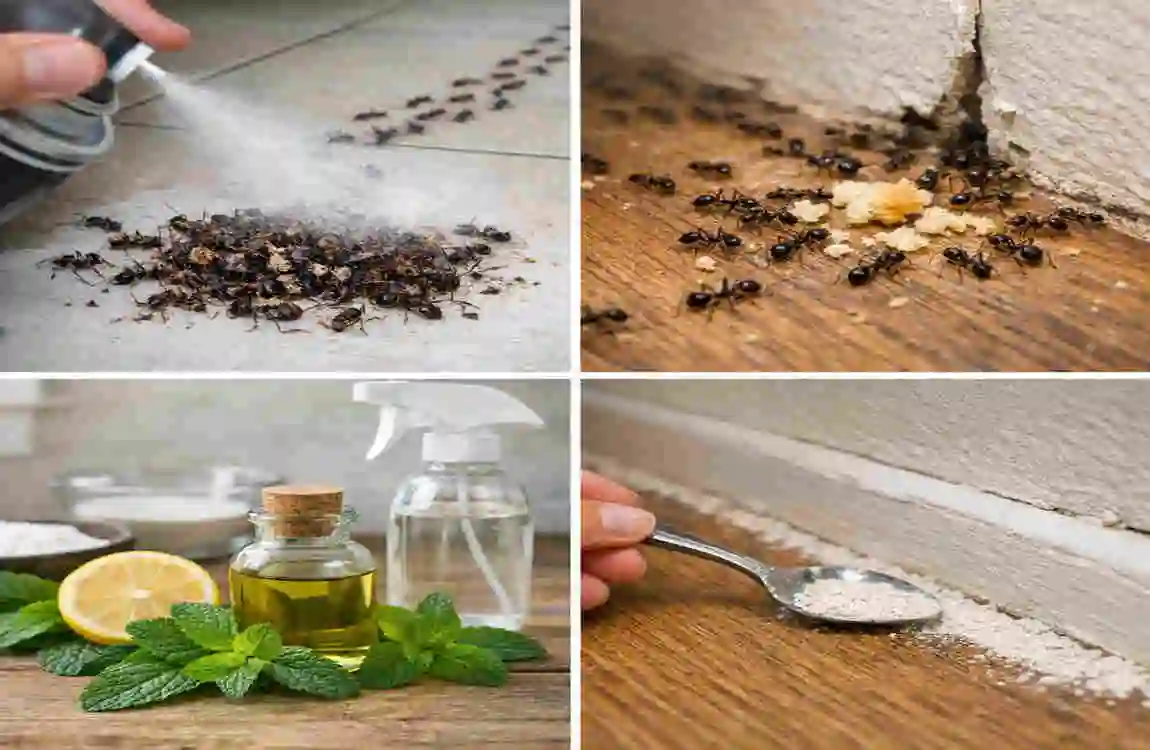
If that sounds familiar, you are not alone. One of the most common pest-control questions homeowners ask is: Is it bad to kill ants in the house? It feels like the fastest solution at the moment. But in many cases, it does not solve the real problem. It can even make the trail harder to control if you do not clean up the chemical scent markers ants leave behind.
That is the frustrating part of indoor ant problems. Ants are small, but their colonies are organized, responsive, and surprisingly good at sharing information. When one ant finds food, others often follow. When ants are crushed, some species release chemicals that can disrupt the colony, reinforce activity, or maintain trail behavior on nearby surfaces. So the problem is not always the act of killing itself. The problem is what happens after you do it, and whether the food source, moisture source, and pheromone trail remain in place.
So, is it bad to kill ants in the luxury house? In many situations, yes—it is not the smartest first move. Squashing worker ants usually does not touch the queen, the nest, or the reason the ants came inside in the first place. It also leaves behind scent signals and residue that can keep the traffic moving.
Is It Bad to Kill Ants in the House? The Short Answer
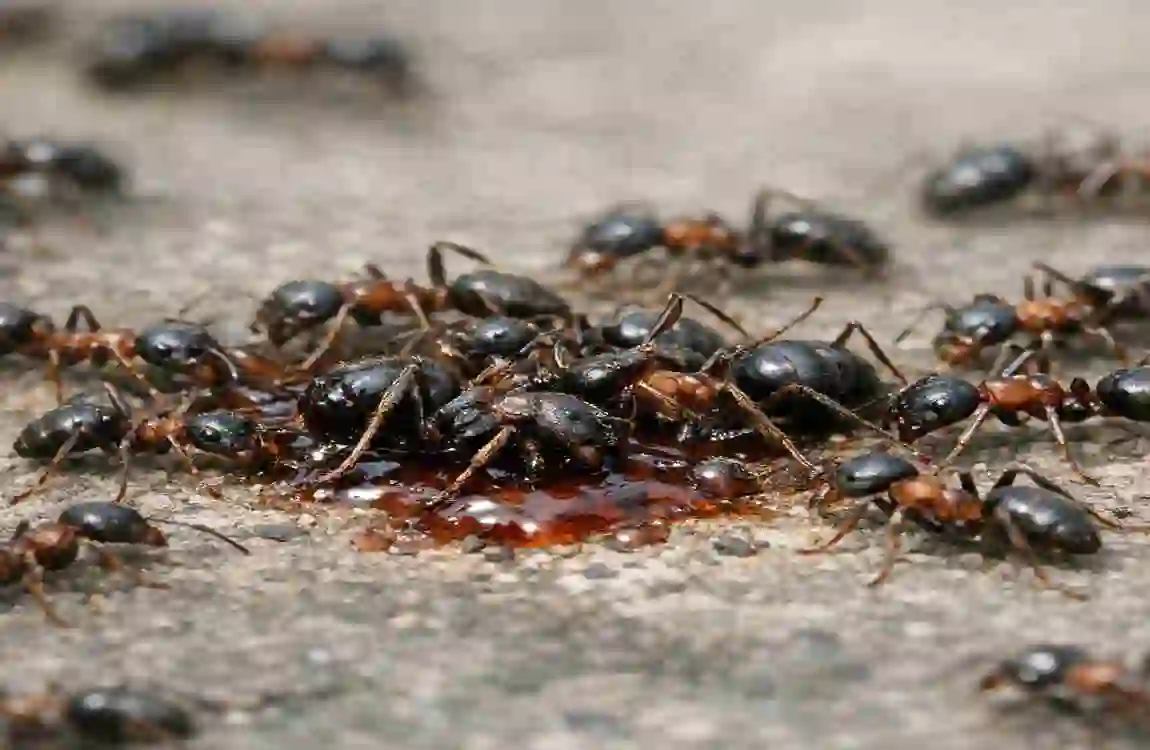
The short answer is yes, it can be—especially if squashing ants is your only strategy.
Killing a few visible ants may give you a sense of relief, but it rarely fixes the source of the infestation. Most of the ants you see indoors are foragers, not the queen. Their job is to search for food and water, then report back to the colony. If you only remove a few workers, the colony usually sends more.
On top of that, ants rely heavily on pheromones, which are chemical signals. These signals help them build trails, warn nestmates, and guide traffic between food and shelter. If you crush ants and leave the area untreated, you may leave behind a strong scent trail that attracts more ants.
That is why homeowners often feel like killing ants attracts more. In many cases, what they are seeing is not a mystery swarm. It is the colony following the same chemical route again and again.
The better approach is simple:
- Remove the trail
- Cut off food and water
- Block entry points
- Use low-tox baits or repellents carefully
- Target the colony behavior, not just the ants you can see
If you remember one thing from this article, make it this: visible ants are usually the symptom, not the whole problem.
Why Killing Ants Attracts More
How pheromones drive ant traffic
Ants are social insects. They do not wander randomly for long. They communicate through scent.
When a foraging ant finds something valuable—like sugar, grease, pet food, or even moisture near a sink—it lays down a trail pheromone as it returns to the colony. That chemical path tells other ants, “Follow me. There is food here.”
This is why you often notice ants moving in neat lines rather than spreading evenly across the room.
When ants are disturbed or crushed, some species release alarm chemicals or leave behind body residue that other ants can detect. Even if the exact effect depends on the species, the bigger issue is that the trail often stays active unless you fully clean the surface. If food crumbs remain and the scent line stays in place, more ants keep arriving.
Worker ants are replaceable to the colony.
Here is another reason squashing ants rarely works: the ants on your counter are usually the ones the colony can most easily lose.
Worker ants do not reproduce. The queen does. In many species, the colony can keep sending workers as long as the nest stays healthy. That means killing ten ants, or even fifty, may barely affect the colony at all.
Instead, it can trigger more searching behavior. The colony still wants the food source. So it sends more workers to reconnect the route.
If you have ever wondered why you kill a few ants in the morning and see another line in the afternoon, this is the reason.
Indoor spaces make the problem feel worse.
Inside your home, ant activity can seem more intense than it does outdoors.
Why? Because indoor environments give ants exactly what they want:
- Stable temperature
- Less wind and rain
- Easy food access
- Water from sinks, pipes, or condensation
- Protected travel paths along walls, cabinets, and counters
Outdoors, pheromone trails can get washed away or disrupted. Indoors, they can linger longer on smooth surfaces, under appliances, or along trim. That is one reason many homeowners ask: Is it bad to kill ants in the stunning house instead of outdoors? The answer matters more inside because trail persistence, food contamination, and repeated exposure are greater concerns in enclosed spaces.
Why does it feel like the infestation doubled overnight?
From the homeowner’s point of view, it often looks like an explosion.
But usually, one of three things happened:
- The colony already had a working trail.
- The food source stayed available.
- The crushed ants and original scent path were never fully removed.
That is why wiping the area properly matters. A quick smear with a dry tissue does little. You need a cleaner that breaks down residue and removes the scent line.
The visual pattern to watch for
If you notice ants appearing in a narrow, repeated path—along the backsplash, window frame, or edge of the counter—you are likely looking at an active trail route.
That pattern tells you something important: this is not random. It is an organized movement between the nest and a reward.
And once you understand that, your next step becomes clearer. You do not just kill ants. You interrupt the system they are using.
Common Myths About Ant Control
A lot of bad advice about ants sounds logical at first. The problem is that these myths waste time and often make indoor infestations harder to manage.
Squashing stops them instantly.
It stops the ants you touched. It does not stop the trail, the colony, or the reason they came in.
Pheromone residue and food scent can remain on surfaces for 24 to 48 hours, sometimes longer, depending on the material and how well you cleaned it. So if you squash ants and leave behind sticky spots, grease, crumbs, or body residue, the line may continue.
This is the biggest reason people start asking, “ Is it bad to kill ants in the house. It feels like a fix, but it often only removes the most visible part of the problem.
All ants are harmless.
Some ants are more of a nuisance than a danger, but not all indoor ants are harmless.
Certain ants can bite or sting. Others contaminate food by walking across trash areas, damp spaces, pet bowls, drains, or outdoor debris before entering your kitchen. Carpenter ants are especially important because they can signal moisture problems and may tunnel into damaged wood.
So while ants are tiny, ignoring them is not always wise.
If I kill the queen, the problem ends.
In theory, yes. In practice, that is hard.
The queen is usually hidden in a nest wall void, under flooring, behind cabinets, in soil near the modern house, or inside damaged wood. Some ant species even have multiple queens, which means removing one may not end the colony.
That is why targeted baiting and habitat correction usually work better than random spraying.
Ants will leave on their own.
Sometimes, the ant activity slows down. But when ants find a reliable source of sugar, protein, grease, or water, they often come back until something changes.
If you do nothing, trails can grow. More ants may discover the same route. Food spoilage risk increases. Stress goes up. And what began as a minor issue can turn into a repeating household problem.
Bug bombs fix it fast.
Foggers and bug bombs sound dramatic, but they often miss the nest and do little to solve the core cause. They can also spread chemicals where you live, cook, and breathe.
This matters even more in homes with kids, pets, asthma, or allergy concerns. In 2026, many homeowners are moving toward eco-home routines and lower-tox options for good reason. Broad indoor chemical use is often the wrong first step.
Myth vs. reality table
MythRealityHouse Impact
Squashing kills the colony. Releases alarm pheromones or leaves a trail residue. More ants invade the kitchen.
Ants leave on their own. Trails grow without intervention—food spoilage risk.
Bug bombs fix it fast. Often misses nests, which can affect indoor air quality—leading to recurring indoor outbreaks.
Health and Ethical Downsides
Crushed ants can spread contamination.
Ants move through places you do not want on your counters.
They may travel over trash lids, floor edges, pet food stations, dirty crevices, drains, and damp exterior soil. When they reach food prep areas, they can carry dirt and microbes with them. Crushing them directly on counters or near open food can smear body matter and surface contamination where you cook.
That does not mean every ant is a serious health emergency. But it does mean careless handling is not ideal. Wipe down affected surfaces with soap and water or a food-safe cleaner after any ant activity.
Ant infestations can worsen allergies and irritation.
Some people are sensitive to insect particles, dust, or chemical sprays used to control pests. If your answer to ants is repeated indoor spraying, you may trade one problem for another.
Low-quality or overused insecticides can irritate airways, especially in closed spaces. This is one reason many families now search for safe ant-control methods instead of reaching for aerosol sprays first.
And if the ants are stinging, there is also the risk of skin irritation or an allergic reaction from bites or stings.
Some ants signal hidden home problems.
Indoor ants do not always mean your house is dirty.
Sometimes they are telling you something else:
- There is a moisture issue behind a wall
- A window or door seal has failed
- There is decaying wood near the structure
- Food is being stored in packaging that ants can access
- The yard around the home is creating easy bridges indoors
In other words, ants can act like a warning light. If you only kill the visible ants, you may miss the underlying home-maintenance issue.
The ethical side is worth thinking about, too.
You do not have to become an insect philosopher to see the point here: ants are not evil.
Outdoors, they help break down organic matter, move nutrients, and support the broader ecosystem. Indoors, of course, you do not want them in your cereal or on your counters. But there is a difference between controlling a nuisance and using unnecessary force or excessive chemicals.
A smarter approach respects both your home and the environment. It is also often more effective.
That is another reason the question of whether it is bad to kill ants in the house matters. The answer is not just about pests. It is about using methods that work without creating a bigger mess for your health, your air, your surfaces, and the spaces your family uses every day.
Safe Home Solutions
Below are the most practical, low-tox strategies for natural ant repellents for home use and general indoor control. None of them relies on panic, harsh whole-room spraying, or constant squashing.
Diatomaceous Earth
How it works:
Food-grade diatomaceous earth, often called DE, is a fine powder made from fossilized algae. It damages the insects’ waxy outer layer, causing them to dry out over time.
How to use it:
Apply a very thin dusting near entry points, under sinks, behind appliances, and along baseboards where ants travel. Less is more. Ants will avoid thick piles, so keep the layer light.
Why it helps:
It works at the route level instead of encouraging you to chase individual ants around the kitchen.
Safety tip:
Use only food-grade DE, not pool-grade. Avoid breathing the dust, and keep it out of reach of children and pets while applying.
Vinegar-Water Spray
How it works:
Vinegar helps break down ant trail residue and masks the scent path that other ants follow.
How to use it:
Mix equal parts white vinegar and water in a spray bottle. Spray counters, windowsills, cabinet edges, and the exact places where ants were walking. Wipe thoroughly with a clean cloth.
Why it helps:
This is one of the simplest ways to interrupt an active trail without relying on strong pesticides.
Safety tip:
Do not use vinegar on delicate stone surfaces, such as marble or some granite finishes. Always test a small hidden area first.
Essential Oils: Peppermint or Lemongrass
How it works:
Strong plant-based scents may help deter ants from certain routes. Peppermint and lemongrass are two of the most commonly used options.
How to use it:
Add a few drops to water in a spray bottle with a little mild soap to help disperse the oil. Spray lightly around entry zones, not directly on food-contact surfaces unless you clean afterward.
Why it helps:
These oils can confuse scent tracking and make some travel paths less attractive.
Safety tip:
Essential oils are not automatically safe for all pets, especially cats. Use with care, avoid direct pet exposure, and ventilate the space.
Baking Soda and Sugar Bait
How it works:
The sugar attracts ants, and the baking soda is meant to interfere with them after they consume it. Many homeowners use this as a simple DIY bait.
How to use it:
Mix equal parts powdered sugar and baking soda. Place a small amount in shallow bait stations near ant trails, but away from food prep surfaces.
Why it helps:
It gives ants something to carry or consume, rather than simply scattering them. That said, results vary by species, and commercial enclosed baits are usually more reliable.
Safety tip:
Keep homemade baits out of reach of children and pets. If safety is a concern, use tamper-resistant bait stations instead.
Cinnamon Barriers
How it works:
Cinnamon has a strong scent that may disrupt or discourage ant movement along a route.
How to use it:
Sprinkle a light line of cinnamon powder near windows, thresholds, or tiny gaps where ants enter. You can also place cinnamon sticks in pantry corners or near door frames.
Why it helps:
It is a simple barrier method that some homeowners find useful as part of a broader routine.
Safety tip:
Powder can be messy, and too much may irritate sensitive noses. Use sparingly and vacuum up any remaining residue before reapplying.
Seal Entry Points
How it works:
If ants cannot get in, they cannot build repeat traffic indoors.
How to use it:
Inspect window frames, plumbing penetrations, wall cracks, baseboard gaps, and door sweeps. Use caulk, weatherstripping, or sealant where needed. Pay extra attention to the kitchen, laundry room, and bathroom.
Why it helps:
This is one of the most overlooked ant-control methods. It does not just deter ants today. It lowers the odds of future infestations.
Safety tip:
Choose indoor-safe sealants and let them cure fully before allowing children or pets near fresh repairs.
Coffee Grounds
How it works:
Used coffee grounds are often suggested as a scent barrier. The evidence is mostly anecdotal, but some homeowners report reduced movement in outdoor areas.
How to use it:
Scatter used grounds around exterior entry zones, potted plants, or the outside perimeter where ant activity begins. Indoors, they can be messy, so outdoor use is usually better.
Why it helps:
It may create a scent disruption at the home’s boundary, especially when paired with trimming plants and sealing gaps.
Safety tip:
Do not rely solely on coffee grounds. Think of them as a backup deterrent, not your main strategy.
Lemon Juice
How it works:
The acidity and strong smell can help break down trail markers and freshen problem areas.
How to use it:
Mix fresh lemon juice with water and wipe down windowsills, countertops, and door thresholds where ants appear. For a quick reset, use it after cleaning crumbs or sticky spills.
Why it helps:
It serves two roles: cleaning and scent disruption.
Safety tip:
Like vinegar, lemon can affect delicate stone. Test first, and wipe surfaces dry afterward.
Plant Deterrents Like Mint or Basil
How it works:
Some aromatic plants may make entry areas less inviting to ants.
How to use it:
Place potted mint or basil near doors, windows, patios, or kitchen-adjacent entry points. Outdoors, keep plants healthy and trim them so they do not become bridges to the house.
Why it helps:
This is a gentle, eco-friendly option that fits well with today’s more natural home care trends.
Safety tip:
Plants help most as a support strategy, not a standalone cure. Use them along with cleaning and sealing.
Bonus: Cleanliness and Scent Reset
How it works:
Ants follow rewards. If you remove those rewards, the trail loses value.
How to use it:
Wipe surfaces daily, sweep crumbs, rinse recycling, clean under small appliances, and do not leave pet food out overnight. Vacuum the trail areas, empty the trash often, and fix the sticky cabinet spills you forgot were there.
Why it helps:
This is the foundation of every smart ant-control plan. It removes both food and the surface clues ants keep using.
Safety tip:
Stick to regular routines. Consistency beats intensity.
A quick routine you can start today
If you want a simple plan, do this in order:
- Clean the trail with vinegar-water or lemon-water
- Remove food and water sources
- Seal obvious cracks
- Use DE or enclosed bait where needed
- Monitor for 7 to 14 days
That is how safe ant control house methods start working. You stop reacting to single ants and start controlling the conditions they depend on.
Prevention for Ant-Free Homes
Stopping ants once is good. Keeping them from returning is better.
Prevention works best when you treat your home the way ants see it: a map of food, water, shelter, and access points.
Weekly prevention habits that actually help
A few simple routines make a big difference:
- Vacuum and wipe the trail areas weekly
- Store pantry goods in airtight containers
- Empty trash and rinse recyclables often
- Fix leaking faucets and damp spots
- Trim plants that touch the house
- Check door sweeps and window seals seasonally
These are not dramatic steps, but they are the reason some homes stay mostly ant-free while others deal with repeat invasions every spring and summer.
Seasonal timing matters
Ant activity often spikes in spring and summer, especially during warm weather, dry spells, or after rain, when ants are pushed to search for new routes. Indoors, you may also notice activity during allergy season, when windows open more often and crumbs, moisture, and pet traffic increase.
If you have ever found yourself asking, ” Is it bad to kill ants in the house every April or May, the timing is not random. Colonies become more active, and foragers search aggressively.
Think outside the kitchen, too.
Many people focus only on countertops, but ants do not.
Check these forgotten hotspots:
- Under bathroom sinks
- Around washing machines
- Near pet bowls
- Inside pantry corners
- Around indoor plants
- Along utility line openings
- At the garage-to-house door
If you want long-term success, look for the pattern, not just the ants.
Organized pantry with sealed containers and clean shelving.
When to Call Professionals
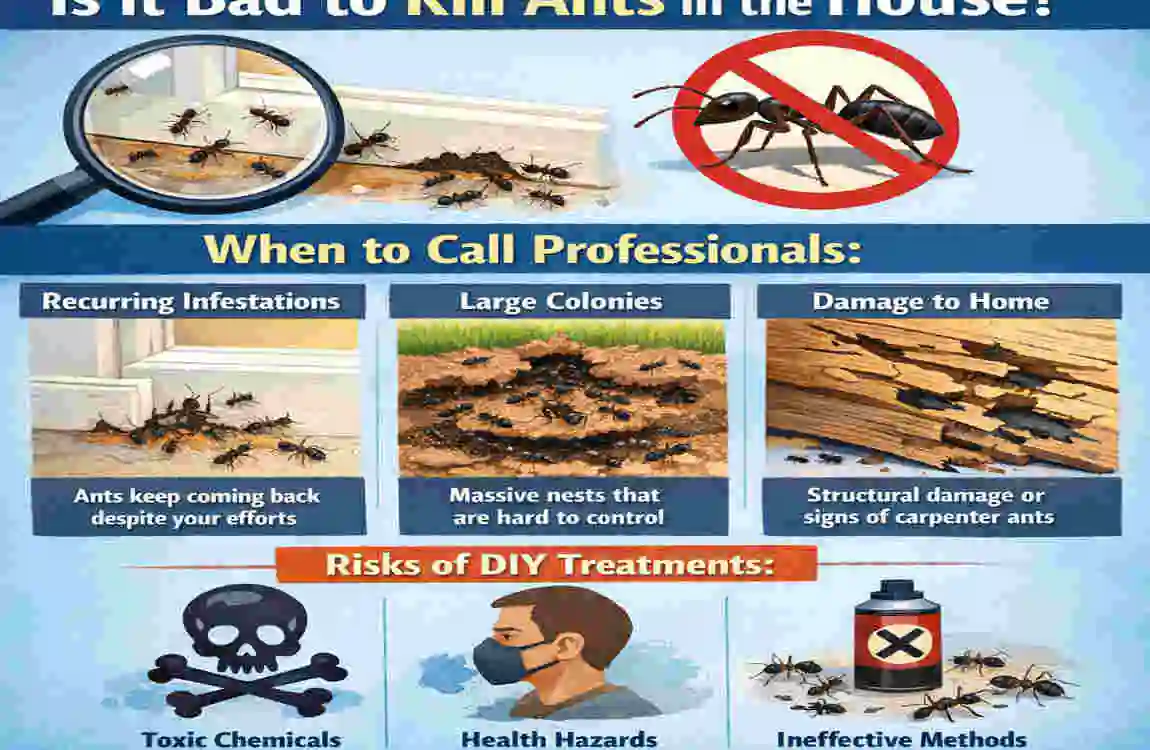
DIY methods can work very well for small or early-stage ant problems. But sometimes the issue is bigger than it looks.
You should consider professional help if:
- Ant trails return daily for more than two weeks
- You suspect carpenter ants
- You hear rustling in the walls or find wood shavings
- Ants are appearing from multiple rooms
- The nest location seems hidden inside the structure
- Store-bought fixes are only causing short-term relief
A professional can identify the ant species, locate likely nesting areas, and use targeted baiting rather than blanket chemical treatment. That matters because different ants respond to different foods and strategies.
Cost varies by area and severity, but many homeowners spend roughly $100 to $300 for standard service. In cases involving structural damage, the value is even clearer. Catching the problem early can prevent much higher repair bills later.
FAQ
Is it bad to kill ants in the house?
Often, yes. Killing a few ants does not remove the colony and may leave behind trail residue or alarm chemicals. The smarter move is to clean the trail, remove food sources, and block entry points.
How long do ant pheromones last indoors?
Ant trail signals can remain noticeable for 24 to 48 hours, sometimes longer if the surface is not cleaned well. Smooth indoor surfaces can help those trails stay useful to other ants.
What is the best natural ant control option for a home?
For many households, the best starting point is a combination of vinegar-water cleaning, food storage, and entry-point sealing. If you need more help, food-grade DE or enclosed bait stations can add control.
Do ants go away in winter?
Some colonies slow down in colder months, but indoor ants can remain active if they have warmth, water, and food. A winter lull does not always mean the problem is gone for good.
Are these methods safe for pets and kids?
Many of these options are safer than wide indoor spraying, but not all are automatically pet-safe. Essential oils, powders, and homemade baits should always be used carefully and placed out of reach.
