

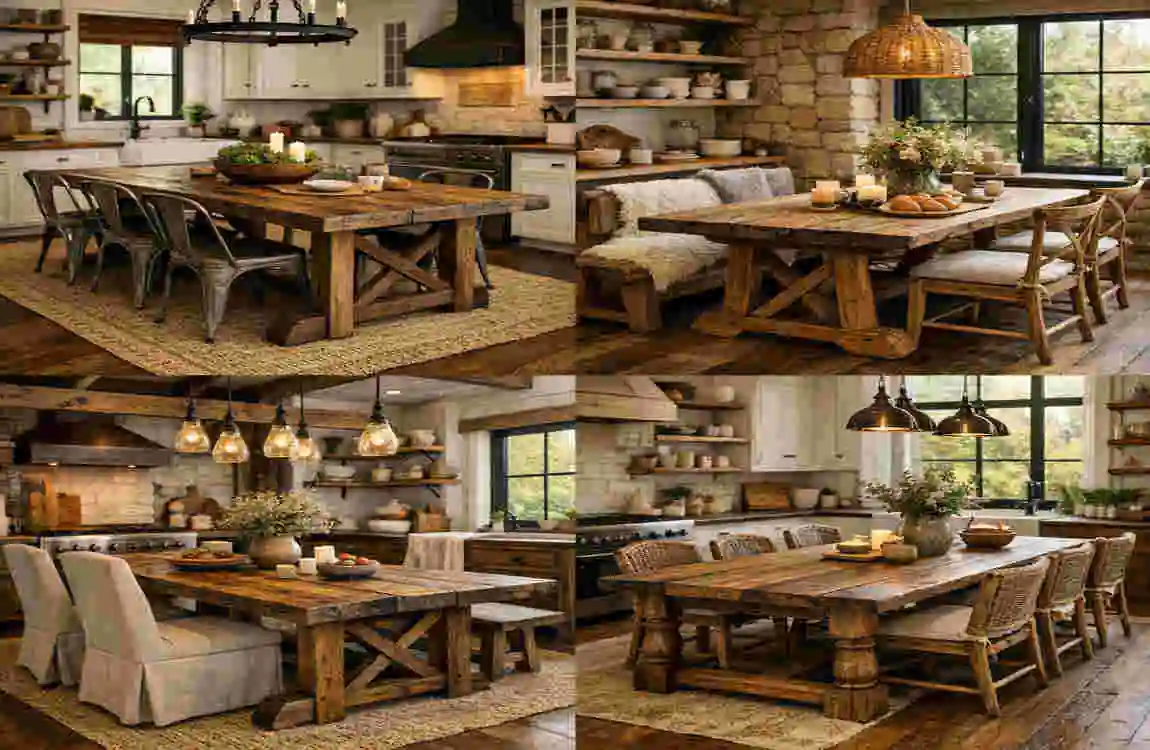
Imagine it is a slow Sunday morning. The sun is peeking through the kitchen window, casting a warm glow over a sturdy, weathered table. As you run your hand across the surface, you feel the textures of a century-old story—the faint grooves of a saw blade from a 1920s barn or the deep, rich patina of wood that once supported a bustling factory floor. You aren’t just sitting at a piece of furniture; you are sitting at a piece of history.
This is the magic of reclaimed wood kitchen tables. In an era of “fast furniture” and disposable decor, these tables offer something rare: a soul. They represent the ultimate blend of sustainability, rugged style, and unmatched durability. Whether you are renovating a farmhouse or softening the edges of a modern apartment, a reclaimed wood table serves as an anchor, turning a simple kitchen into a timeless haven.
What Are Reclaimed Wood Kitchen Tables?
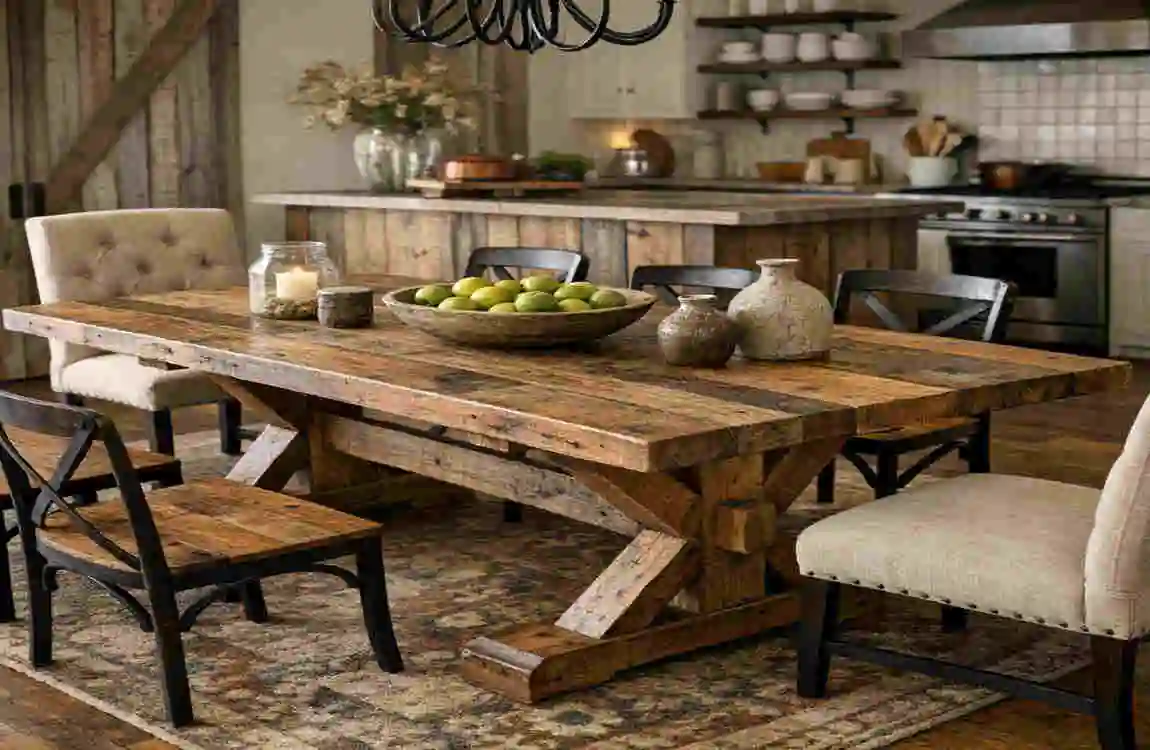
To understand the beauty of these tables, we first have to understand where the wood comes from. Unlike “distressed” furniture, which is new wood made to look old, reclaimed wood is the real deal. It is timber salvaged from old structures such as barns, warehouses, ships, and even vintage wine vats.
When you choose a reclaimed wood kitchen table, you are choosing wood that has been naturally seasoned by time. This wood has spent decades—sometimes centuries—expanding and contracting with the seasons. This process makes it incredibly stable and much harder than the “new” wood you find at big-box retailers.
The Sourcing Process: From Barn to Breakfast Nook
The journey of a reclaimed table is fascinating. It usually starts with a deconstruction crew carefully taking apart an old building. Instead of bulldozing history, they salvage the beams, floorboards, and joists.
- Barn Wood: Often characterized by its silver-grey weather-beaten look or original red paint marks.
- Factory Beams: These are usually thick, heavy, and incredibly dense, often made from old-growth Heart Pine or Oak.
- Pallet and Shipping Wood: For smaller projects or more “upcycled” looks, wood from vintage shipping crates can offer unique stamps and markings.
Why Choose Reclaimed Over Mass-Produced?
Why go through the trouble of sourcing old wood? The environmental perks are massive. By using reclaimed timber, you are directly reducing demand for virgin logging, helping preserve our forests, and lowering the carbon footprint associated with manufacturing.
Beyond the “green” factor, there is the aesthetic superiority. You cannot replicate the unique grains, knots, and nail holes that come with age. Mass-produced tables are often made of particleboard or young, soft wood that lacks the “soul” and strength of aged timber.
The Timeless Appeal of Reclaimed Wood Kitchen Tables in Rustic Design
Rustic design is all about bringing the outdoors in and celebrating imperfection. A reclaimed wood kitchen table is the undisputed king of this aesthetic. It doesn’t scream for attention; it commands it through warmth and texture.
Rustic Haven Vibes
Whether your home is a “Modern Farmhouse” (think Chip and Joanna Gaines) or an “Industrial Loft,” a reclaimed table fits right in. In a farmhouse setting, a thick-planked table provides a sense of groundedness and family tradition. In an industrial space, the organic lines of the wood provide a much-needed contrast to cold materials like concrete, steel, and glass.
Psychological Benefits: The Power of Wood
Did you know that wood can actually make you feel better? Research into biophilic design suggests that incorporating natural materials, such as wood, into our living spaces reduces stress and lowers heart rate. There is a psychological “warmth” to wood that human beings are naturally drawn to. A reclaimed table invites people to sit down, linger over coffee, and actually talk to one another.
Trending Styles for Reclaimed Tables
Not all reclaimed tables look the same. Depending on how the wood is finished and what kind of base is used, you can achieve very different looks:
StyleKey FeaturesBest For
Farmhouse: thick planks, heavy trestle bases, natural wax finishes. Large family gatherings and country homes.
Industrial Reclaimed tops paired with black iron or steel legs. Modern lofts and urban apartments.
Coastal Light-washed wood, driftwood textures, simple lines. Beach houses and airy, sun-lit kitchens.
Live Edge: The natural edge of the tree is preserved on the sides—ideal for high-end, artistic, and modern-rustic spaces.
Top Benefits of Reclaimed Wood Kitchen Tables
If you are on the fence about investing in a reclaimed piece, consider these practical benefits that go far beyond just “looking pretty.”
- Unmatched Durability: Because the wood is “old-growth” and has already lived a full life, it is less likely to warp, split, or shrink. It has already done all its moving!
- Sustainability: You are giving a second life to a material that would otherwise end up in a landfill.
- One-of-a-Kind: No two tables are identical. Your neighbor might have a reclaimed table, but the knots and “character marks” on yours will be unique to your home.
- Value Appreciation: While cheap furniture loses value the moment you take it home, high-quality reclaimed wood pieces often become heirlooms that hold their value over time.
Cost Savings in the Long Run
Let’s be honest: a high-quality reclaimed wood kitchen table usually costs more upfront than a flat-pack table from a Swedish furniture giant. However, think about the “cost per year.” A cheap table might last five years before the veneer starts peeling or the legs wobble. A reclaimed oak table will last for generations. When you divide the cost by 50 years of use, the reclaimed table is actually the smarter financial move.
How to Choose the Perfect Reclaimed Wood Kitchen Table
Choosing the right table is about more than just picking a pretty wood. You need to consider the flow of your kitchen and how you actually live.
Size and Shape Guide
Before you hit “buy,” grab some painter’s tape and mark out the table’s dimensions on your kitchen floor.
- Round Tables: These are the best reclaimed wood kitchen tables for small spaces. They encourage conversation and have no sharp corners to bump into in tight quarters.
- Rectangular Tables: The classic choice for seating 6 to 10 people. Great for long, narrow kitchens.
- Trestle vs. Four-Legged: Trestle bases allow you to slide more chairs (or a bench) underneath without hitting table legs.
Wood Types and Finishes
The species of wood determines the color and the “vibe” of the table:
- Oak: Very hard, prominent grain, classic look.
- Pine: Softer, warmer tones, develops a “distressed” look quickly (great for kids!).
- Teak: Naturally oily and water-resistant, great if your kitchen is high-moisture.
Budget Breakdown
BudgetTable Options: What to Expect
Under $1,000 DIY Pallet or Small Round Tables: Often, thinner planks or “upcycled” crates.
$1,000 – $3,000 Artisan Handcrafted High-quality joinery, custom finishes, and thick timber.
$3,000+ Custom Heirlooms Massive slabs, rare wood species, and designer bases.
Red Flags to Avoid
When shopping, keep an eye out for poorly sealed wood. While you want the “rustic” look, you don’t want a table that absorbs every drop of spilled red wine. Ensure the maker has used a high-quality, food-safe sealant. Also, check for “kiln-dried” wood. Even reclaimed wood should be dried to the correct moisture level to prevent bugs and future shifting.
Styling Reclaimed Wood Kitchen Tables: Design Tips for Every Space
Once you have your table, how do you make it look like a magazine cover? It’s all about balance and contrast.
Small Kitchen Hacks
If you have a tiny kitchen, don’t be afraid of reclaimed wood! Use a wall-mounted drop-leaf table made of reclaimed pine. Pair it with clear acrylic “Ghost” chairs. The chairs’ transparency keeps the room feeling open, while the wood table provides the soul.
Pairing with Decor
Don’t feel like you have to go “all wood.” In fact, please don’t!
- Chairs: Mix it up. Pair a heavy oak table with matte black metal chairs for a modern edge.
- Lighting: Hang a large, oversized woven pendant or an industrial Edison-bulb chandelier directly over the center.
- Centerpieces: Keep it simple. A stoneware pitcher with fresh greens or a simple dough bowl filled with fruit is all you need.
Color Schemes
Reclaimed wood is naturally warm. To make it pop, use cool-toned neutrals on your walls—think sage green, misty grey, or a crisp, gallery white. These colors act as a backdrop that lets the wood’s natural grain take center stage.
Maintenance and Care for Long-Lasting Beauty
One of the best things about a rustic kitchen table is that it is meant to be used. A new scratch or a small dent adds to the story. However, you still want to protect your investment.
- Daily Cleaning: Use a damp microfiber cloth with a drop of mild dish soap. Avoid harsh chemicals like bleach or ammonia, which can strip the natural oils and finish.
- Seasonal Treatments: Apply a high-quality furniture wax or oil (such as Howard Feed-N-Wax) once or twice a year. This keeps the wood hydrated and glowing.
- Heat Protection: Always use coasters and trivets. While the wood is tough, extreme heat can leave white “blush” marks on the finish.
Myth Busted: You do not need to cover your reclaimed table with a plastic tablecloth. Embrace the patina! If a guest leaves a small ring, it’s just another chapter in the table’s long history.
Where to Buy Reclaimed Wood Kitchen Tables
Depending on where you live, you have several great options for finding your dream table.
Online Retailers
- Etsy: This is the gold mine for reclaimed wood. You can talk directly to the artisan, request custom dimensions, and see photos of the exact wood they use.
- Wayfair/Perigold: Good for those who want a “reclaimed look” with faster shipping and standardized sizes.
Local and Custom Options (Pakistan Focus)
If you are in Lahore or Islamabad, you are in luck. Pakistan has a rich tradition of woodworking. Look for local “Furniture Markets” (like those near Lakshmi Chowk or specialized shops in Gulberg) where artisans often use reclaimed Sheesham (Indian Rosewood) or Cedar.
- Custom Builders: Many local workshops can take old doors or ceiling beams from colonial-era buildings and transform them into stunning dining surfaces.
Top Picks Comparison
Product TypeBest ForPrice Range
The Trestle Farmhouse Large Families $$$
The Metal-Leg Industrial Modern Apartments $$
The Round Pedestal Small Nooks $
DIY Reclaimed Wood Kitchen Table Projects
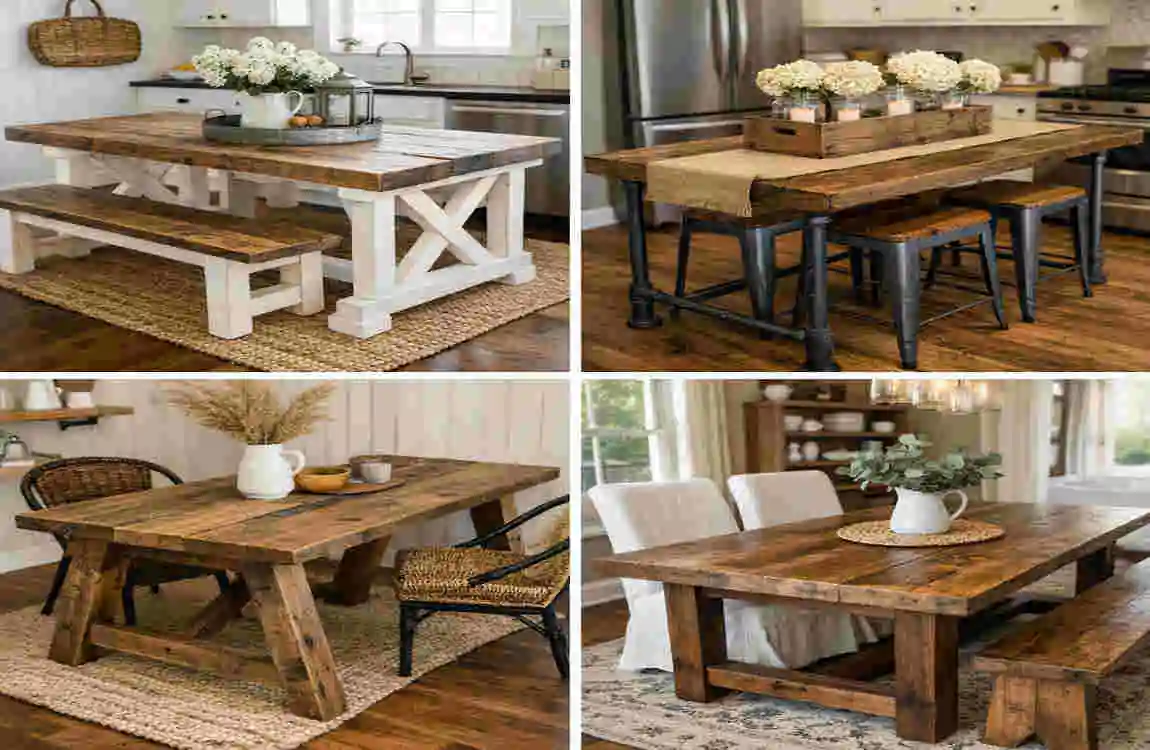
Are you a weekend warrior with a “can-do” attitude? You can build your own table for a fraction of the retail cost.
The Beginner Pallet Table:
- Source: Find 3-4 heat-treated (marked “HT”) pallets.
- Prep: Break them down, remove nails, and thoroughly sand the boards.
- Build: Create a simple box frame using 2x4s and screw your pallet boards across the top.
- Finish: Use a dark walnut stain and three coats of polyurethane.
Total Cost: Usually under $200 (mostly for tools and finish). Time: One productive weekend.
FAQs
What is the average cost of reclaimed wood kitchen tables?
Prices vary wildly. A small, simple table might start at around $600, while large, custom-made pieces made from rare timber can exceed $4,000.
Are they durable enough for daily use with kids?
Absolutely! In fact, they are often better for kids. Because the wood is already distressed, a new crayon mark or a toy car scratch blends right in. You don’t have to be “precious” with it.
How do I clean a reclaimed wood table?
Keep it simple. A slightly damp cloth and mild soap are all you need. Avoid “furniture polish” sprays that contain silicone, as they can build up a sticky residue over time.
Can I find reclaimed wood kitchen tables in Pakistan?
Yes! Look for artisans who work with reclaimed railway sleepers or old door frames. Markets in Lahore and Peshawar are famous for finding high-quality aged timber.
What is the best finish for a high-traffic kitchen?
A matte polyurethane or a hard-wax oil (like Rubio Monocoat) is best. It protects the wood from liquids while maintaining the timber’s natural, non-shiny look.
