

Imagine this: You’re making a cup of coffee, and the kitchen lights start flickering. Later, you plug in your phone, and the outlet feels strangely warm. You pause and wonder, “Is it worth rewiring a house?” For many homeowners, this question comes up sooner or later, especially in houses built before the 1980s.
Rewiring a house means replacing your old electrical wiring, outlets, switches, and sometimes the panel with new, safer materials. This process isn’t just about convenience—it’s about protecting your family and investment. Outdated wiring can lead to higher fire risks, electrical shocks, or an inability to run modern appliances.
Rewiring Costs Breakdown
Rewiring a house is a significant investment. Whether you’re planning a full house rewire or just updating specific circuits, knowing the costs upfront helps you plan and budget wisely.
Let’s dive into the numbers.
Average Cost by Home Size
Here’s a handy table to illustrate how much rewiring can cost based on home size in 2026:
| Home Size (sq ft) | Average Cost Range | Per Sq Ft Cost |
|---|---|---|
| 1,000 | $6,000–$10,000 | $6–$10 |
| 1,500 | $15,000–$30,000 | $10–$20 |
| 2,500+ | $25,000–$60,000 | $10–$24 |
What Makes Up The Cost?
Labor (50–60% of Total Cost)
- Electricians typically charge $50–$100 per hour.
- A full rewire may take 1–2 weeks, depending on your home’s complexity and size.
- Labor is often the biggest chunk of your budget.
Materials
- Copper wiring: $1.50–$3 per foot
- Upgraded electrical panel: $1,000–$3,000
- New outlets, switches, boxes: $500–$2,000
- Quality matters! Cheaper materials may not last as long or meet code.
Permits and Inspections
- Permits: $200–$500 (varies by city/county)
- Inspection fees: Usually included in permit but can sometimes cost extra.
Drywall Repair & Painting
- Drywall repair: $2,000+ (if walls must be opened)
- Repainting: $500–$2,000, depending on affected areas
Miscellaneous Costs
- Access difficulties: Tight spaces, finished basements, or homes with plaster walls can add 20–30% to the total cost.
- Location: Urban areas often have higher labor rates than rural regions.
- Inflation: As of 2026, materials and labor costs have risen 5–10% over previous years.
Cost Factors at a Glance
- Home Age: Older homes often have outdated systems (like knob-and-tube or aluminum wiring) and can cost more to upgrade.
- Panel Upgrade Needs: Homes with insufficient power (less than 100 amps) may need a new panel.
- Accessibility: If electricians can access wiring through unfinished basements or attics, costs drop. Finished walls/floors mean more labor.
- Regional Variations: For example, rewiring in California or New York can be 20–30% higher than in the Midwest.
- Hidden Surprises: Unexpected issues, such as water damage or pests in walls, can increase the cost.
Sample Rewiring Cost Breakdown Table
| Cost Element | Low Estimate | High Estimate | Notes |
|---|---|---|---|
| Labor (1,500 sq ft) | $7,500 | $18,000 | 50–60% of total cost |
| Copper Wire | $2,250 | $4,500 | $1.50–$3/ft, avg 1,500 ft needed |
| Electrical Panel | $1,000 | $3,000 | If an upgrade is required |
| Permits & Inspections | $200 | $500 | City/county fees |
| Drywall & Paint | $2,000 | $4,000 | Repairs after rewiring |
| Total | $12,950 | $30,000+ |
Regional Tips for 2026
- Expect costs to be 5-10% higher than 2025 due to ongoing shortages in copper and skilled electricians.
- Permits and code requirements are stricter in 2026, which may increase inspection fees.
- Urban vs. Rural: Urban homeowners might pay more for permits and labor but have easier access to electricians.
Costs: The Bottom Line
Rewiring is a big-ticket project. But remember, the price you pay upfront can save you much more down the line—especially when it comes to safety, efficiency, and home value.
Signs Your House Needs Rewiring
How Do You Know It’s Time?
Not sure if your home needs rewiring? Here are red flags that shouldn’t be ignored. If you notice any of these, it’s time to call a licensed electrician for an assessment.
Top Warning Signs to Watch For
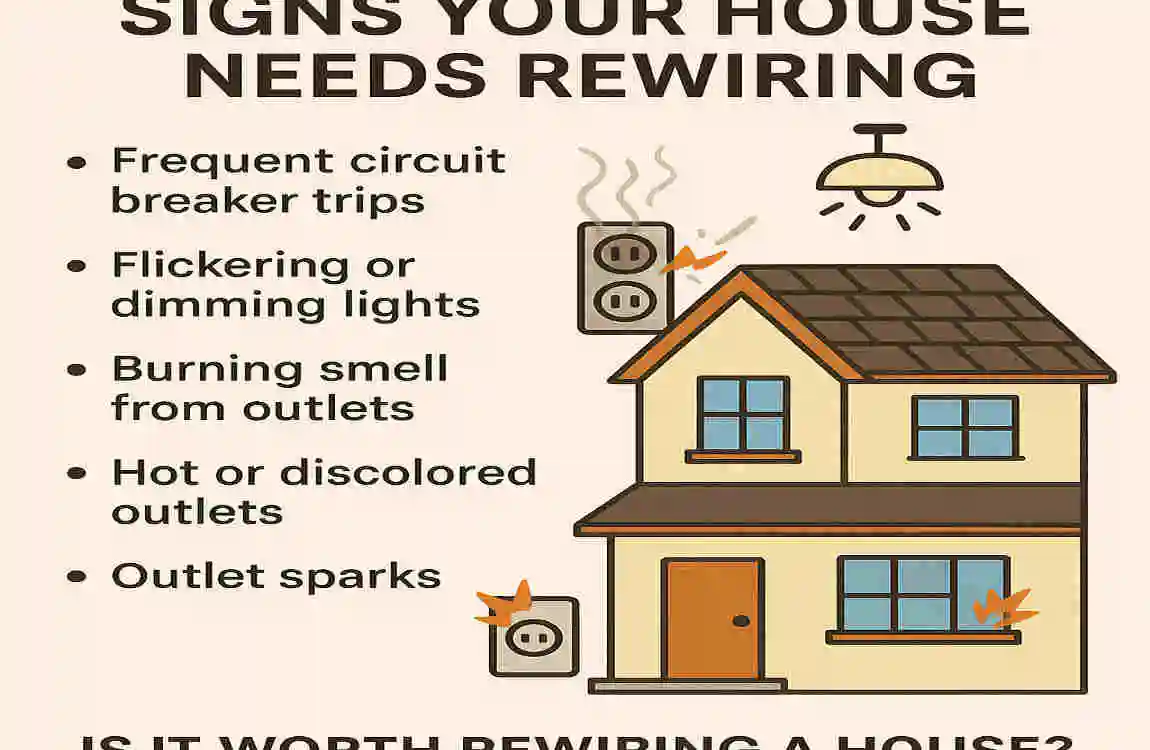
- Frequent circuit breaker trips or blown fuses
- If your breakers trip regularly or fuses blow often, your wiring may be overloaded or faulty.
- Scorch marks, buzzing outlets, or warm switches
- These are signs of heat buildup and can indicate potential fire hazards.
- Image alt text: “Outlet scorch marks—rewiring a house fire hazard sign”
- Flickering or dimming lights
- Unsteady lighting often points to poor connections or aging wires.
- Outdated wiring types (aluminum, knob-and-tube)
- Homes built before the 1970s often have risky wiring systems.
- Aluminum wiring can oxidize and overheat; knob-and-tube lacks grounding.
- Image alt text: “Old aluminum wiring—signs rewiring a house is needed”
- Two-prong outlets (no grounding)
- Modern devices need grounded outlets for safety.
- Frequent shocks or tingling when touching appliances
- This signals faulty wiring or improper grounding.
- Insufficient outlets or extension cords everywhere
- Too few outlets means your wiring can’t handle modern loads.
- Insurance hikes or failed home inspections
- Insurers may raise rates or refuse coverage for old wiring.
- Burning smells from outlets or switches
- A burning odor can mean melting insulation—turn off power and call an electrician immediately.
- Visible rodent damage or frayed wires
- Rodents chewing wires is a common issue in older homes.
Why Act Fast?
Ignoring these signs can put your home and family at risk. According to the U.S. Fire Administration, electrical fires cause over 24,000 house fires annually, many linked to outdated wiring. If these red flags sound familiar, take action sooner rather than later.
Key Benefits of Rewiring
The biggest benefit of rewiring a house is peace of mind.
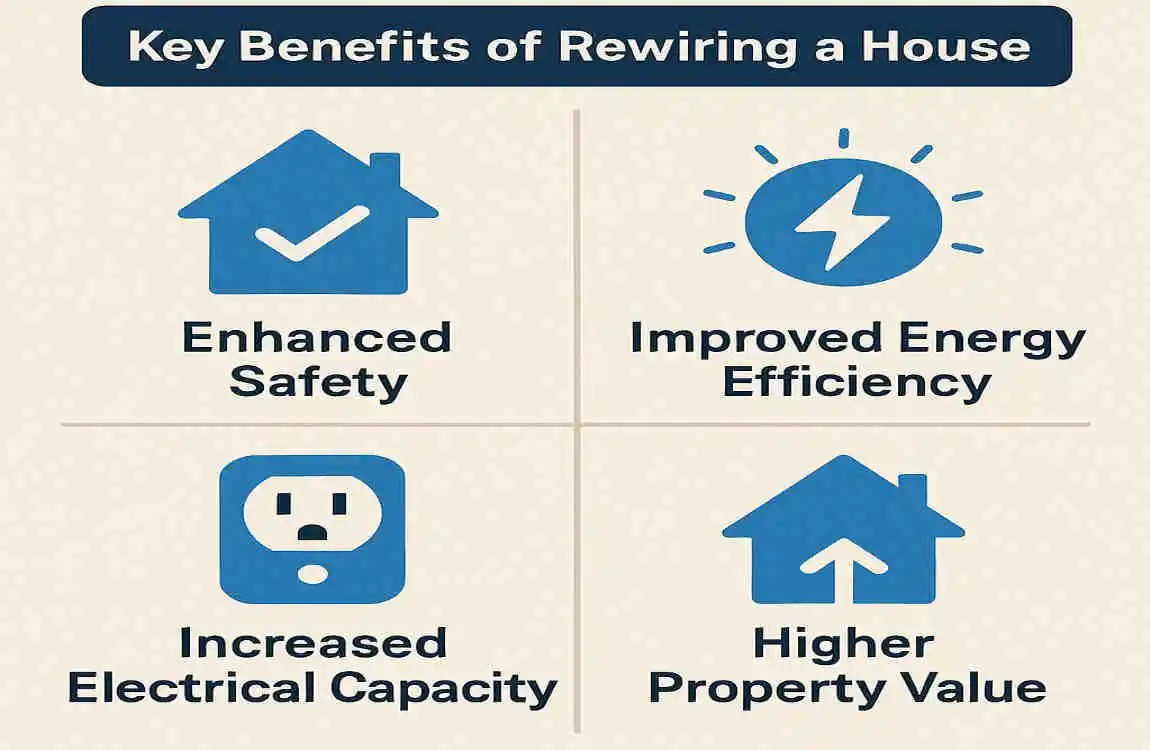
- Modern wiring reduces fire risk by up to 70%.
- New systems include grounded outlets, arc-fault circuit interrupters (AFCIs), and GFCIs in wet areas—cutting down on shocks and short circuits.
- Proper grounding protects both people and electronics.
Energy Efficiency and Lower Bills
- New wiring and panels make your home more energy efficient.
- Modern systems handle loads better, cutting down on wasted electricity and voltage drops.
- Upgrading to a 200-amp panel supports high-efficiency appliances, EVs, and solar panels.
Boosting Home Value
- Rewiring increases your home’s resale value by 5–10%.
- A $300,000 home could see a value increase of $15,000–$30,000 after a full rewire.
- Buyers and inspectors look for updated electrical systems—it’s a top selling point in real estate listings.
- Many insurance companies offer discounts for homes with modern wiring.
Future-Proofing for Modern Living
- Supports today’s technology: Electric vehicles, home offices, smart thermostats, and security systems all require stable, safe power.
- Meets code and capacity: New codes require more circuits and safer wiring—rewiring ensures you stay compliant and ready for any tech upgrade.
Longevity: Set It and Forget It
- New wiring lasts 50+ years.
- You’ll rarely need to worry about electrical issues again for decades.
- Adds long-term value and cuts maintenance costs.
| Benefit | Impact |
|---|---|
| Safety | Cuts fire risk up to 70% |
| Energy Efficiency | Lowers bills by 10–20% |
| Home Value | Boosts resale by 5–10% |
| Modern Capacity | Supports EVs, solar, smart devices |
| Longevity | Lasts 50+ years, minimal upkeep |
When to Rewire: Timing Guide
Immediate Action: Safety First
- If you have warm outlets, burning smells, or frequent breaker trips, rewire ASAP.
- Don’t wait: Delaying can lead to fires or costly damage.
Pre-Sale or Renovation
- Listing your home soon?
Rewiring before selling can help you pass inspections and boost your sale price. - Renovating a kitchen or bathroom?
Bundle rewiring with other projects to save money and reduce disruption.
Proactive Upgrades
- Homes 40+ years old should strongly consider rewiring, even if there are no obvious issues.
- During remodels: Open walls make it easier and cheaper to run new wires.
When Rewiring Might Not Be Worth It
- Selling soon with no electrical issues?
Minor upgrades (like replacing outlets or adding circuits) may suffice. - 2026 cost considerations:
If you’re on a tight budget, consider partial rewires or upgrades until you can afford a full rewire.
Remember, material costs have risen 5–10% this year, so waiting could mean paying more later.
Alternatives and ROI Analysis
Sometimes, a full house rewire isn’t feasible. Here’s how alternatives stack up:
| Option | Cost Range | Pros | Cons |
|---|---|---|---|
| Partial Rewire | $3,000–$10,000 | Cheaper, targeted fix | May miss hidden risks |
| Full Rewire | $15,000–$30,000 | Comprehensive safety | Disruptive, expensive |
| DIY Updates | $1,000–$5,000 | Low upfront cost | Unsafe, often illegal |
ROI: Does It Pay Off?
- Energy savings: 10–20% lower bills add up quickly.
- Insurance: Lower premiums after updating.
- Home value: Get 5–10% more at resale.
- Breakeven: Most homeowners see costs offset in 5–7 years through efficiency and home value gains.
