

Did you know that over 60% of U.S. homes rely on natural gas for heating, water, and cooking needs? This incredibly versatile fuel powers a wide variety of household appliances, delivering comfort and convenience—but often at a cost that surprises many homeowners by the end of the month.
Are you wondering what uses gas in a house, and why your energy bill seems to spike, especially during colder or busier times of the year? You’re not alone. Understanding where your natural gas dollars go is the first step toward lowering your home energy costs.
Whether you’re a homeowner trying to trim expenses or a renter curious about your utility bills, this guide will answer your questions about gas appliances in home and give you actionable advice. Let’s dive in and see what’s using gas in your house!
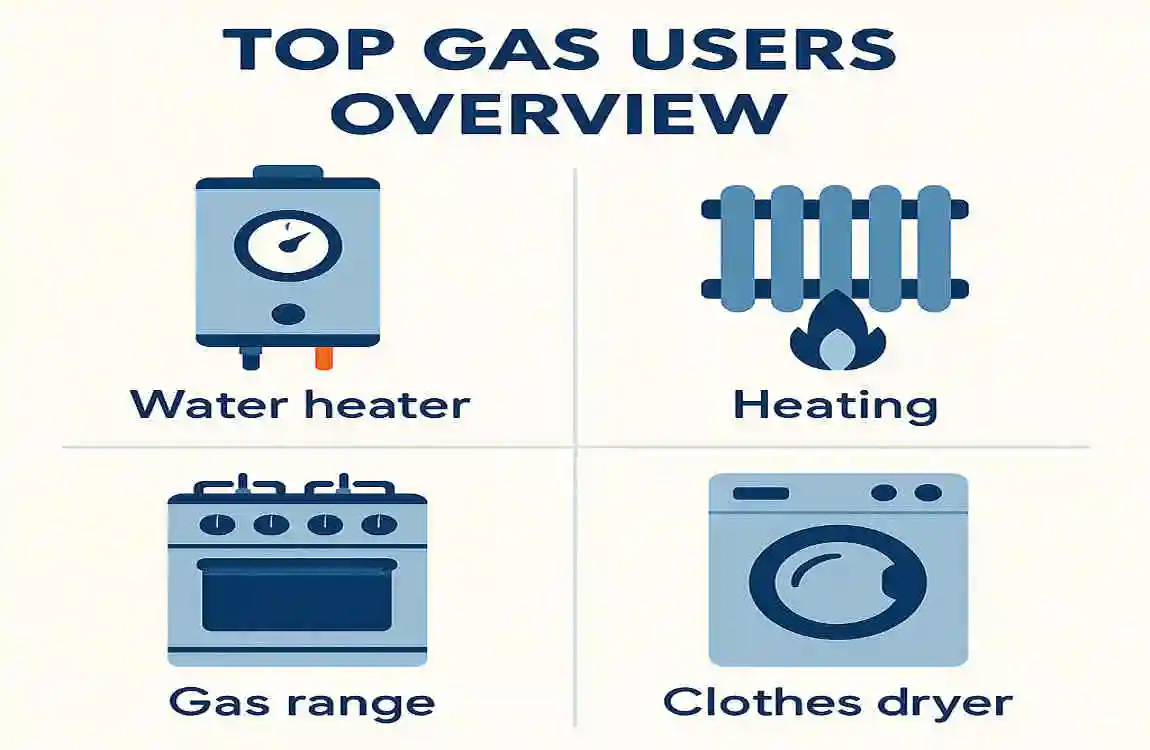
Top Gas Users Overview
Natural gas is a fossil fuel delivered to homes through underground pipelines. It’s prized for being efficient, instant, and often cheaper than electricity for many applications. In the U.S., millions of households use gas for heating, hot water, and more because it heats faster and costs less per BTU (British Thermal Unit) than electricity.
How Much Gas Does a Typical Household Use?:
- Heating (48%): By far the biggest chunk, especially in cooler climates.
- Water Heating (14%): Essential for showers, laundry, and dishwashing.
- Cooking & Drying (5%): Think stoves, ovens, and dryers.
Gas vs. Electric: What’s Cheaper?
| Appliance | Avg. Annual Gas Cost | % of Home Usage |
|---|---|---|
| Furnace | $400-800 | 48% |
| Water Heater | $150-350 | 14% |
| Stove/Oven | $25-75 | 4-5% |
| Clothes Dryer | $15-30 | 1-2% |
Gas appliances usually cost less to operate annually than their electric counterparts. For example, a gas furnace might cost $400–$800/year, compared to $600 or more for electric heat. That’s a significant difference over time!
Common Gas Appliances in Your Home
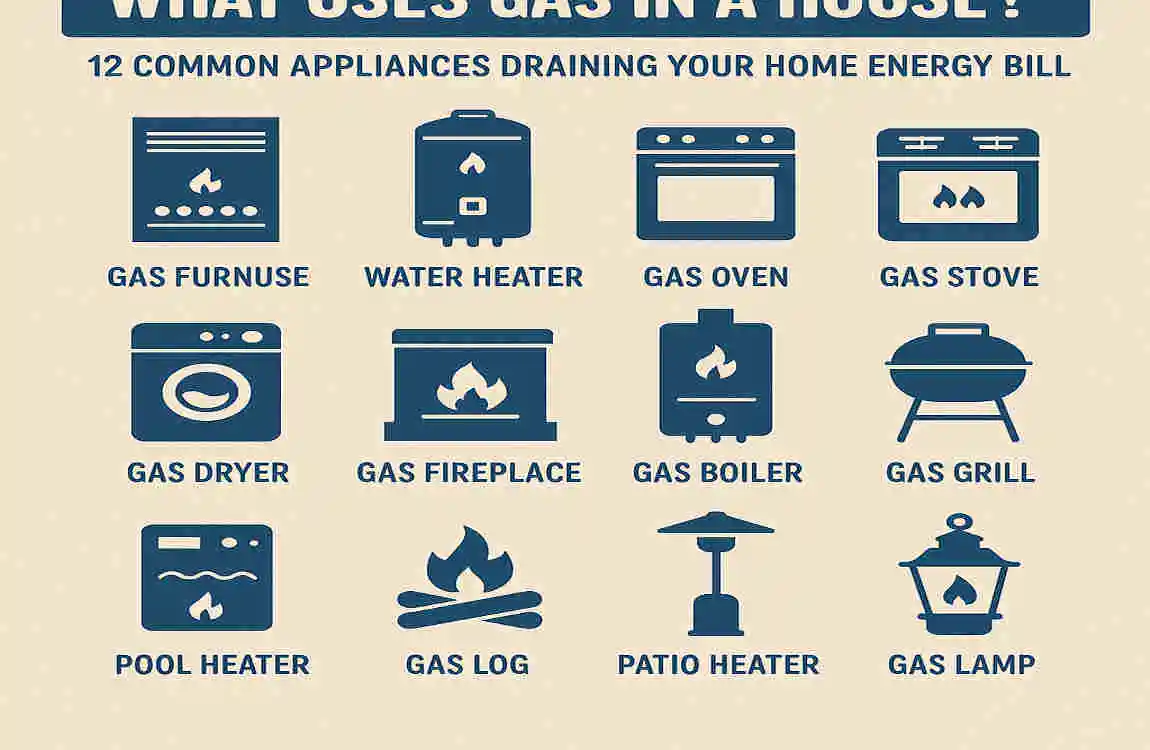
Let’s take a closer look at what uses gas in a house. Each of these appliances plays a unique role in your comfort and daily routines—but they can also be major contributors to your energy bill if not managed wisely.
Gas Furnace/Boiler
What it does:
A gas furnace or boiler is the heart of your home’s heating system. The furnace heats air, which is pushed through ducts, while a boiler heats water for radiators or radiant floors.
How much gas it uses:
This powerhouse can account for 31–48% of a home’s total energy use—making it the largest gas consumer in most houses.
Efficiency tips:
- Schedule annual tune-ups; a well-maintained furnace can save up to 10% on gas costs.
- Upgrade to a high-efficiency model (look for ENERGY STAR®).
Pros: Fast, even heat; affordable to run.
Cons: Needs regular maintenance; older units can waste energy.
Gas Water Heater
What it does:
This appliance provides hot water for showers, sinks, dishwashers, and laundry.
How much gas it uses:
Roughly 13.6% of your home’s total energy—enough to make a real impact on your bills.
Efficiency tips:
- Tankless (on-demand) water heaters use less energy and can save $350/year compared to traditional tanks.
- Insulate hot water pipes to reduce heat loss.
Pros: Quick recovery time; reliable hot water.
Cons: Tanks can waste energy keeping water hot 24/7.
Gas Stove/Range/Oven
What it does:
From boiling water to baking, gas stoves and ovens are kitchen essentials.
How much gas it uses:
Combined, they account for 4–5% of household gas use.
Efficiency tips:
- Use the right-sized burner for your pot or pan.
- Keep burners and oven clean for better heat transfer.
Pros: Precise temperature control; instant heat.
Cons: Can leak gas if not maintained; requires ventilation.
Gas Clothes Dryer
What it does:
Dries your laundry faster than electric models by using a gas burner.
How much gas it uses:
Averages about 1–2% of home gas use, but can save $75/year in operating costs over electric dryers.
Efficiency tips:
- Clean the lint trap and vent regularly.
- Dry consecutive loads to take advantage of residual heat.
Pros: Quick drying times; lower operating cost.
Cons: Needs a gas hookup; venting is essential for safety.
Gas Fireplace
What it does:
Provides instant ambiance and warmth with just the flip of a switch—no wood, ashes, or smoke.
How much gas it uses:
Varies widely, but modern units can be 60–80% efficient and are more cost-effective than wood-burning options.
Efficiency tips:
- Use a programmable thermostat.
- Add glass doors to reduce heat loss.
Pros: Convenience; clean-burning.
Cons: Can use a lot of gas if left on for hours.
Gas Grill
What it does:
Brings the outdoor cooking experience to your backyard, using propane or natural home gas.
How much gas it uses:
Generally low—about $20–30 per grilling season.
Efficiency tips:
- Preheat only as long as needed.
- Turn off burners as soon as you’re finished.
Pros: Eco-friendly; no charcoal mess.
Cons: Needs a gas supply; outdoor use only.
Gas Fire Pit
What it does:
Creates a smokeless, cozy gathering spot outside—perfect for cool evenings.
How much gas it uses:
Usage depends on flame size and hours of operation, but typically less than a fireplace.
Efficiency tips:
- Use only when needed.
- Opt for smaller models for less fuel consumption.
Pros: No smoke; easy to light.
Cons: Outdoor-only; can add up if used frequently.
Gas Pool/Spa Heater
What it does:
Heats your pool or spa quickly, extending your swimming season.
How much gas it uses:
One of the highest seasonal users—can add $300–$500/month during heavy use.
Efficiency tips:
- Use a pool cover to retain heat.
- Set timers to only run when needed.
Pros: Fast heating; precise temperature control.
Cons: Costly to operate; mostly seasonal.
Gas Space Heater
What it does:
Provides supplemental heat to rooms or areas not served by central heating.
How much gas it uses:
Relatively low, but can add up if used often.
Efficiency tips:
- Use only in occupied rooms.
- Look for ventless models for higher efficiency.
Pros: Targeted warmth; portable.
Cons: Not for whole-home use; safety considerations.
Gas Generator/Backup
What it does:
Supplies soler emergency power during outages using natural gas or propane.
How much gas it uses:
Depends on size and usage; can consume 1–2 gallons/hour for whole-home models.
Efficiency tips:
- Run only essential circuits during outages.
- Maintain regularly for best performance.
Pros: Reliable backup; no need to store gasoline.
Cons: Expensive upfront; ongoing fuel costs.
Gas Outdoor Lighting
What it does:
Provides a warm, bug-repellent glow along walkways and patios.
How much gas it uses:
Minimal per fixture, but can add up if left on all night.
Efficiency tips:
- Use timers or motion sensors.
- Choose LED alternatives for even lower costs.
Pros: Attractive; keeps bugs at bay.
Cons: Continuous use can waste gas.
Gas Log Lighter
What it does:
Makes it easy to ignite wood-burning fireplaces—no need for matches or kindling.
How much gas it uses:
Used only for a few minutes per fire, so very little overall.
Efficiency tips:
- Turn off immediately after the fire is started.
- Use with dry wood for faster ignition.
Pros: Convenient; safer than lighter fluid.
Cons: Not for continuous use.
Efficiency and Savings Tips
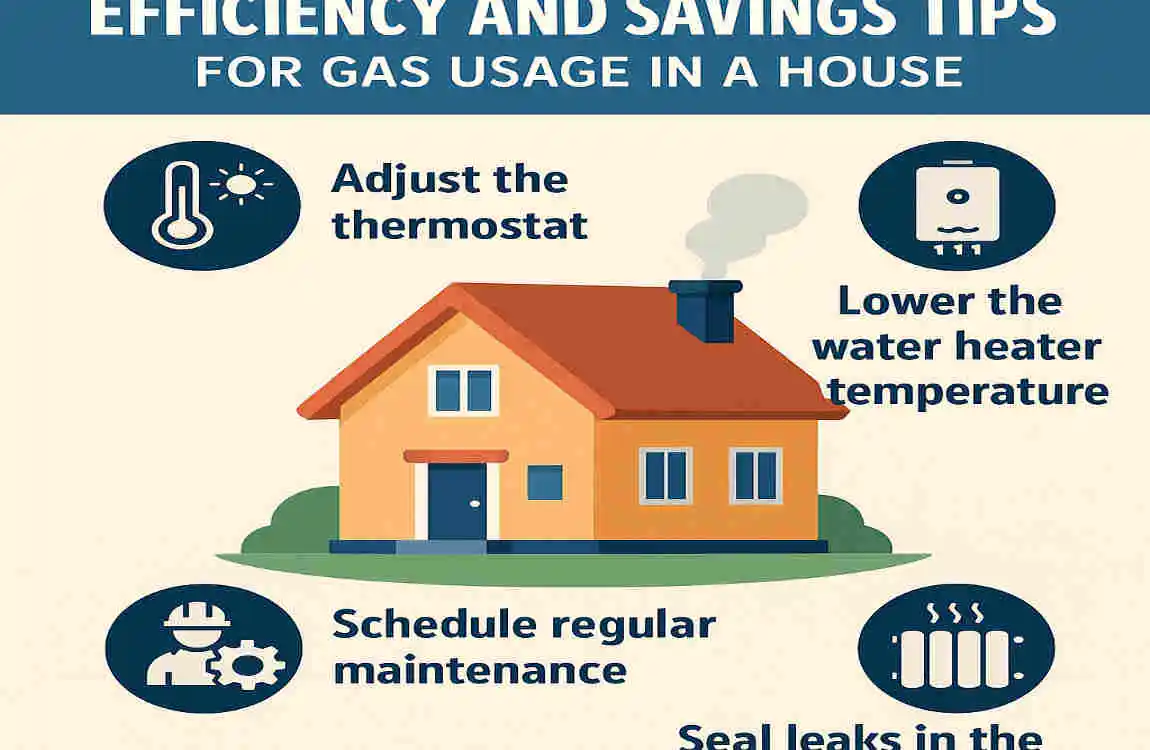
Want to reduce your gas bill without sacrificing comfort? Here are some practical strategies you can start using today:
- Schedule annual maintenance for your furnace, water heater, and other gas appliances. This keeps them running efficiently.
- Install a smart thermostat to better control heating and cooling schedules.
- Seal leaks and add insulation in attics, walls, and around windows/doors to keep warm air in.
- Upgrade to ENERGY STAR® appliances. These models use less gas and often come with rebates.
- Use low-flow fixtures to reduce hot water consumption in showers and sinks.
- Check for gas leaks regularly and fix them promptly.
- Do laundry and dishes with full loads to maximize efficiency.
- Set water heater temperature to 120°F—hot enough for comfort, but not so high that you waste energy.
Appliance Upgrades and ROI:
| Upgrade | Savings/Year | Payback Period |
|---|---|---|
| Tankless Heater | $350 | 5 years |
| Smart Thermostat | $100+ | 1-2 years |
| High-Efficiency Furnace | $200+ | 7-10 years |
