

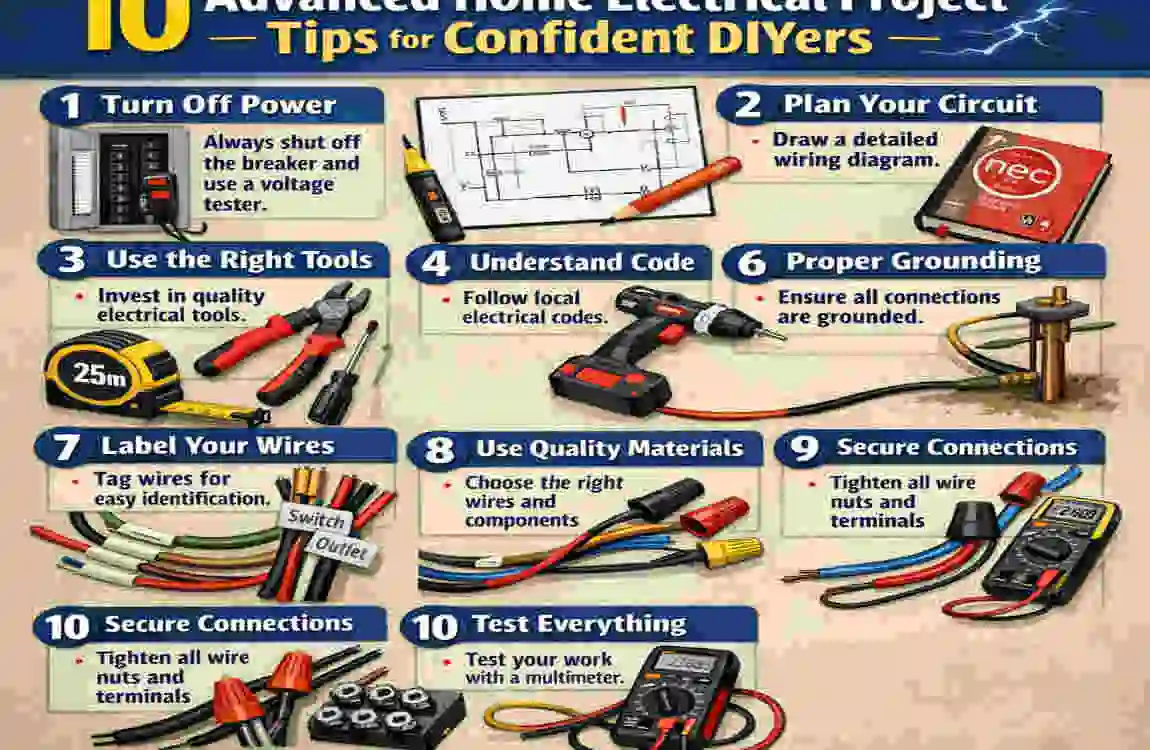
The DIY landscape is shifting dramatically. As we move deeper into 2026, industry reports show that over 65% of homeowners are looking beyond simple paint jobs and diving straight into complex smart home upgrades. If you have already mastered changing a light switch or swapping out a ceiling fan, you are likely itching for a bigger challenge.
However, moving from basic repairs to major wiring overhauls requires a serious step up in your knowledge base. That is exactly why you need these advanced tips for tackling home electrical projects.
Taking on expert-level electrical work comes with massive rewards. You can save thousands of dollars on contractor fees, customize your home automation exactly as you want, and ensure your family’s safety by bringing old wiring up to modern home code. But the stakes are also much higher. A simple mistake at this level does not just mean a tripped breaker; it can lead to severe fire hazards or expensive hardware damage.
Essential Preparation Before You Start Wiring
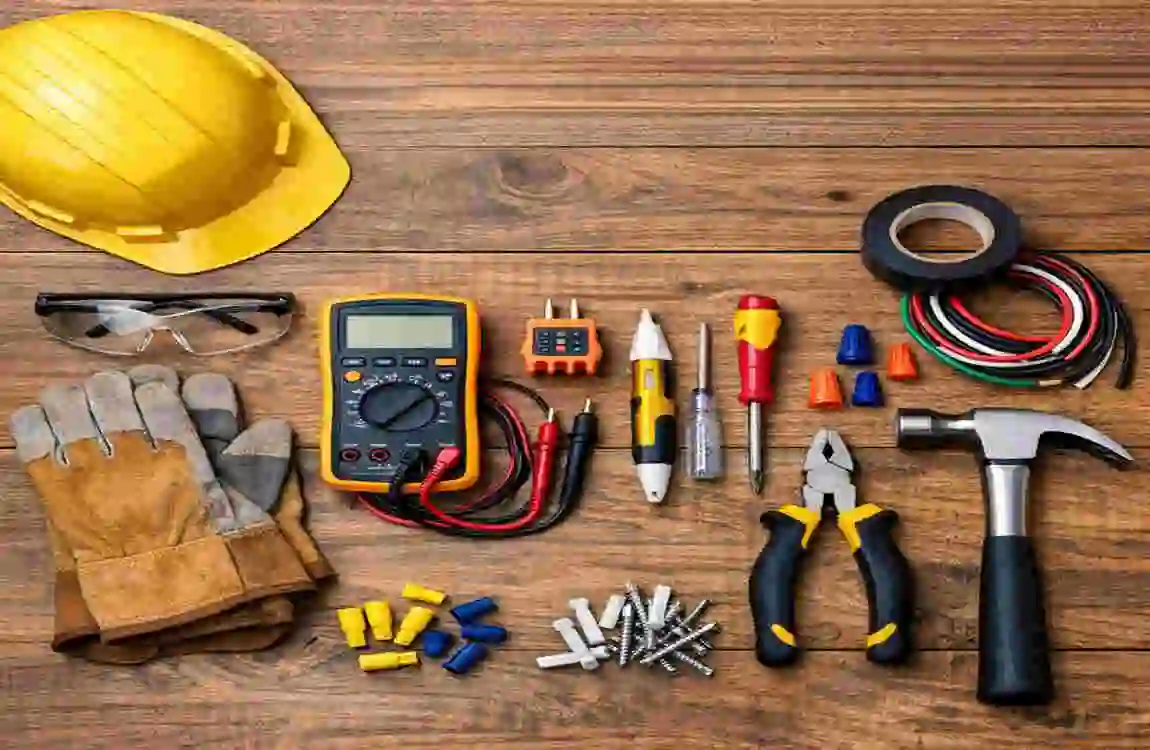
Before we jump into our advanced tips for tackling home electrical projects, we need to talk about groundwork. Professional electricians never start a job without a bulletproof plan, and neither should you.
First and foremost, always check your local building codes and secure the necessary permits. Many municipalities legally require a permit for anything beyond replacing a basic fixture. Skipping this step can lead to massive fines or major headaches when you try to sell your home later.
Next, you must assess the capacity of your main electrical panel. Just because there is an empty slot in your breaker box does not mean you have the physical juice to add a new circuit. You need to calculate your home’s total electrical load. If you are maxing out a 100-amp service, consider upgrading to a panel before adding that heavy-duty workshop machinery.
Finally, if your house was built before 2000, I recommend a full home energy audit. Older homes often hide outdated wiring methods, like knob-and-tube or aluminum wiring. Identifying these hidden hazards early is one of the most vital electrical safety hacks you can employ.
Upgrade to Smart Breakers
One of the most impactful advanced tips for tackling home electrical projects is modernizing your main panel. Standard breakers are great, but smart breakers are the future of smart home electrical systems.
The Magic of Modern Protection
Smart breakers—specifically Arc Fault Circuit Interrupters (AFCI) and Ground Fault Circuit Interrupters (GFCI)—do more than trip when there is an overload. They actively monitor your home’s energy consumption. By connecting to your home’s Wi-Fi, these breakers can send real-time alerts to your smartphone if they detect the tiny, invisible sparks that cause electrical fires. They provide whole-house surge protection, keeping your expensive electronics safe from sudden power spikes.
Step-by-Step Installation Basics
Installing a smart breaker requires extreme caution. First, you must absolutely shut off the main power breaker for the entire house. Once the panel is dead, you will carefully snap the new smart breaker into place.
Unlike traditional breakers, smart AFCI/GFCI breakers require you to connect the circuit’s neutral wire directly to the breaker itself, rather than the neutral bus bar. Then, you will connect the breaker’s curly white “pigtail” wire to the panel’s neutral bus bar.
Reaping the Benefits
Always use a torque screwdriver to tighten the lugs to the manufacturer’s exact specifications. Loose connections are the number one cause of panel fires. Once installed, sync the breaker to its companion app, and you instantly gain granular control over your home’s power consumption.
Master Dedicated Circuits for EV Chargers
As electric vehicles become the norm, wiring a dedicated EV charging station is a highly sought-after skill. This is one of those advanced tips for tackling home electrical projects that will save you a fortune in installation fees.
Choosing the Right Wire Gauge
An EV charger is a continuous load, meaning it draws heavy power for hours at a time. You cannot simply tap into an existing garage outlet. You must run a dedicated 240-volt circuit directly from your main panel.
For a standard Level 2 EV charger, you typically need a 50-amp dual-pole breaker. Because of this high amperage, you must use heavy-duty 6-gauge wire (specifically 6/3 wire if you are installing a NEMA 14-50 receptacle). Thick 6-gauge wire is notoriously stiff and difficult to bend, so take your time planning your conduit routes to avoid sharp, impossible corners.
Performing Load Calculations
Before you even buy the wire, you must perform a whole-house load calculation. EV chargers consume a massive amount of electricity. If your house has only a 100-amp service, adding a 50-amp charger could overload your entire system when the air conditioner and electric oven are running simultaneously.
Hardwired vs. Plug-In
While installing a 240V plug is convenient, hardwiring your EV charger directly into a junction box often provides a safer, more reliable connection that is less prone to overheating. If you choose the hardwired route, double-check your grounding connections!
Safely Handle Multi-Wire Branch Circuits (MWBCs)
If you are opening up junction boxes in an older home, you will eventually encounter a Multi-Wire Branch Circuit. Understanding how to handle them is one of the most critical advanced tips for tackling home electrical projects.
[Image: An open junction box showing multiple colored wires being tested with a multimeter. Alt text: testing a multi-wire branch circuit during an advanced home electrical project wiring]
Spotting the Shared Neutral
An MWBC consists of two separate “hot” wires (usually one red and one black) that share a single white “neutral” wire. Builders used this trick to save money on copper wire.
The danger arises if you do not realize that the circuits share a neutral. If you shut off the breaker for the black wire but leave the red wire’s breaker on, the shared neutral wire can still carry lethal current. Always look for a red wire paired with a black-and-white wire in a single cable sheath—this is your classic MWBC setup.
The Danger of an Open Neutral
When working with MWBCs, you must tie the two breaker handles together at the panel. This ensures that if one circuit trips, the other shuts off too, protecting anyone working on the line.
If that shared neutral wire becomes loose or disconnected (an “open neutral”), it can cause voltage fluctuations that will instantly fry your televisions, computers, and appliances.
Voltage Drop Testing
To safely maintain an MWBC, use a high-quality multimeter to test for voltage drops. Connect your meter leads to the hot and neutral wires while a heavy appliance is running. If the voltage drops significantly below 120V, you likely have a loose, dangerous connection hiding in a junction box somewhere along the line.
Create Ambiance with Low-Voltage Lighting
Do not let the term “low-voltage” fool you. Integrating custom LED strips, recessed lights, and landscape lighting requires serious planning, making it one of our favorite advanced tips for tackling home electrical projects.
Picking the Perfect Transformer
Low-voltage lighting systems run on 12 or 24 volts instead of your home’s standard 120 volts. This means you need to install a step-down transformer.
The secret to a pro-level installation is sizing your transformer correctly. Add up the total wattage of all the LED lights you plan to install on the run. Then, buy a transformer that is rated for at least 20% more wattage than your total. This “20% rule” prevents the transformer from overheating and extends its lifespan by a factor of 20.
Overcoming Voltage Drop
One of the biggest hurdles in low-voltage wiring is voltage drop. Because the voltage is so low, it struggles to travel long distances. If your wire run is too long, the lights at the end of the line will appear noticeably dimmer than those near the transformer.
To fix this, use a thicker wire gauge for long distances (e.g., 12-gauge instead of 16-gauge). Alternatively, you can wire your lights in a “center-tapped” or “loop” configuration to ensure equal power reaches every single bulb.
Hiding the Wires Like a Pro
Part of expert home wiring upgrades is aesthetics. Use a router to cut shallow channels into the underside of your kitchen cabinets. You can press the LED strip channels directly into the wood, creating a completely flush, invisible light source that looks incredibly expensive.
Hunt Down Phantom Loads Like a Pro
Are your electricity bills inexplicably high? You likely have “energy vampires” draining your power. One of the best advanced tips for tackling home electrical projects is learning how to trace and eliminate phantom loads.
The Energy Vampires in Your Walls
Phantom loads occur when devices consume electricity even when they are technically turned “off.” Televisions, gaming consoles, smart speakers, and microwave clocks all continuously sip power. While one device only uses a trickle, twenty devices can add hundreds of dollars to your annual utility bill.
Using Advanced Metering Techniques
To hunt these vampires down, you need to use advanced metering techniques. Start by plugging individual appliances into a “Kill-A-Watt” meter. This simple tool will tell you exactly how many kilowatt-hours a device pulls while in standby Mode.
For a whole-house approach, grab a digital clamp meter. Go to your breaker box and clamp the meter around the main power lines coming into the house (be incredibly careful here, as these lines are always live!).
Terminating the Drain
Have a partner walk through the house and unplug devices one by one. Watch your clamp meter. When you see a sudden, significant drop in amperage, you have found a major phantom load. To solve the problem permanently, install smart switches that let you completely cut power to those specific outlets via an app when you leave the house.
Expand Power with Custom Subpanels
When you add a new workshop, a mother-in-law suite, or a heavy-duty home gym, running individual wires all the way back to the main house is incredibly inefficient. Building a custom subpanel is a must-know advanced tip for tackling home electrical projects.
Planning and Sizing Your Feeder Wires
A subpanel acts as a satellite breaker box. To power it, you must run thick “feeder wires” from a large double-pole breaker in your main panel out to the new subpanel.
Sizing these feeder wires correctly is critical. If you are feeding a 100-amp subpanel in a detached garage, you will typically need expensive, heavy-duty 2-gauge or 3-gauge copper wire. You must route these wires through proper protective conduit, especially if you are burying them underground to reach an outbuilding.
The Golden Rule of Grounding
Here is the most crucial of all expert electrical DIY tips regarding subpanels: You must keep the ground and neutral wires separate!
In your main home panel, the ground and neutral wires connect to the same bus bar. But in a subpanel, they must be isolated. You have to remove the green bonding screw from the subpanel and install a completely separate grounding bar. If you fail to do this, return current will travel on the grounding wires, turning your entire metal subpanel box into a deadly shock hazard.
Planning for Expansion
Always install a subpanel with more breaker slots than you currently need. It costs only a few dollars more upfront to buy a 20-space subpanel instead of a 10-space one, but it saves you hours of grueling labor when you eventually decide to add a new table saw or air compressor down the road.
Future-Proof and Retrofit for Solar Tie-Ins
With energy independence on everyone’s mind, prepping your home for solar power is one of the most forward-thinking ways to tackle home electrical projects. Even if you aren’t installing the roof panels yourself, doing the heavy electrical prep work saves a lot of money.
Prepping Your Main Panel for the Grid
Solar systems require specialized connections to feed power back into the grid. First, you need to determine if your panel can handle a “load-side tap.”
Electrical codes dictate the “120% rule.” This rule states that the total rating of your main breaker and your new solar breaker cannot exceed 120% of the panel’s bus bar rating. If your panel doesn’t meet this math, you will have to perform a “line-side tap,” which involves splicing into the massive service wires before they even hit your main breaker—a job that requires utility company approval.
Net Metering and Battery Backups
If you plan to use solar power during a grid outage, you must wire in a critical loads subpanel and a transfer switch. A transfer switch completely disconnects your home from the neighborhood grid during a blackout.
This is not just an electrical safety hack; it is a legal requirement. If you don’t use a transfer switch, your solar panels will pump electricity back into the neighborhood power lines, potentially electrocuting the utility workers trying to fix the outage.
Running the Conduit
You can do a lot of the grueling labor yourself by running the heavy metallic EMT conduit from your attic down the side of your house to the main panel location. Making clean, precise bends in EMT conduit takes practice, but it perfectly preps your home for the day the solar installers arrive.
Wire Up for Next-Level Home Automation
Forget simple Wi-Fi bulbs. True smart home electrical mastery involves hardwiring your automation infrastructure. Implementing structured cabling is a game-changer among advanced tips for tackling home electrical projects.
The Power of Power Over Ethernet (PoE)
Wi-Fi is great, but it is prone to interference and dead zones. For high-end smart homes, you want to hardwire your security cameras, smart hubs, and wireless access points using Power Over Ethernet (PoE).
PoE allows a single Cat6 Ethernet cable to deliver both blazing-fast internet data and electrical power to a device. You won’t need to install a standard 120-volt wall outlet near your ceiling cameras; the data cable handles the power delivery safely and efficiently.
Running Cat6 Without Tears
When running low-voltage Cat6 cables through your walls and attic, you must follow strict rules to avoid electromagnetic interference (EMI).
Never run your delicate internet cables parallel to, or right next to, your home’s standard 120-volt electrical wires. The magnetic field generated by your house wiring will disrupt your internet signal, causing lag and dropped connections. If your Cat6 cables absolutely must cross paths with your electrical wires, make sure they cross at a perpendicular 90-degree angle to minimize interference.
Creating a Central Smart Hub
Dedicate a specific closet in your home to act as your networking brain. Install a structured media enclosure right into the drywall between the studs. Route all your Cat6 wires back to this single location, and plug them into a centralized network switch. This keeps your home automation neat, organized, and infinitely upgradable.
Perfect Your Advanced Grounding Techniques
Electricity always looks for the easiest path back to the earth. Ensuring that the path is secure is the absolute bedrock of electrical safety. Mastering grounding is one of the most vital advanced tips for tackling home electrical projects.
Driving Whole-Home Grounding Rods
Your home’s electrical panel is connected to a thick copper wire that runs outside and clamps onto a metal rod driven deep into the dirt. Over decades, these grounding rods can corrode, snap, or loosen.
To upgrade your system, drive a new, 8-foot copper-clad grounding rod into the earth outside your panel. For maximum safety, modern codes often require you to drive two separate grounding rods, spaced at least six feet apart, and bond them together with a thick, unbroken copper wire. Driving an 8-foot rod into hard clay is exhausting work, but using a specialized grounding-rod attachment on a heavy-duty rotary hammer drill will sink it in seconds.
Equipotential Bonding Made Easy
Grounding rods aren’t enough. You must also implement equipotential bonding. This means using thick copper wire to connect all the metal systems in your house so they share the same electrical potential.
You need to locate your home’s metal cold-water pipes and metal gas lines. Use specialized bronze grounding clamps to tightly attach a copper wire to these pipes, and run it back to your main panel’s grounding bus bar. If a live electrical wire ever accidentally touches a water pipe in your walls, this bonding wire ensures the circuit breaker trips instantly, preventing the entire plumbing system from becoming electrified.
Test, Verify, and Certify Your Upgrades
The final step of any major job is proving that you did it correctly. Professional testing separates the amateurs from the experts, making this the ultimate conclusion to our advanced tips for tackling home electrical projects.
Beyond the Basic Multimeter
While a basic multimeter is great, advanced DIYers need advanced tools. Once you have pulled new wires through a difficult conduit run, use an insulation resistance tester (often called a Megger).
A Megger pushes a high voltage (like 500V or 1000V) through your newly installed wires to check whether you accidentally scraped off any of the plastic insulation while pulling the wire around tight corners. If the Megger detects a tiny leak in the insulation, you know you need to replace the wire before you ever turn the main power on.
Your DIY Certification Checklist
Treat your DIY project like a strict city inspector would. Create a mandatory checklist:
- Are all wire nuts twisted tightly so no bare copper is showing?
- Are all the breaker lugs tightened to the specific inch-pounds of torque listed on the panel door?
- Are all your outdoor receptacles weather-resistant and GFCI protected?
- Did you label every new breaker with a clear, permanent marker?
Testing your work methodically gives you the peace of mind that your family is safe as they sleep.
Must-Have Tools and Safety Gear for Serious DIYers
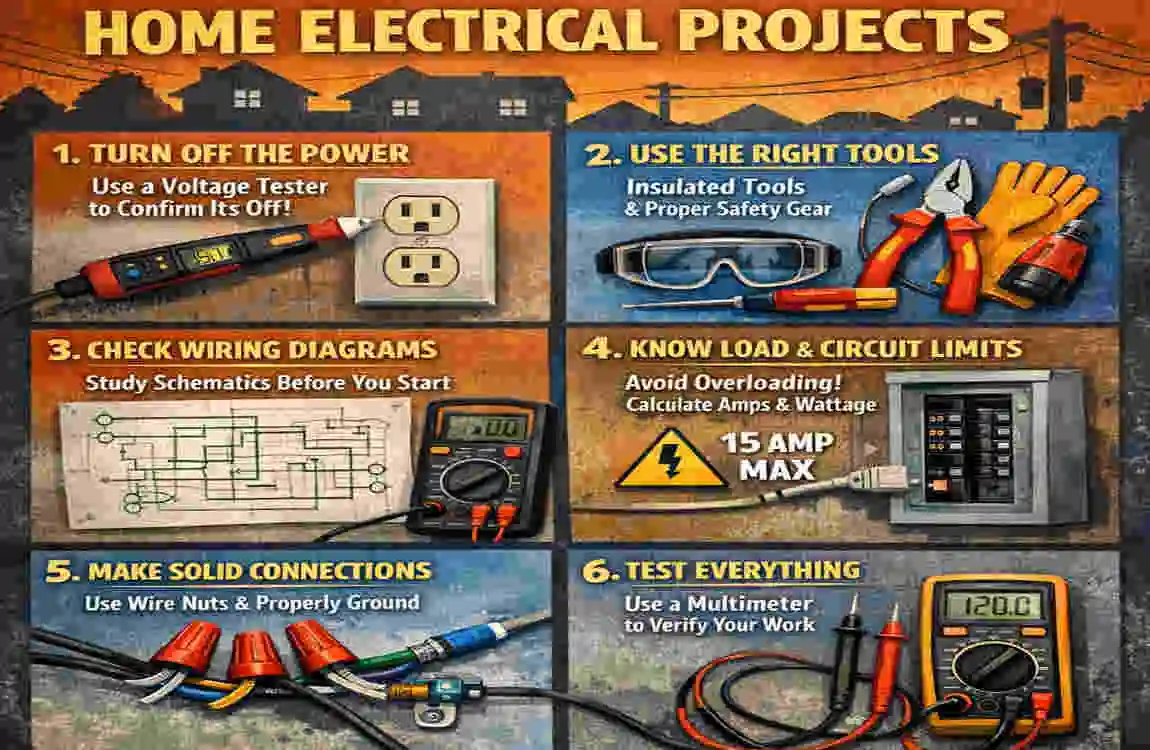
You cannot execute advanced tips for tackling home electrical projects using cheap dollar-store tools. You need professional-grade equipment and serious personal protective equipment (PPE).
Always wear insulated gloves rated for high voltage when working near the main panel, and invest in high-quality safety glasses to protect your eyes from sudden sparks or flying copper clippings.
Here is a look at how your toolbag needs to evolve as you move from beginner repairs to expert-level installations:
ToolBeginner UseAdvanced Tip
Multimeter Basic voltage checking (Is it on or off?) Load balancing, voltage drop testing, and MWBC tracing
Fish Tape Simple, short wire pulls through straight walls. Long conduit runs, negotiating multiple 90-degree bends.
Wire Strippers: Cutting and stripping basic 14-gauge Romex and stripping heavy 6-gauge wire without nicking the copper core.
Screwdriver: Securing plastic faceplates to the wall, using a torque-rated screwdriver to tighten breaker lugs to the proper torque.
Tester Standard plug-in outlet tester, Insulation resistance testing (Megger) to verify wire integrity
Investing in these advanced tools will make your home wiring upgrades infinitely faster, safer, and cleaner.
Frequently Asked Questions (FAQ)
What are advanced tips for tackling home electrical projects safely? Advanced safety tips include using lockout/tagout devices on your main breaker, using insulation resistance testers (Meggers) to check for wire damage after conduit pulls, properly isolating neutral and ground wires in custom subpanels, and using torque screwdrivers to prevent loose connections that can cause fires.
Can beginners skip to these tips? No, absolutely not. Beginners must master the fundamentals first. You need to understand basic circuit paths, properly strip wires, and use a basic multimeter safely before attempting complex tasks like EV charger installations or dealing with Multi-Wire Branch Circuits. Skipping the basics can lead to fatal accidents.
How much to budget for tools? While a beginner’s tool kit might cost $50, an advanced electrical toolset requires a larger investment. Expect to budget between $300 and $600. This covers a professional-grade digital clamp meter ($100+), a torque screwdriver set ($80), a fiberglass fish tape ($40), high-voltage insulated gloves ($50), and a reliable insulation tester. This upfront cost easily pays for itself after your very first DIY project.
